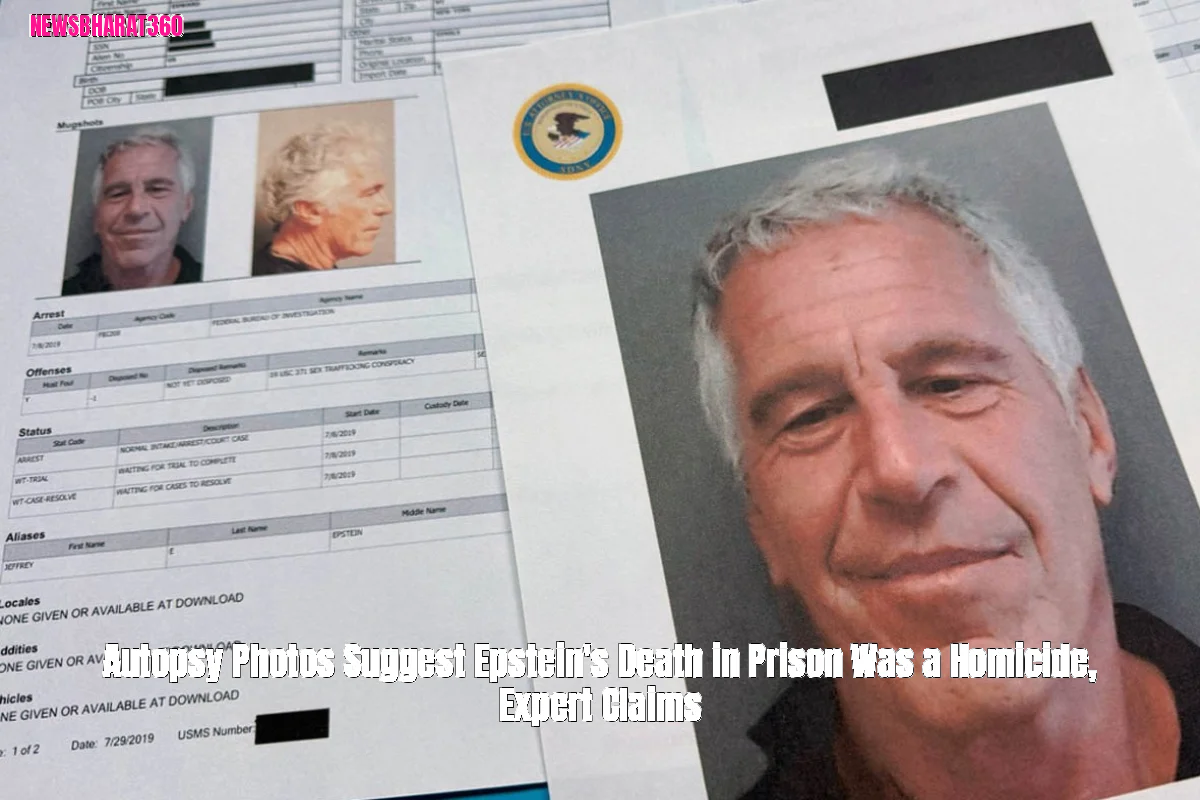

The circumstances surrounding Jeffrey Epstein's death in a New York prison are being re-examined, with a forensic expert suggesting that evidence from his 2019 autopsy is more consistent with homicide than the previously determined cause of suicide.
Professor Michael Freeman, a renowned expert who has worked closely with U.S. prosecutors on high-profile investigations into fatalities occurring during custodial settings, shared his insights with BBC Newsnight in a recent interview.
A forensic examination of the case involving the New York City doctor has led to the conclusion that the injuries sustained by the businessman are more consistent with strangulation by a ligature, potentially inflicted from behind.
A new analysis has reignited debate surrounding the circumstances of Jeffrey Epstein's death, a case marked by his associations with influential individuals and allegations of child sex trafficking that were raised prior to his passing.
A forensic examination revealed physical evidence suggesting a violent assault, according to Freeman's analysis. Key findings include a severe hemorrhage in the left shoulder, facial injuries consistent with blunt trauma, and nail marks above the area where the ligature was applied to the neck.
A crucial detail has caught the attention of investigators, who believe it may be linked to the victim's desperate attempt to free themselves from an object obstructing their airway.
Freeman stated that the nature of the injuries and the discovery of the body do not align, leading him to conclude that the death was a homicide in his professional opinion.
The investigation relied on photographs and documents obtained from the forensic evidence, which was provided by Mark Epstein, the brother of the deceased individual.
Freeman emphasized that he conducted the work without any external influence and confirmed that he did not accept any compensation from the family.
Contrary to the findings of a 2019 autopsy, New York's chief forensic pathologist, Barbara Sampson, initially concluded that Jeffrey Epstein's death was a result of a self-inflicted hanging.
Sampson reaffirmed his team's findings, stating that he fully endorses the cause and manner of death they had determined.
The pathologist conducting the autopsy testified to the Office of the Inspector General within the Department of Justice that the observed injuries were more consistent with a self-inflicted act than with a homicide. The doctor further stated that no defensive wounds were found, which would typically be expected in a violent attack of this nature.
Freeman expressed concern over the documentation process, suggesting that photographs of the body should have been taken prior to its excavation.
A financier was discovered deceased on August 10, 2019, at the Metropolitan Correctional Center in New York, where he was being held prior to a scheduled trial on charges related to the sex trafficking of minors.
A recent report from the Department of Justice has highlighted instances of irregularity during Jeffrey Epstein's time in prison. Notably, he had been placed under temporary surveillance a month prior to his death due to concerns over his risk of suicide.
Freeman declined to speculate on the identity of the person or individuals responsible for the victim's death, stating that he is unable to provide any information on potential suspects.