

NASA will release the first photos of interstellar comet 3I/ATLAS
On December 19, 3I/ATLAS will reach its closest approach to our planet
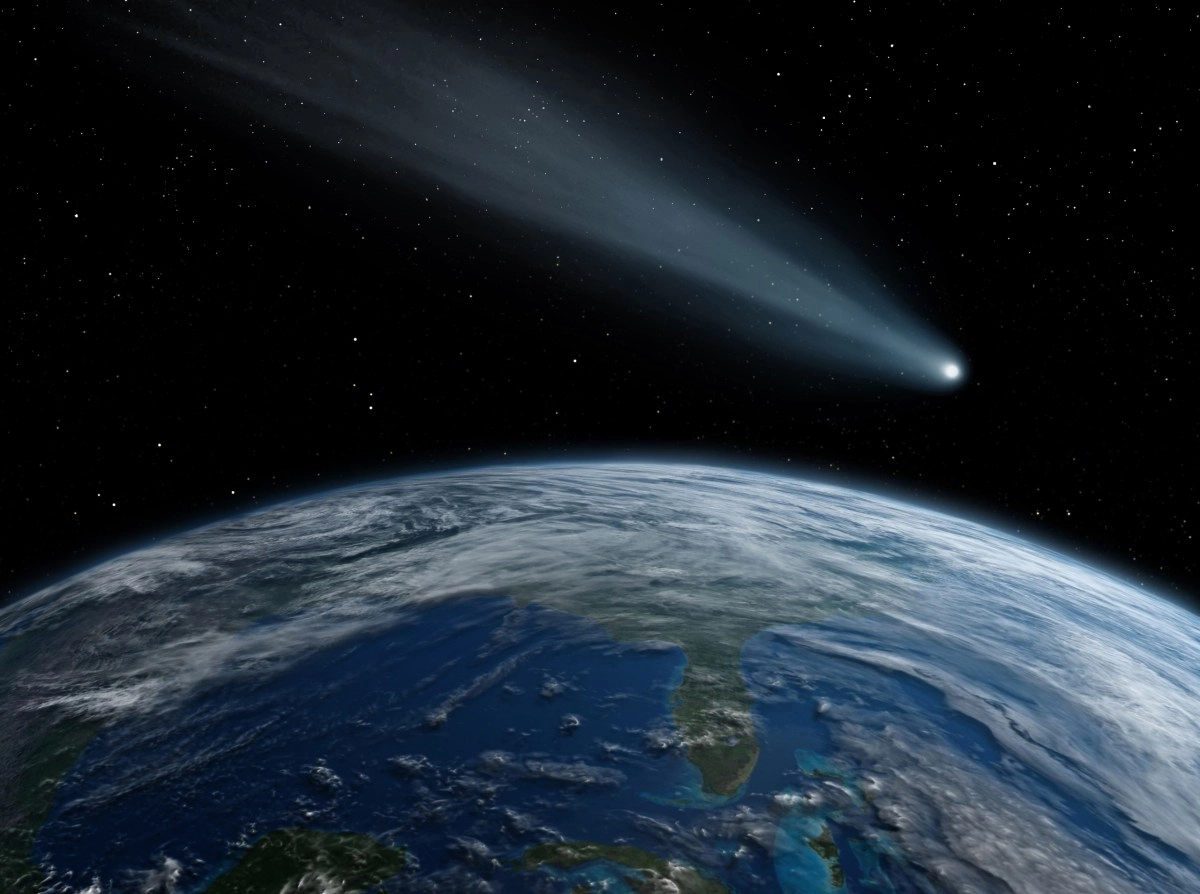

Those who have spent weeks following the interstellar comet 3I/ATLAS mission have the impression that a particular delay is about to come to an end.
Only the fourth recognized object to enter our solar system from interstellar space this Wednesday, November 19th, NASA will release a collection of previously unreleased images of the mysterious cosmic visitor.
The Goddard Space Flight Center in Greenbelt, Maryland, where the agency will display the public photos that haven't previously been shared, is scheduled for 3 p. m. EST ( 8:00 p. m. UTC ).
The delay in publishing these studies was not due to a lack of information or the fantastical theories that suggested an interplanetary aircraft.
The explanation was much more realistic: the majority of NASA employees worked during the government shutdown between October 1 and November 12.
This administrative suspension took place at a crucial time in the moon's voyage, making the agency unable to speak with the public at a crucial time.
The galactic comet's perihelion
In fact, during these weeks of silence, 3I/ATLAS was at the center of significant events. On October 29, it reached its closest level, the Sun, at which time comets usually exhibit their most activity. When thermal heat sublimates their snowy area, creating the distinctive tails of mist and ions, these "dirty snowballs," or masses of rock and ice, are commonly known as. The issue was that at that crucial instant, the meteor was hidden behind the Sun from Earth. Mars studies: But, not everything was lost. A fleet of aircraft waited on Mars on October 3 as the interstellar guest approached the planet, which is only 30 million km away. On October 7, the European Space Agency released photographs captured by its ExoMarsTrace Gas Orbiter and Mars Express. The comet is little discernible as a little, luminous smudge in the images, which makes sense given that these probes are designed to observe the Martian surface from a distance, rather than to follow fast-moving objects at great distances. Even so, the data provided scientists with the ability to find an ionized gas envelope around it, the usual "atmosphere" that accompanyes natural comets. Additionally, according to Live Science, scientists were able to drastically improve the analysis of the object's path by combining this information with ground-based observations. Hubble and James Webb's potential pictures and data Although the company has not yet confirmed which observations are possible, Science Alert speculates that those from Hubble, the James Webb Space Telescope, and ground-based stations like Gemini could also be included. Instruments of a particular kind took part.
The elysium comet 3I/ATLAS
The ATLAS ( Asteroid Terrestrial-Impact Last Alert System ) observatory, which is funded by NASA, discovered the comet on July 1.
Although it poses no threat to Earth, its passage presents an extraordinary technological option because it originates in an unfamiliar star system.
Using comparable instruments from a variety of angles, NASA claims its resources allow it to see the item "virtually for the entire time it will stay in our divine neighborhood. "
How to access the life supply
The best chance for ground-based studies is still to come: on December 19, 3I/ATLAS will make its closest approach to Earth, but it will be at a distance of about 270 million meters.
After, it is anticipated that some of the probes operating close to Jupiter will be able to see it.
Observe the comet again early next year, in the final stage of its journey through the solar system before it disappears into interstellar space.
The spread will be broadcast on Wednesday on NASA+, the firm's website, YouTube, and Amazon Prime.
The hashtag# AskNASA can be used to post queries on social media and receive life responses.
Amit Kshatriya, the NASA Associate Administrator, Nicky Fox, the Associate Administrator of the Science Mission Directorate, and Tom Statler, the Chief Scientist for Small Solar System Bodies, are among the speakers.
Using data from NASA, Space . com, Live Science, and Science Alert, Felipe Espinosa Wang edited.
This news has been tken from authentic news syndicates and agencies and only the wordings has been changed keeping the menaing intact. We have not done personal research yet and do not guarantee the complete genuinity and request you to verify from other sources too.