

Scientists discover incredible megacity of 111,000 spiders underground
In a cave between Greece and Albania, scientists have discovered a massive underground colony of 111,000 spiders living together in complete darkness.
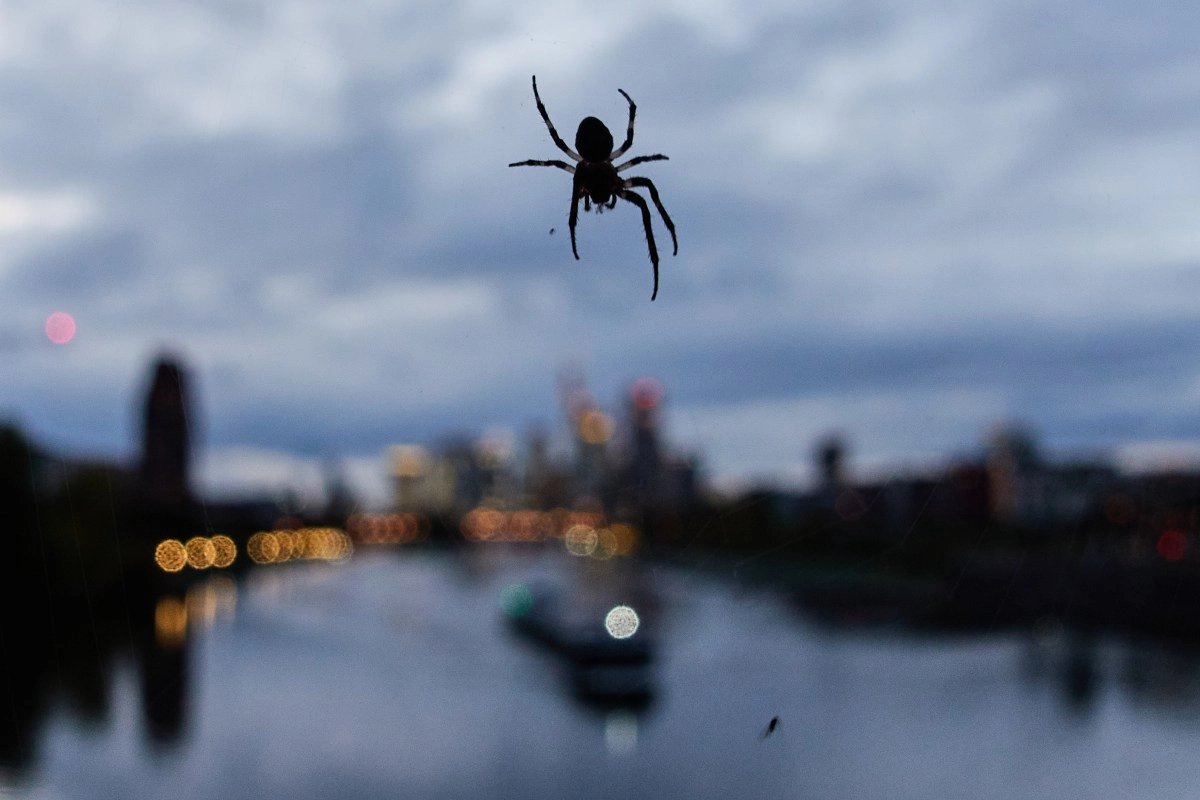

Hidden deep within the borderlands of Greece and Albania lies a warm, sulfur-rich cave concealing a sight that would terrify any arachnophobe: a massive silk web stretching over 100 square meters and housing an estimated 111,000 spiders.
This so-called “Sulfur Cave” is far more than just a spider den—it is a remarkable, self-contained ecosystem where life thrives despite extreme conditions: total darkness, air saturated with sulfur, and a toxic environment that would seem utterly hostile to most forms of life.
The discovery of the giant spiderweb
The incredible find was made in 2022 by a team of speleologists from the Czech Speleological Society. While exploring the cave system, they stumbled upon this astonishing spider colony and immediately notified a group of biologists for further study.
Since then, researcher Istvan Urak of Sapientia Transylvania University in Hungary has led multiple expeditions to investigate this unique phenomenon in detail.
Urak described his first impression as a mix of awe and respect: “You have to be there to truly understand what it feels like,” he told Live Science.
According to their findings, published in the journal Subterranean Biology, the web spans more than 100 square meters—so vast that IFL Science humorously noted it could be “big enough to catch a whale.” The immense web begins about 50 meters from the cave’s entrance and extends through a narrow, low-ceilinged passage completely engulfed in darkness.
111,000 spiders living within a single structure
The most remarkable aspect isn’t just the size of the web—but the coexistence of its inhabitants. Researchers estimate the cave shelters around 69,000 Tegenaria domestica (common house funnel spiders) and over 42,000 Prinerigone vagans, a species known for building flat webs.
Under normal conditions, both species are solitary and rarely interact. This marks the first documented case of them sharing a single structure or living cooperatively. Scientists believe the cave’s unique environment may have encouraged this behavior. The larger T. domestica appear to be the web’s main architects, while the smaller P. vagans act as opportunistic tenants.
In a world where light never reaches, the absence of vision might be key to their peaceful coexistence—perhaps they simply cannot see each other well enough to fight.
A sulfur-powered underground ecosystem
But the true mystery lies in what sustains this vast community. Unlike most spider habitats that rely on insects from outside, every species in this ecosystem is born, lives, and dies within the cave. Using isotopic and genetic analyses, scientists discovered that the cave’s food web is driven by chemoautotrophy—an energy system based not on sunlight, but on chemical reactions.
The process begins with bacteria that metabolize sulfur compounds abundant in the cave’s air and water. These bacteria create sticky biofilms on the cave walls, serving as food for the larvae of chironomid midges—tiny, harmless insects that never leave the cave. In turn, these midges become the primary food source for the spiders.
Over time, the spiders in Sulfur Cave have developed unique traits. They display distinct genetic differences and possess less diverse gut microbiomes than their surface-dwelling relatives. Prolonged isolation and adaptation to these harsh, lightless conditions seem to have accelerated their evolution. Researchers call this remarkable adaptability “genetic plasticity.”
In this suffocating atmosphere filled with sulfur fumes, where no sunlight has ever entered, life has not only survived—it has flourished. What might seem like a nightmare vision is, for scientists, another stunning example of how resilient and inventive nature can be in its most hidden corners.
And in this case, that surprise comes with eight legs—or, to be precise, 111,000 times eight.
This news has been tken from authentic news syndicates and agencies and only the wordings has been changed keeping the menaing intact. We have not done personal research yet and do not guarantee the complete genuinity and request you to verify from other sources too.