
The air war in the Middle East reveals an alarming financial imbalance. The United States spends fortunes to intercept Iranian offensives. While US defensive systems deplete millions of dollars, Iranian tactics rely on volume and low cost. This economic disparity poses serious challenges to sustaining long-term military protection.
The High Price of Air Defense
Defending airspace requires astronomical investments. A US THAAD anti-missile system is worth approximately $1 billion. These batteries operate at the edge of the atmosphere and are vital for intercepting complex threats. However, their deployment and maintenance represent a gigantic financial undertaking for the Pentagon.
Individual components are also incredibly expensive. The AN/TPY-2 radar alone in this system costs about $300 million. Recently, satellite imagery confirmed that Iran destroyed one of these key radars at Muwaffaq Salti Air Base in Jordan. The loss of this strategic equipment is a devastating blow to the armed forces.
Every defensive shot adds millions to the cost.
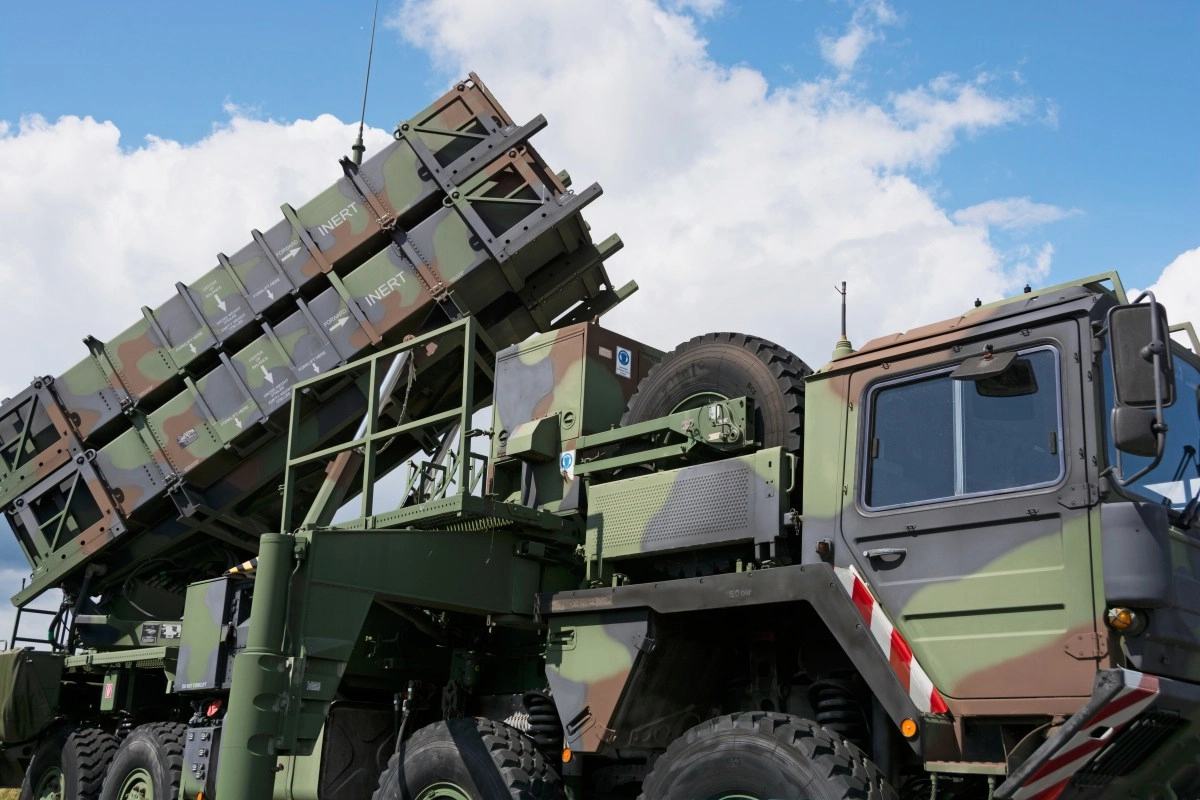
The interceptor missiles manufactured by Lockheed Martin cost $13 million each. A standard THAAD battery has 48 of these missiles distributed across six launchers. Emptying the magazines in a single engagement results in an exorbitant expense that is difficult to sustain. These strategic resources are extremely scarce globally. Currently, the United States possesses only eight THAAD systems deployed in locations such as South Korea and Guam. This number falls short of the nine systems required according to the goals set in 2012. Therefore, there are no spare radars available for immediate use. Iran's Economic Advantage: Compared to the expensive US shields, Iran uses significantly cheaper weaponry. Iranian forces are launching waves of drones and ballistic missiles that are overwhelming defenses in the Gulf region. This saturation strategy aims precisely to deplete inventories of advanced interceptors by using much cheaper weapons to produce.Volume of fire is Tehran's main weapon.We know they employ the Shahed 136 drone, which costs approximately $20,000 to $50,000, although we do not know the exact manufacturing cost of their various missile types.
The damage from these inexpensive weapons affects multiple installations. Early in the conflict, an early warning radar located in Qatar was also damaged by an Iranian attack. Unlike mobile equipment, this was a fixed installation designed to detect threats at extreme distances, demonstrating the reach of the enemy offensive.
Even without knowing all the exact figures, the tactical asymmetry is evident. While a US interceptor costs tens of millions, Iran's weapons allow for continuous, massive attacks. Regional defense systems have been overwhelmed on multiple occasions by these retaliatory strikes. This demonstrates that quantity can overcome sophisticated technology. The Challenge of Neutralizing Attacks: Halting each enemy offensive requires an overwhelming defensive effort. Patriot batteries must take over when THAAD systems lose their radar capability. Unfortunately, supplies of PAC-3 missiles are already in short supply. The need to constantly fire on swarms of drones pushes the military's response capacity to its limits. Ensuring military security involves a huge effort against each enemy threat. Some experts suggest that two interceptors are needed to ensure the destruction of a single Iranian target. This tactic aims to avoid failures and guarantee successful downing against complex attacks. Taking this tactical requirement into account, the financial calculations for defense are truly alarming. Knowing that each US missile costs about $13 million, the cost to intercept each enemy missile or drone skyrockets to $26 million. This enormous figure reflects the immense opposition to the Pentagon faces in this asymmetric conflict. Spending $26 million to stop extremely cheap Iranian weapons represents an unsustainable economic burden that depletes military resources at a very worrying rate. There is a real fear that stockpiles of advanced interceptors will be dangerously depleted soon due to the peace of the conflict. To counter this crisis, The US government is pressing defense contractors to drastically accelerate weapons production and avoid vulnerabilities.Iran's weapons allow for continuous, massive attacks. Regional defense systems have been overwhelmed on multiple occasions by these retaliatory strikes. This demonstrates that quantity can overcome sophisticated technology. The Challenge of Neutralizing Attacks: Halting each enemy offensive requires an overwhelming defensive effort. Patriot batteries must take over when THAAD systems lose their radar capability. Unfortunately, supplies of PAC-3 missiles are already in short supply. The need to constantly fire on swarms of drones pushes the military's response capacity to its limits. Ensuring military security involves a huge effort against each enemy threat. Some experts suggest that two interceptors are needed to ensure the destruction of a single Iranian target. This tactic aims to avoid failures and guarantee successful downing against complex attacks. Taking this tactical requirement into account, the financial calculations for defense are truly alarming. Knowing that each US missile costs about $13 million, the cost to intercept each enemy missile or drone skyrockets to $26 million. This enormous figure reflects the immense opposition to the Pentagon faces in this asymmetric conflict. Spending $26 million to stop extremely cheap Iranian weapons represents an unsustainable economic burden that depletes military resources at a very worrying rate. There is a real fear that stockpiles of advanced interceptors will be dangerously depleted soon due to the peace of the conflict. To counter this crisis, The US government is pressing defense contractors to drastically accelerate weapons production and avoid vulnerabilities.Iran's weapons allow for continuous, massive attacks. Regional defense systems have been overwhelmed on multiple occasions by these retaliatory strikes. This demonstrates that quantity can overcome sophisticated technology. The Challenge of Neutralizing Attacks: Halting each enemy offensive requires an overwhelming defensive effort. Patriot batteries must take over when THAAD systems lose their radar capability. Unfortunately, supplies of PAC-3 missiles are already in short supply. The need to constantly fire on swarms of drones pushes the military's response capacity to its limits. Ensuring military security involves a huge effort against each enemy threat. Some experts suggest that two interceptors are needed to ensure the destruction of a single Iranian target. This tactic aims to avoid failures and guarantee successful downing against complex attacks. Taking this tactical requirement into account, the financial calculations for defense are truly alarming. Knowing that each US missile costs about $13 million, the cost to intercept each enemy missile or drone skyrockets to $26 million. This enormous figure reflects the immense opposition to the Pentagon faces in this asymmetric conflict. Spending $26 million to stop extremely cheap Iranian weapons represents an unsustainable economic burden that depletes military resources at a very worrying rate. There is a real fear that stockpiles of advanced interceptors will be dangerously depleted soon due to the peace of the conflict. To counter this crisis, The US government is pressing defense contractors to drastically accelerate weapons production and avoid vulnerabilities.Spending $26 million to stop extremely cheap Iranian weapons represents an unsustainable economic burden that depletes military resources at a very worrying rate. There is a real fear that stockpiles of advanced interceptors will be dangerously depleted soon due to the peace of the conflict. To counter this crisis, The US government is pressing defense contractors to drastically accelerate weapons production and avoid vulnerabilities.Spending $26 million to stop extremely cheap Iranian weapons represents an unsustainable economic burden that depletes military resources at a very worrying rate. There is a real fear that stockpiles of advanced interceptors will be dangerously depleted soon due to the peace of the conflict. To counter this crisis, The US government is pressing defense contractors to drastically accelerate weapons production and avoid vulnerabilities.