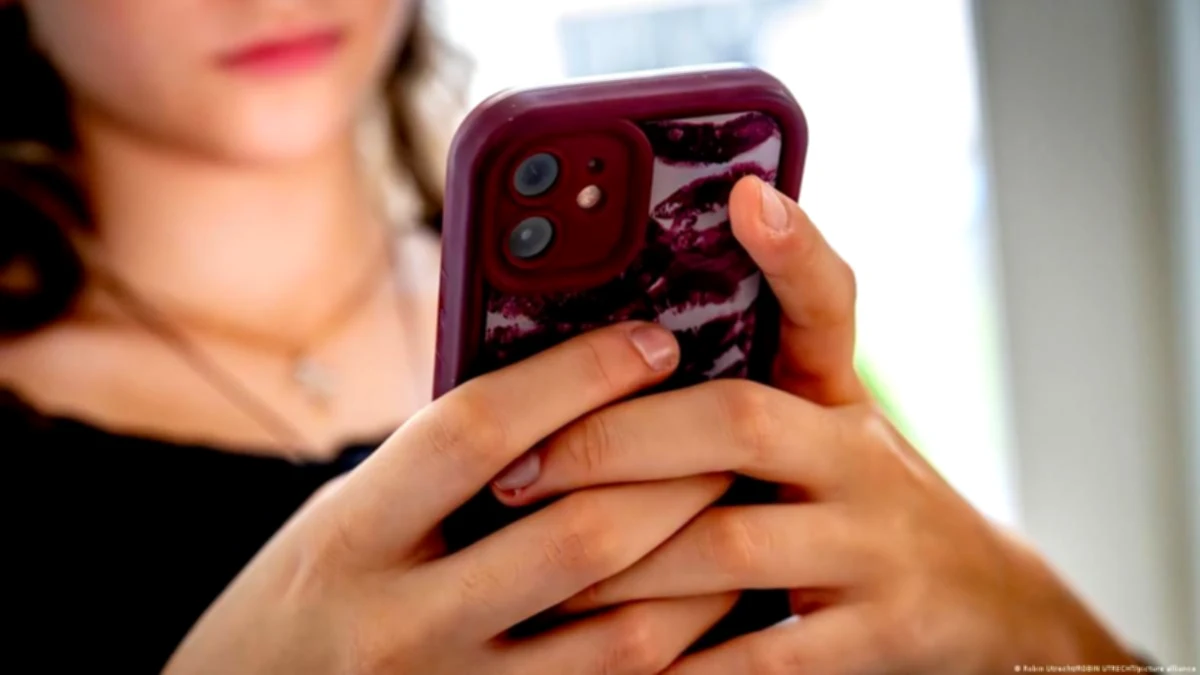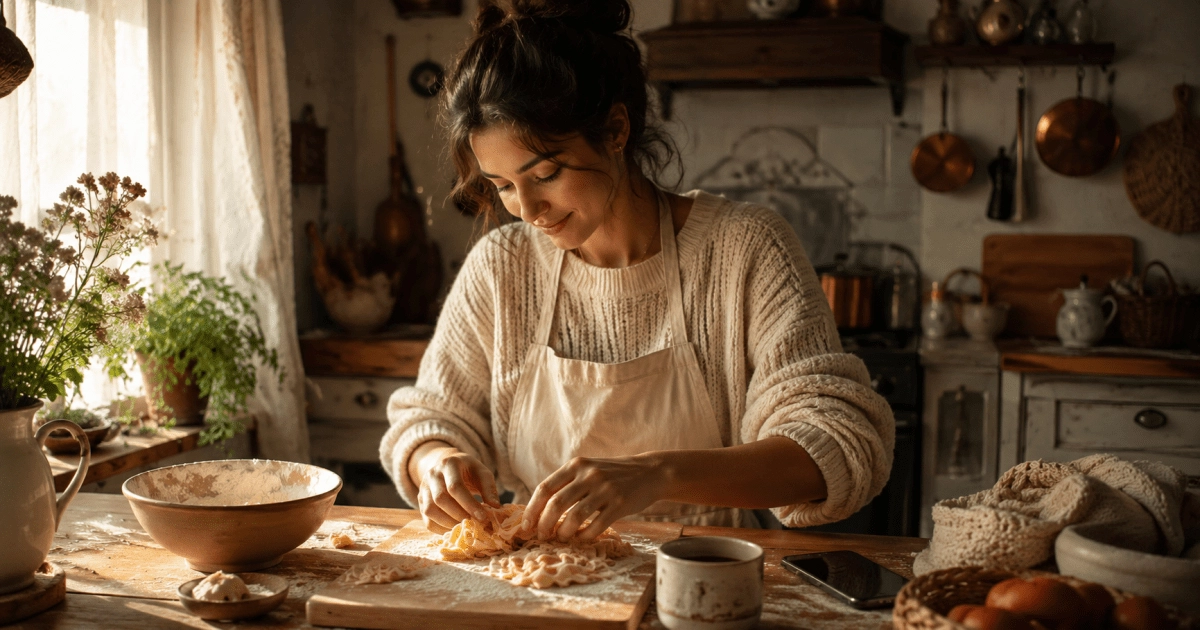

The video begins with a minimal scene: a young woman leaves her cell phone face down on the kitchen table. He doesn't turn it off completely, but he pushes it away. Then he appears kneading pasta, watering plants, folding a tablecloth, pouring coffee into a ceramic cup and sitting next to an open window, without headphones, without notifications, without the obligation to transform every minute into something useful.
The phrase that accompanies the images says: “Entering my nonna era.”
That small, almost domestic gesture sums up a trend that is growing on TikTok and Instagram with a curious name: Nonna Maxxing. The expression combines “nonna” (grandmother in Italian) with the suffix “maxxing”, used on the internet to talk about the search to enhance or take something to the maximum.
But here it is not about looking better, performing more or producing more. The idea is much less anxious: to live a little more like an Italian grandmother.
What is Nonna Maxxing and what it consists of
Cook without rush. Walk in the sun. Eat at a real table. Take care of plants. Make bread. Weave. Sit down and talk. Take a nap without feeling guilty. Get bored for a while without filling the silence with a screen.
The trend gained momentum after the Tallow Twins brand published a manifesto inviting you to spend a “nonna summer”, with homemade meals, slow routines and more life outside the phone. Since then, thousands of users began to share their own versions of that everyday fantasy: afternoons without a clock, long dinners, leisurely walks and kitchens where time seems to flow differently.
A fashion that speaks of fatigue
At first glance, Nonna Maxxing may seem like just another aesthetic: floral tablecloths, fresh tomatoes, linen dresses, bright kitchens and soft background music. But its success says something deeper about a generation that grew up connected all day and began to feel that digital life was taking its toll.
For years, networks promoted a hyperproductive version of existence. You had to get up early, train, read, undertake, organize your week, prepare healthy meals, take care of your skin, respond to messages, create content, and also look relaxed while doing all that.
Nonna Maxxing appears as a reaction to this exhaustion. It does not propose a revolution or a total renunciation of technology. Nobody is throwing their cell phones into the sea. What many are looking for is something more modest and, perhaps for that reason, more possible: recover spaces where not everything is mediated by a screen.
“I realized that I didn't know how to cook without putting on a podcast,” says Emma, ​​26, in one of the videos circulating under this trend. "It wasn't because I wanted to learn something all the time. It was because the silence made me uncomfortable. One day I made pasta without listening to anything and at first it seemed strange. Then I felt a calm that I didn't remember."
That type of testimony is repeated. Young people who do not want to abandon the internet, but do want to stop feeling like they live within it.
You can see: Why AI chatbots may be making you dumber
The paradox of disconnecting on TikTok
The most interesting thing about the phenomenon is its central contradiction: thousands of people use TikTok to explain why they want to spend less time on TikTok. They film their attempts to disconnect, edit slow routines, publish afternoons without a cell phone and turn the pause into content.
That paradox does not invalidate the trend. Rather, it makes it very typical of this moment. Social networks are, at the same time, the problem and the place where we talk about the problem.
The phenomenon fits into a broader conversation about digital fatigue. Pew Research Center reported that nearly half of U.S. teens say they are online “almost constantly,” a sign of the extent to which constant connection has become a part of everyday life.
Therefore, when someone shows an afternoon making pasta, reading in the sun or drinking coffee without checking messages, they are not just showing a domestic activity. He is selling—even if unintentionally—a fantasy of rest.
It's not nostalgia, it's necessity
There's something tempting about imagining that grandmothers lived better because they had fewer screens. The reality, of course, was more complex. But Nonna Maxxing does not seem to seek a literal return to the past. It takes some images of that life—the home-cooked meal, the shared table, the slow time, the contact with the manual—and turns them into an emotional response to the present.
“My grandmother never talked about wellness,” says Julia, 31, in a viral publication. "But she walked every day, cooked real food, sat and drank coffee with her neighbors, and didn't apologize for resting after lunch. I pay apps to try to do something similar."
The phrase sums up the charm of the trend: what was once routine now appears as luxury.
Cook, walk, rest
Among the habits that are most repeated in Nonna Maxxing's videos are cooking from scratch, walking without an urgent destination, spending more time outdoors, fixing things with your hands and sharing long meals. They are not new or extraordinary practices, but they contrast with the speed of a life organized by notifications.
They also connect with an idea that different wellness specialists have been pointing out: not all rest occurs when we sleep. Sometimes resting also means recovering attention, lowering stimuli and doing something that does not have an immediate reward.
In that sense, Nonna Maxxing functions less as a to-do list and more as a symbolic authorization. Let's say: I don't have to convert every free minute into productivity. I can cook slow. I can walk without recording everything. I can sit in the sun without justifying it.
The Guardian described Nonnamaxxing as a kind of generational antidote to modern malaise, inspired by habits associated with longevity, community bonds and home-cooked food. Simple, everyday things that in these times seem to be felt (and shown) as acts of resistance.