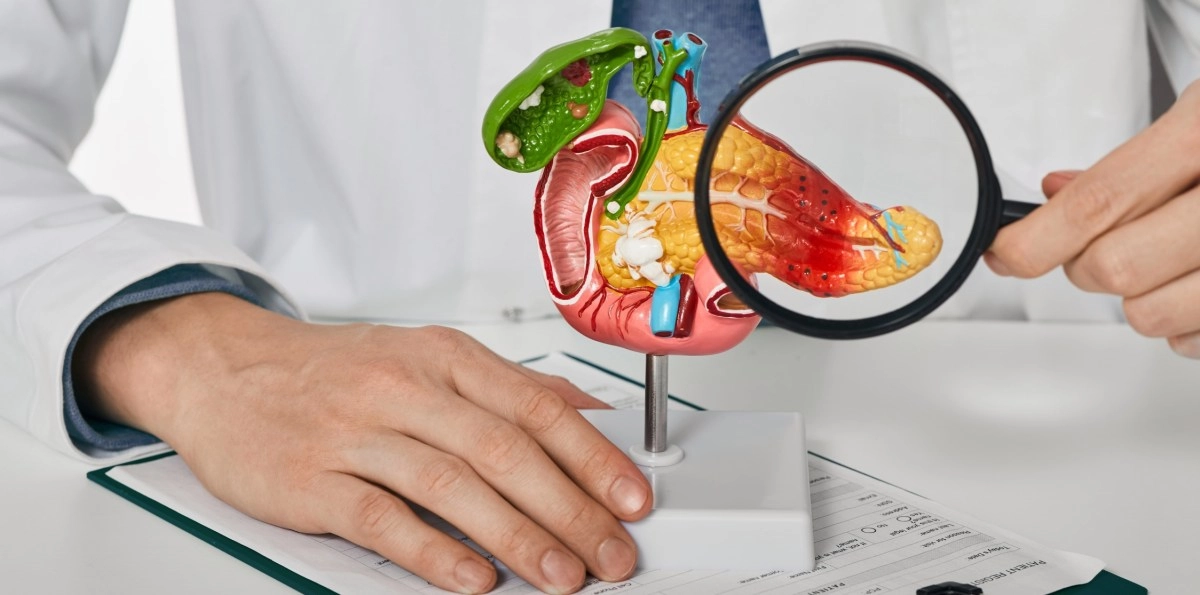

The pancreas, that discreet organ located behind the stomach, performs vital functions in digestion and blood sugar regulation. However, when the cells of this organ begin to grow uncontrollably, one of the most fearsome enemies of modern medicine develops. Pancreatic cancer accounts for only 3% of all diagnosed cancers, but it is responsible for 7% of all cancer deaths, a disproportion that reveals its lethal nature and the urgency of understanding it better. Unlike other types of cancer where medical advances have significantly improved survival rates in recent decades, pancreatic cancer has remained a persistent challenge. Its late detection, rapid growth, and resistance to conventional treatments make it the third deadliest cancer in developed countries, with projections suggesting it could climb to second place in the coming years. Understanding the characteristics that make this cancer so devastating is fundamental to gauging both the challenge it presents and the importance of ongoing research. Silent Killer: Pancreatic cancer has earned its reputation as one of the deadliest cancers for a relevant reason: it is virtually invisible in its early stages. The pancreas's deep location in the abdomen, surrounded by other organs, means that tumors can grow without causing noticeable symptoms until they reach a considerable size or spread to nearby structures. When signs such as persistent abdominal pain, unexplained weight loss, jaundice, or digestive problems finally appear, the disease has often already progressed to advanced stages where treatment options are limited. The statistics are stark and grim. The five-year survival rate for all stages combined is barely 12%, a figure dramatically lower than the 65% for breast cancer or the 90% for early-detected prostate cancer.This disparity is explained by the fact that approximately 80% of patients receive their diagnosis when the cancer has already metastasized or is locally advanced, severely limiting the possibilities of curative surgery, which represents the only real option for long-term survival.
Risk Factors and Vulnerable Population
Although anyone can develop pancreatic cancer, certain factors significantly increase the risk. Smoking tops the list, doubling or tripling the chances of developing the disease and being responsible for approximately 25% of cases. Advanced age is another determining factor, with 90% of diagnoses occurring after age 55 and a peak incidence between 65 and 75 years.
Obesity, long-standing type 2 diabetes, chronic pancreatitis, and excessive alcohol consumption have also been identified as modifiable risk factors.
However, between 5% and 10% of cases have a hereditary component, linked to mutations in genes such as BRCA1, BRCA2, or those associated with Lynch syndrome. People with a direct family history of pancreatic cancer face a two- to three-fold increased risk compared to the general population, which has led some specialized centers to offer surveillance programs for high-risk families.Battle Against a Resilient Enemy
Treating pancreatic cancer represents one of the greatest challenges in modern oncology. Surgery, known as the Whipple procedure when it affects the head of the pancreas, is technically complex and only viable in approximately 20% of patients at the time of diagnosis. Even when it is possible to surgically remove the tumor, recurrence rates are high, making it necessary to combine surgery with adjuvant chemotherapy.
For advanced or metastatic cases, chemotherapy becomes the primary line of defense, although the results remain modest. Regimens such as FOLFIRINOX or the combination of gemcitabine with nab-paclitaxel have shown improvements in survival, but at the cost of significant side effects and with benefits measured in months rather than years. Radiotherapy is used in selected cases, particularly for locally advanced tumors that are inoperable but have not spread. The particular biology of this cancer largely explains its therapeutic resistance. Pancreatic tumors develop a dense, fibrous microenvironment called desmoplastic stroma that acts as a physical barrier, making it difficult for drugs to reach the cancer cells. Furthermore, these tumors often present multiple genetic mutations, with the KRAS gene mutation being the most common, present in more than 90% of cases.which gives them exceptional abilities to survive, grow, and evade the immune system.
Advances and Hope
Despite the discouraging outlook, scientific research continues. Current efforts are focused on multiple fronts: developing early detection methods through blood tests that identify specific biomarkers, targeted therapies that attack the particular genetic mutations of each tumor, and immunotherapy that activates the patient's immune system against cancer cells.
The fight against pancreatic cancer requires a multifaceted effort ranging from prevention to advanced research. The medical community continues to emphasize the importance of paying attention to persistent and unexplained symptoms, especially in people over 50. Although many of these symptoms may be due to benign conditions, timely medical evaluation is crucial.
You may also be interested in: