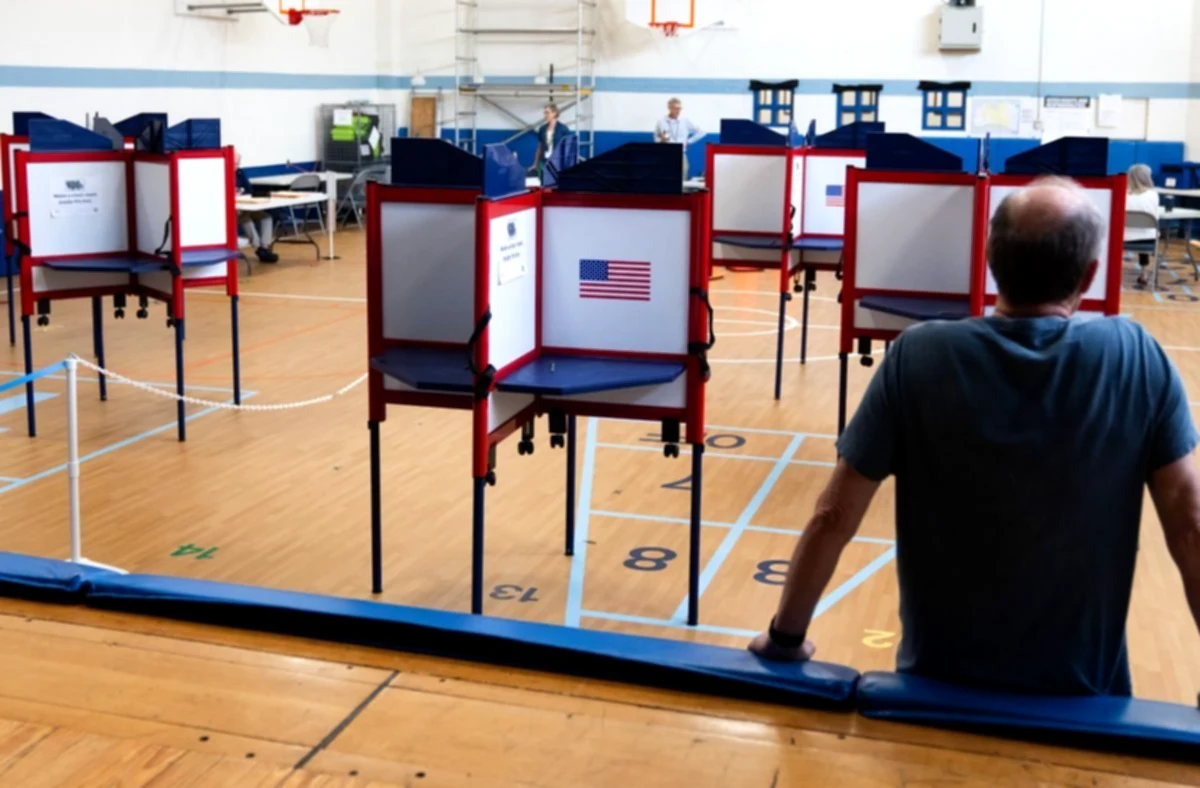

Donald Trump's administration is preparing a deployment of approximately 1,000 election observers from the Department of Justice (DOJ) for the November midterm elections, an operation that seeks to monitor compliance with federal voting laws in different parts of the country.
The figure was revealed by Harmeet Dhillon, deputy attorney general and head of the DOJ's Civil Rights Division, during an interview with Bloomberg. The official stated that the department already sent observers during the primary elections and that it will now considerably expand the operation.
“We will deploy approximately 1,000 election observers in the November election,” said Dhillon, who maintained that this is a regular function of the Justice Department.
According to the information released by the aforementioned media, the DOJ has not yet publicly defined all the jurisdictions where the observers will be. Among the factors it analyzes are possible access problems for people with disabilities, language barriers and places where the government considers there is a risk of electoral fraud.
Federal observers do not administer elections nor do they have the power to decide who can vote. Their role primarily consists of observing procedures and evaluating compliance with federal laws.
The dispute over the electoral rolls
The announcement comes as the Trump administration maintains a court battle to obtain unredacted state electoral rolls, including voters' personal data.
The offensive has encountered numerous obstacles in federal courts. A record from the Civil Rights Litigation Clearinghouse documents multiple lawsuits related to DOJ requests, while court decisions have questioned the use of Title III of the Civil Rights Act of 1960 to demand certain records.
The Department of Justice itself maintains that it has the authority to access that information and maintains litigation in different courts. On its official website, the Civil Rights Division notes that it continues to appeal cases related to voter rolls, including the litigation against Michigan.
Dhillon even suggested that the dispute could reach the Supreme Court: “It is possible that our next step will be the Supreme Court.”
The official also assured that in the states that have cooperated there are hundreds of thousands of deceased people and tens of thousands of people who are not citizens within the registers. However, during the interview he did not identify the states or present evidence to support those numbers, and acknowledged that the DOJ has yet to verify whether any of those people voted illegally.