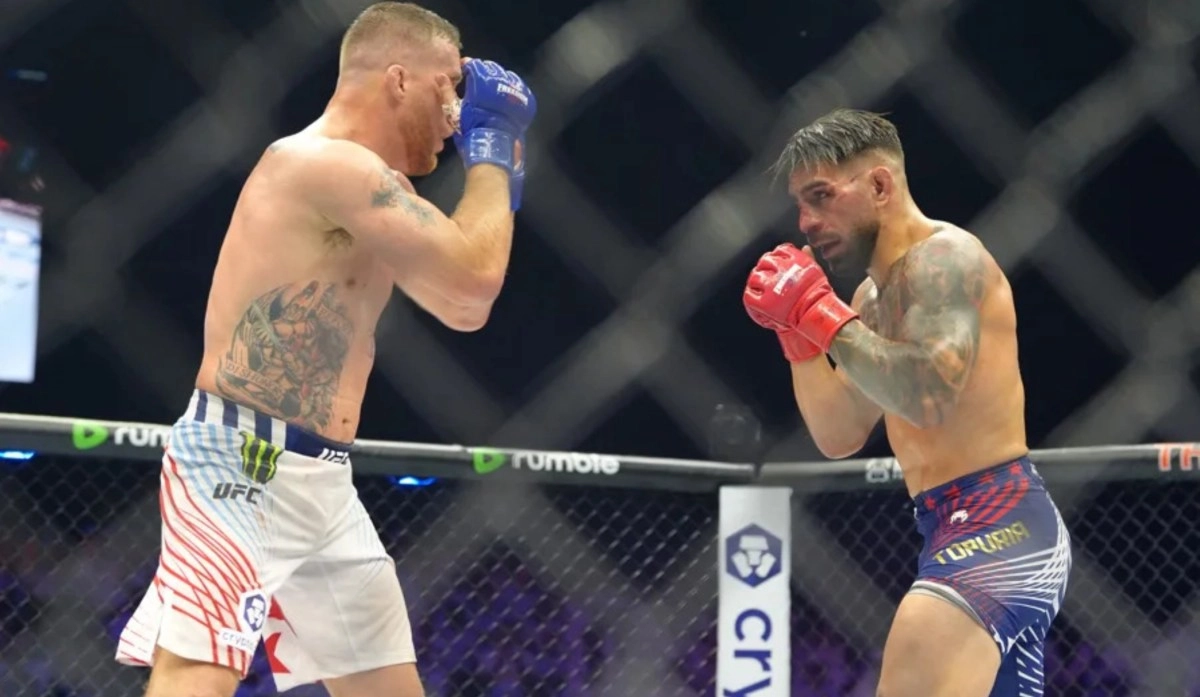

The recent fight between Ilia Topuria and Justin Gaethje, held at the White House, headquarters of the United States government, marked the first defeat in the Spanish fighter's career. Despite the intense competition and his efforts to continue, the decision to stop the fight was made by his brother after receiving medical recommendations due to the severity of the injuries.
Fractures, like the orbital one Topuria suffered, are common in the world of mixed martial arts. While many types of fractures, such as nasal fractures, do not require surgery, others can become complicated and require surgical intervention.
These types of fractures, since they affect the skull, do not require immobilization, since in that part of the body the only bones that move are those of the jaw, José Manuel Argüello, a specialist in the Department of Orthopedic Surgery and Traumatology at the Clínica Universidad de Navarra (Spain), explains to EFE Salud.
In addition, less visible injuries, such as fractures in the hands and forearms, are common.
Impact on mental health
Brain impact is a significant concern from blows to the head. According to experts, repeated blows to the skull can lead to conditions such as chronic traumatic encephalopathy, associated with neurodegenerative diseases such as Alzheimer's.
This risk is amplified by the “second hit” phenomenon, where an already stunned athlete receives a new impact.
“There is a high risk of a much more serious concussion occurring,” highlights the also member of the Spanish Society of Neurology, who points out that the clinical manifestation of a brain injury will depend on the part of this organ affected.
Questionable future of the fighters
The consequences of injuries in mixed martial arts are not only physical. With an elevated risk of brain damage and long-term health complications, the medical community warns of the need for greater awareness and health protocols.
The career of fighters like Topuria highlights the fine line between sport and health danger.
Symptoms of an orbitofacial fracture
The initial symptoms of an orbitofacial fracture mainly include swelling and bruising around the eye, severe pain in the fracture area (especially in the cheek when opening the mouth or chewing), double, decreased or blurred vision, and difficulty moving the eye up, down or sideways.
Numbness in the cheek, upper lip, or upper teeth on the same side as the injured eye is also common due to nerve trauma caused by the fracture, along with deformation of the cheek or forehead and an abnormal position of the eye, which may bulge or sink.
Treatment depends on the severity of the injury. In cases of minor fractures without muscle entrapment or notable ocular subsidence, conservative treatment can be applied with rest, application of ice, analgesics and close monitoring by a specialist. Reconstructive surgery, usually performed under general anesthesia, is considered necessary when there is persistent double vision for seven days or more, muscle entrapment evident on x-rays, significant bone displacement (more than three millimeters from the original location), enophthalmos (eye depression), or when the fracture causes serious functional or cosmetic disorders.
Surgery may involve releasing trapped muscles and reconstructing the orbital wall with synthetic materials, and postoperative discomfort is minimized with medications and anti-inflammatory treatment. It is essential that evaluation and surgery, if necessary, be performed by a specialized oculoplastic surgeon. Recovery can range from weeks to months, and ongoing follow-up with an ophthalmologist is essential to monitor recovery and treat any complications, including possible rehabilitation with vision therapy for double vision and specific exercises to improve eye mobility.
You may also be interested in:
· No more men's workouts! FIFA launches project to improve the health and performance of female athletes· It's not just a matter of genetics! Factors that make women live longer than men · Head trauma in sports and its victims: Claude Lemieux's family donates his brain for research