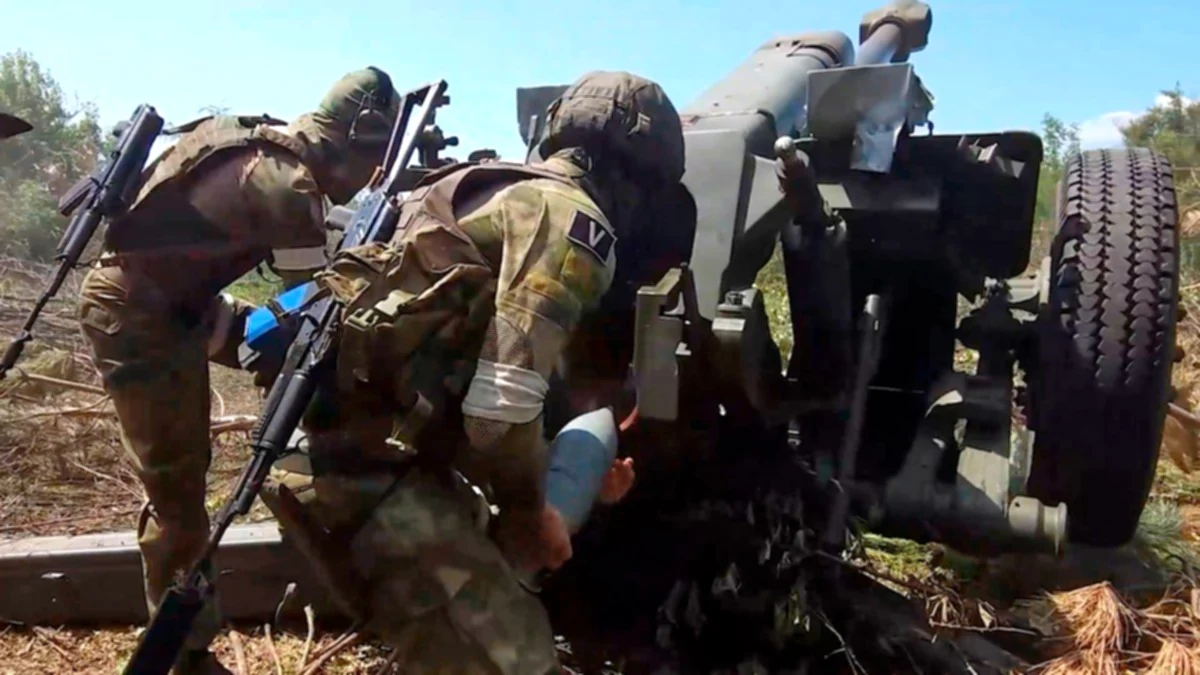

Amnesty International pointed to Russian ties to a new investigation, which includes false job offers, force, threats, and exploitation of people in migrant or financially vulnerable situations, which include practices that in many cases constitute human trafficking.
According to the report, low-income people of the Global South have primarily been contacted by selection networks. People from Brazil, Colombia, Cuba, Egypt, Sierra Leone, Somalia, Sri Lanka, and South Africa have stories that Amnesty has documented. Some of them claimed to have traveled on the hope of finding well-paying civilian jobs and ended up deployed on the Russian before.
According to Agnès Callamard, Secretary General of Amnesty International," Amnesty's investigation shows that the Russian armed forces are strengthening their ranks with foreigners in economic vulnerability and using them as cannon meat in the war against Ukraine. "
The Organization came to the conclusion that the degree of abuse and coercion that were detected frequently fell under the terms of the United Nations Palermo Protocol's definition of trafficking in people.
One of the main ways that the firm has documented is to provide relatively human jobs in fields like security, logistics, building, information technology, or transportation, accompanied by high salaries and, in some cases, the possibility of quickly obtaining Russian citizenship.
Amnesty International claims that the fraud begins even before the subjects appear in Russia. Individuals in Brazil, Colombia, Sierra Leone, Somalia, Sri Lanka, and South Africa were seized by local agents and used to post jobs that didn't involve military services.
Some immigrants discovered that the circumstances were utterly unique once they arrived on Russian soil.
A North American person who responded to an offer to work as a pilot in Poland has been tracked down by Amnesty International. He was informed by a middleman that he was traveling to Moscow to pick up a trailer after talking to him via WhatsApp.
When his family arrived in Moscow, they discovered everything he was carrying and informed him that he would not leave Poland and that he would work as a soldier.
Another foreigners gave assurances that they were persuaded to signal Russian documents because they were confused. They were then subjected to surveillance, including removing their documents and cellular phones, restricting their movements, and transferring them to military installations.
Amnesty also found cases of Cuban and Egyptian citizens imprisoned for alleged possession of drugs who were offered to sign military contracts as an alternative to fulfilling or ending their prison sentences.
For the organization, these cases show how migration irregularity, incarceration and economic precariousness can become instruments to fuel military recruitment.
“Either you go to jail or we kill you.”
The possibility of leaving the armed forces after signing would also not be guaranteed.
Pedro, a Brazilian computer specialist, said he arrived in Russia after accepting what he believed was a contract for a well-paid technology employment. When he informed a superior that he wanted to leave, he received a threat.
“If you try to escape, either you go to jail or we kill you,” he recalled.
Most were sent to active combat zones after just two weeks of training, despite many lacking military experience.
The respondents also described insufficient equipment and difficulties in communicating with their superiors due to language barriers. For Amnesty International, these elements indicate that the aim of the recruitment was to rapidly increase the number of personnel available for the front, with little consideration for their preparedness or safety.
The United Nations Protocol of Palermo defines trafficking as the recruitment, transportation or reception of persons by force, coercion, fraud, deception or abuse of a vulnerable situation for the purpose of exploitation.
Amnesty International argues that several of these elements appear simultaneously in the investigated cases: deception about the work they would do, exploitation of economic or migration vulnerabilities, document retention, movement restrictions, threats and subsequent use in military operations.
The organization, however, does not claim that all foreigners fighting in the Russian ranks are victims of trafficking. Their conclusion focuses on cases where recruitment was accompanied by coercion, fraud, deception or exploitation of vulnerability situations.
Thus, the NGO notes that Russia has also used economic incentives to attract new soldiers. The government offers a federal payment of about $4,800 for signing a military contract, a sum that can increase with contributions from regional authorities.
In the case of foreigners, Amnesty International also documented promises of high wages and quick access to Russian citizenship, aimed primarily at people in vulnerable economic or migration situations.
However, several of the respondents assured that the promises were not fulfilled. Some received only a fraction of the money offered before being sent to the front, while others claimed to have received no payment.