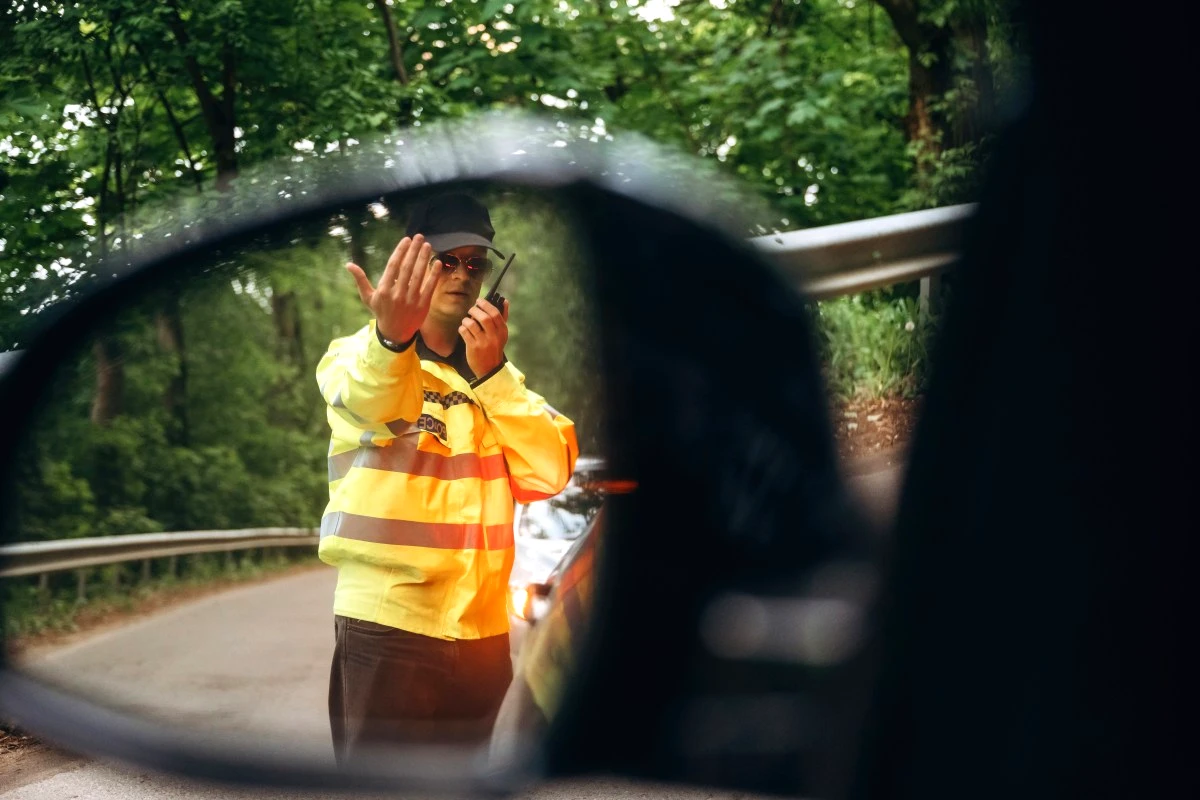

A traffic officer in the United States has the authority ( and duty ) to request pertinent documents, pose questions about the stop's justification, and take appropriate security measures. However, you are not allowed to search any area of the automobile, even the glove box.
The Fourth Amendment shields people from unreasonable searches and seizures, according to the California-based law firm My Rights Laws. But, US legislation includes a number of instances that may permit inspections without a permit.
This implies that the particular situation determine a customers officer's ask to open the car's glove compartment.
Read more about 5 Walmart infractions that result in fines for misbehavior.
Is a traffic officer search a car's glove box?
Never always. That is, a traffic infraction, such as exceeding the speed limit or entering a faulty mild, does not automatically issue the entire vehicle to a search.
The Supreme Court has determined that illegal vehicle searches properly be permitted in some instances.
For instance, the landmark decision Arizona v. Gant from 2009 found that a car search can only be conducted under certain circumstances: when the arrestee can also get the customer room or when there is a compelling reason to believe the automobile contains evidence related to the crime he was accused of engaging in.
This is crucial because not all auto searches conducted during a prevent have the same legal justification.
One of the main exceptions is probable cause. If there are concrete facts that allow one to reasonably believe that there is evidence of a crime or contraband inside the vehicle, the police may have the authority to search the car without first obtaining a warrant.
What if the officer asks to open it to search for the documents?
There is an important difference here. If your vehicle registration, proof of insurance, or other documents are stored in the glove compartment, you can inform the agent before making any moves.
A prudent course of action is to say something like, "The documents are in the glove compartment. Can I open it and give them to you?" This prevents the movement from being interpreted as suspicious and allows the officer to know exactly what you are going to do.
But if the officer wants to open the glove compartment to look for other things, you can ask what the reason for the search is and clearly state that you do not give your consent, without arguing or physically resisting.
Saying that you do not authorize a search does not physically prevent an agent from conducting it, if he believes that there is a legal exception that allows him to do so. The question of whether the search was constitutional may end up being evaluated later by a court.
During a traffic stop, it is best to remain calm, follow legal instructions, and not attempt to physically prevent a search. If you believe that your rights have been violated, you can seek legal advice later.
You may be interested in:
· How to live in Supai, a hidden town in the Grand Canyon: the mail arrives by mule · Fines and service cuts: the drastic measure of this water company in Utah · Death penalty in Arizona: why it can take up to 20 years to be carried out