
A recent survey conducted by The Guardian has revealed that Mexican cartels, including Sinaloa and Jalisco New Generation (CJNG), have established operations in at least 12 countries across Europe.
A comprehensive report, compiled by investigative journalist Andrei Netto through analysis of police and intelligence data, along with insights from judges, prosecutors, and subject matter experts, reveals the widespread growth of transnational criminal organizations operating in Mexico, Colombia, Brazil, Ecuador, Venezuela, and the United States.
Recent studies indicate that these entities have formed connections with European organized crime groups in order to broaden their operations, primarily centered on the lucrative drug trade, within a market offering substantial profit opportunities.
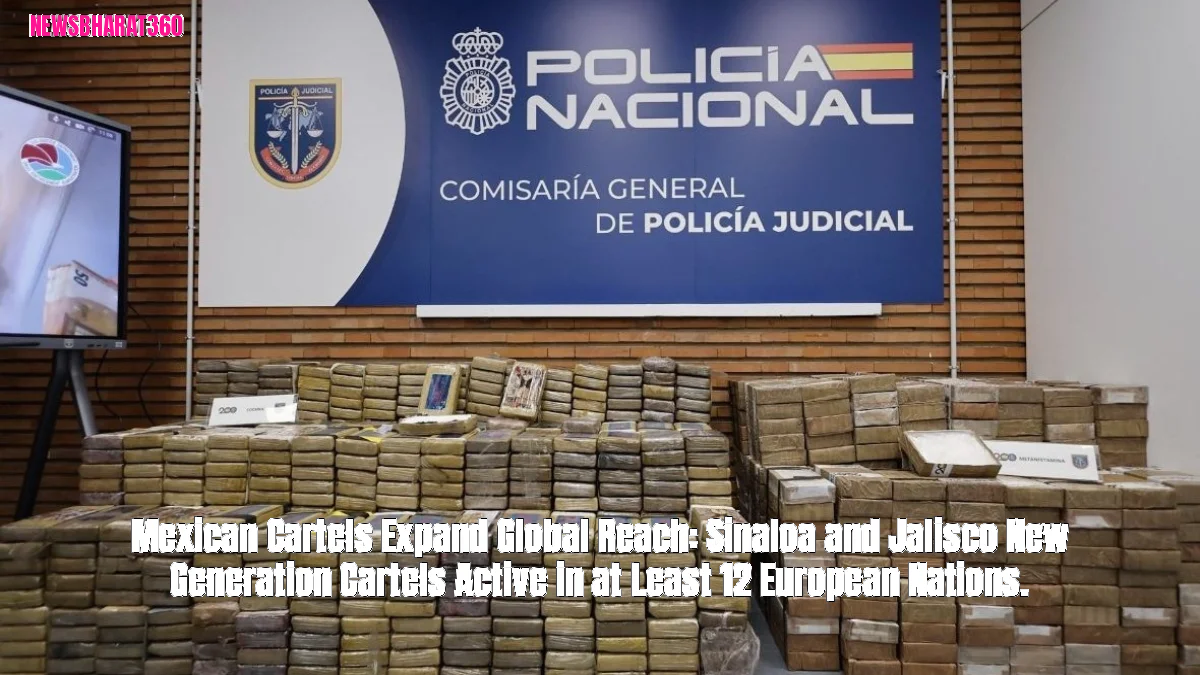
Cocaine seizures in Europe have seen a significant surge, with a 471% increase in the period spanning 2014 to 2024, as per data compiled by the British authorities.
The number of clandestine laboratories dismantled during that period rose significantly, with some facilities identified as being used to manufacture synthetic drugs.
A significant presence of these networks has been identified in several European territories, including Spain, Portugal, the Netherlands, Belgium and France. Additionally, evidence of their activities has been found in Germany, Romania, Croatia and Slovakia.
Latin American organizations may be expanding their influence due to partnerships with local criminal groups and the implementation of flexible operational strategies that do not necessitate a permanent presence of their members.
Mexican cartels Sinaloa and CJNG have been identified as key players in the country's organized crime landscape.
A recent report highlights the involvement of Mexican cartels alongside Colombian organizations, specifically the Gulf Clan, the National Liberation Army (ELN) and dissident factions of the Revolutionary Armed Forces of Colombia (FARC).
The report specifically highlights several notorious organized crime groups, including the Primeiro Comando da Capital (PCC) and the Red Commando from Brazil, as well as the Aragua Train from Venezuela, and the Barrio 18 and MS-13 gangs.
Organized crime groups have leveraged their ties with European underworld organizations to bolster their supply chains and increase their global influence.
The involvement of Mexican groups in European territories does not necessarily signify direct control. Their operations can also be facilitated through intermediaries, emissaries, and commercial partnerships with local organizations.
The European continent has emerged as a highly sought-after destination for illicit drug trafficking operations, with its geographical location and extensive border networks making it an attractive hub for organized crime groups.
The expansion of Latin American organized crime groups is closely tied to a surge in cocaine production in South America and a corresponding rise in European demand.
Research indicates that the European continent's favorable price dynamics and profit margins make it an appealing location for organizations looking to expand their global presence and diversify their market reach.
Research indicates that the phenomenon has evolved beyond the international trafficking of narcotics, now encompassing complex relationships with local entities and transnational organized crime networks.
Research by The Guardian highlights the importance of international cooperation and the exchange of information between authorities in combating the spread of Latin American organized crime in Europe.