

More people are becoming homeless in L.A.
Homelessness on the rise in Los Angeles County and City, despite billions of dollars invested over the past decade
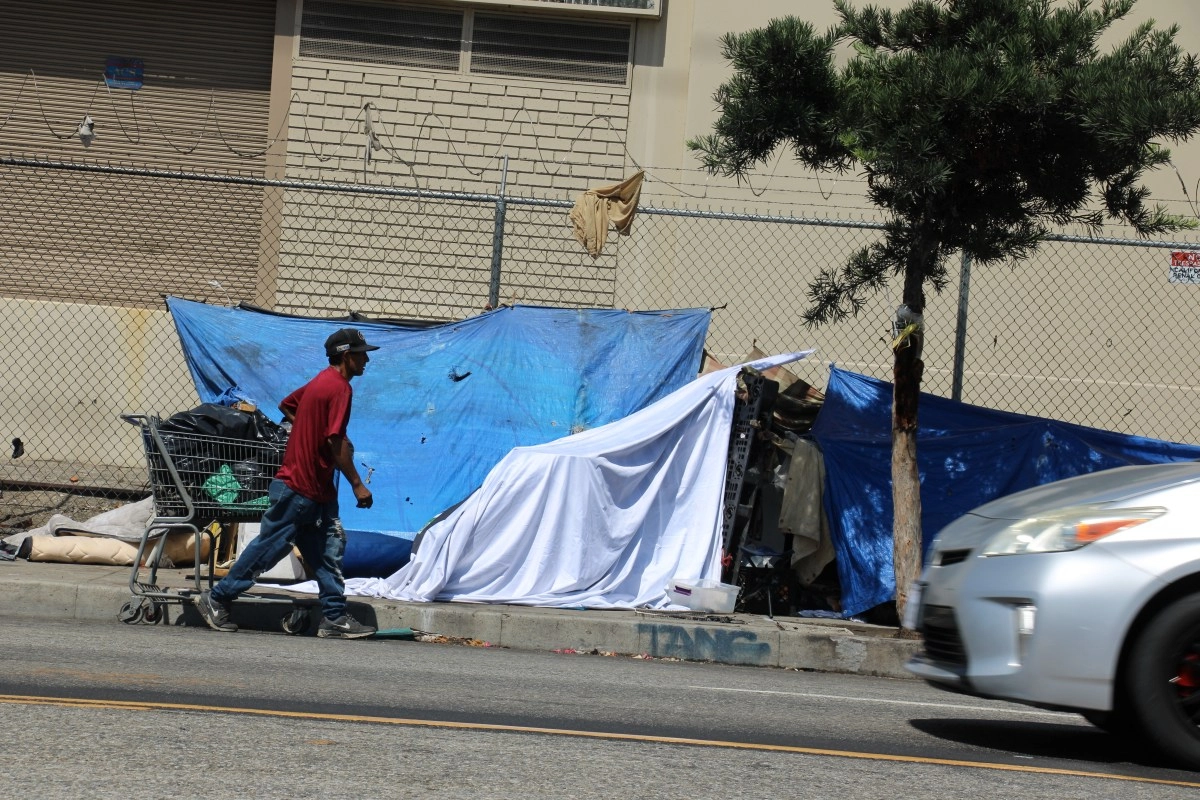

An increase in homelessness was identified by the standard 2026 poor count in the Los Angeles urban location, with an estimated 73, 000 people experiencing homelessness in Los Angeles County and 45, 194 in the city of Los Angeles.
Late in January, the Los Angeles Homeless Services Authority ( LAHSA ) conducted the count over the course of three days.
We are aware that these variations are real people- actual people struggling to find a permanent home in our area, according to GitaO'Neill, interim executive director of LAHSA, despite the statistics no saying that this variation is statistically significant.
The good news is that we now have a clear understanding of why our advancement has stagnated and what it takes to get back on track ,O'Neill said. " This may not be what people want to hear, but the good news is that this may not be what people want to hear," he continued.
O'Neill attributed the rise in homelessness to economic hardship, particularly the cost of living in Los Angeles. He noted that the region's social safety net must do more to help people keep their homes.
multi-million penny investment in ten years
All four levels of government, including the federal, state, county, and local, have allocated between$ 10 billion and$ 15 billion in combined appropriations to address the homelessness crisis, but they have had no tangible impact.
Do you believe that this issue will ever be resolved? GitaO'Neill was asked by La Opinión.
We are optimistic, he said. It's a very important issue, they say.
The social issues of the poor have not been resolved for years, both in the area and the state, despite multimillion dollar funding.
A voter-approved general obligation bond issue known as Proposition HHH ( 2016 ), worth$ 1. 2 billion. Recent Los Angeles City Council president Marqueece Harris-Dawson, a councillor in Los Angeles, co-authored the measure.
10 512-unit tasks were constructed in the 8th District for seniors, their people, veterans, and those who have left or are experiencing poverty.
According to the proposed proposal, the city of Los Angeles may construct 10,000 homes over a 10-year time, with a 2026 date for compliance.
Additionally, Determine H, passed by Los Angeles County taxpayers in March 2017, was subject to a quarter-cent sales tax.
The estimate anticipated a$ 355 million annual series that would help pay for both prevention and comprehensive care for the unemployed.
This measure's set began in October 2017. To" coordinate" aid at the local level, tens of nonprofit organizations, state agencies, and cities receive the proceeds.
Determine H, which was approved by the state Board of Supervisors, was intended to assist another 30, 000 families or individuals in avoiding poverty and make it possible for 45, 000 to move into permanent housing. Its authenticity expires in 2027.
According to Helen Chavez, the Board of Supervisors approved a$ 908 million funding deal for poor housing and treatment programs for fiscal time 2025-26 in April 2025.
The Los Angeles County Department of Homeless and Housing Services ( HSH)'s$ 843 million spending plan was unanimously approved by the five supervisors on February 3rd of this year ( Hilda Solis, Kathryn Barger, Janice Hahn, Holly Mitchell, and Lindsey Horvath ).
Prioritizing the most crucial initiatives and services for reducing poverty, this program places a premium on serving disproportionately affected populations, including families, youth, and domestic violence victims.
adjustments to grants
In April 2025, LAHSA suspended fresh enrollment and the allocation of everlasting housing, according to GitaO'Neill, through time-limited subsidies.
The evacuation system experienced a bottleneck that slowed our advancement in ending homelessness, he said, adding that because this low-access, short-term leasing option was unavailable.
Without the access to housing offered by time-limited subsidies (TLS), people found it more difficult to move from temporary accommodation to permanent housing or get off the streets to access such accommodation.
“This loss of efficiency is the main cause of this year's results,” he said, noting that, “if we want our community to make progress again in reducing homelessness, we must ensure better access to housing.”
He trusted that, in addition to the impact of local measures and Measure A and the Half ULA in the city of Los Angeles, - financed by taxes - they will help keep people in their homes and encourage the construction of new homes.
“We must win the court battle [against HUD] to save the homes of more than 11,000 formerly homeless people — in Los Angeles County and the region — thanks to federal subsidies,” O’Neill said.
On June 29, LAHSA sued the U.S. Department of Housing and Urban Development (HUD) to prevent the federal suspension of more than $150 million in regional funding intended to serve the homeless.
“The only thing I would like is to have a place to live alone, that has a kitchen and a place where I can sleep peacefully and take a bath every day,” said María Elena, a 65-year-old woman, who was sitting in a wheelchair on Alameda Boulevard, taking refuge in the little shade of the street. “In the 10 years that I have lived on the streets, no one has ever offered me help.”
Skid Row, the epicenter of the crisis
For Los Angeles Mayor Karen Bass, the 3.4% increase in the number of homeless people in the city reflects multiple factors driving homelessness, including rising housing costs, economic pressures, and reductions in state and federal funding.
“Although some people who managed to access housing face difficulties and become homeless again, the city remains focused on connecting people with permanent housing and support services to improve their long-term stability,” Bass told La Opinión.
Bass emphasized that the Inside Safe program has achieved lasting results in communities. Of the 130 camps intervened through Inside Safe, 108 remain clean, which represents more than 80% of the sites.
“This demonstrates that progress has been maintained in neighborhoods across the city, including the San Fernando Valley, South and East Los Angeles, among other communities,” he said.
He noted that reductions to the State's Homeless Housing, Assistance and Prevention Program (HHAP) have limited the resources available for local governments to expand shelters, strengthen outreach efforts, develop more housing and offer support services to people who need them.
However, the new homeless count reveals that nowhere else has the most dramatic increase been in Skid Row, the area considered the epicenter of the homelessness crisis: from 3,427 people in 2025, this year there was an increase of 788 people – approximately 23% – in just one year.
Fewer homeless people in the Antelope Valley
Supervisor Kathryn Barger (District 4) was encouraged to see a 37% reduction in the number of unsheltered homeless people in the Antelope Valley, showing that targeted strategies can make a significant difference.
"I also understand how the public measures success. Residents look to our streets as the most visible indicator of whether we are making progress, and too many still see people living in crisis. We have to recognize that reality," the official stated.
Barger recognized that if fundamentally different outcomes are wanted, the biggest barriers standing in our way must be addressed.
"Los Angeles County cannot solve this crisis through housing alone. We also need the ability to provide intensive and timely treatment for people suffering from serious mental illness and substance use disorders."
She has advocated for greater local flexibility to expand access to those services because federal restrictions continue to limit the ability to treat people on the scale the homelessness crisis demands.
Solís: leadership with solutions
Meanwhile, Los Angeles County Board of Supervisors Chairwoman Hilda L. Solís (District 1) called the 1.2% increase in homelessness “slight.”
"The most recent homeless count reflects the challenges that communities across Los Angeles County face every day. While we have made significant progress, too many residents still struggle to find stable housing," he said.
Solís specified that in his district he continues to lead with solutions.
“Over the past decade, I have helped create more than 10,000 affordable housing units and driven innovative models that link housing, health care and supportive services, including the Hilda L. Solis Care First Village, Restorative Care Village, Skid Row Care Campus and MacArthur Park Care Collaborative.
"These efforts are making a difference. Through the Skid Row Action Plan, thousands of people have accessed interim housing, and many of them have transitioned to permanent housing," he said.
He added that in MacArthur Park and East Los Angeles, targeted outreach efforts through the Pathway Home program have helped move people off the streets and into safe temporary housing, while connecting them to the care and support they need.
In their district, they are also redoubling their efforts to support residents experiencing homelessness: Montebello and Baldwin Park have established tiny home communities; Pomona opened the Hope for Home shelter, and El Monte used the state's Homekey program to acquire and convert two hotels into long-term housing options for people in need.
“You are not allowed to fail”
Los Angeles County Supervisor Holly J. Mitchell, who represents the 2nd District, called the homeless numbers a reminder that funding cuts and delays in proven solutions can quickly undermine progress made in the fight against homelessness.
“The reality is that, for every person we provide housing to, another two become homeless,” he said. “Ending this crisis requires sustained collaboration and investment at all levels of government.
He added that the Point-in-Time Count offers an important snapshot – although not the complete picture – that should guide the response of the authorities,
This includes ensuring the county's new Department of Homeless and Housing Services fulfills its mission to close gaps, strengthen accountability, and better coordinate efforts between the city, county, and community partners. “As I have said before, this department cannot afford to fail.”
This news has been tken from authentic news syndicates and agencies and only the wordings has been changed keeping the menaing intact. We have not done personal research yet and do not guarantee the complete genuinity and request you to verify from other sources too.