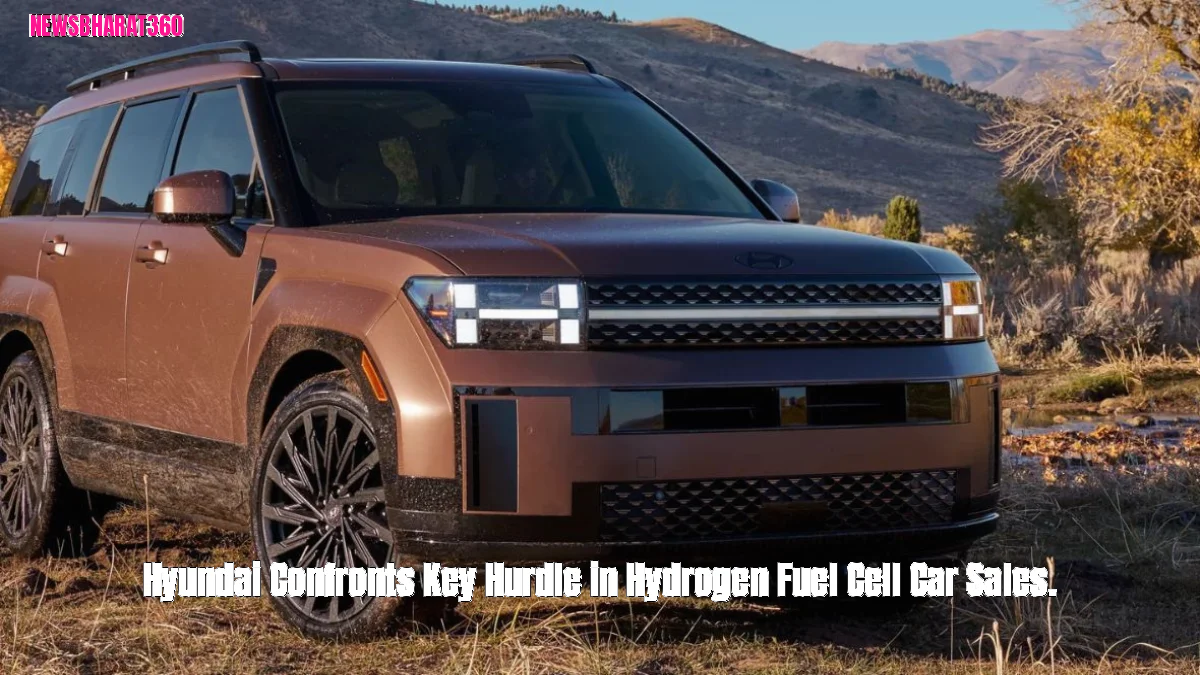

Hyundai remains committed to hydrogen as a viable alternative to traditional passenger vehicles, despite recognizing the challenges of convincing consumers to adopt this technology. The company continues to invest in research and development of fuel cell technology, but its expansion is hindered by two key barriers: the high cost of hydrogen-powered vehicles and the limited availability of supporting infrastructure.
The upcoming 2027 Kia EV6 model will maintain its current lineup of seven distinct versions, with no changes to the number of available options.
Hyundai Australia's Head of Future Mobility and Government Relations, Scott Nargar, emphasized the ongoing relevance of hydrogen technology in passenger vehicles during a recent interview with CarExpert. Notably, he expressed confidence in the future of this technology, stating that hydrogen is not a dying prospect for passenger vehicles.
Ford has conceptualized a vehicle designed to deter theft by remaining stationary and inaccessible when not in use.
The company's manager emphasized that the development of a new generation of models is ongoing, with a key factor being the identification of a customer base to support their progress.
Hyundai has acknowledged that the production and promotion of hydrogen-powered vehicles currently come at a higher cost compared to conventional electric vehicles. The company also noted that this disparity presents a significant challenge for the development of hydrogen-powered heavy-duty vehicles.
The challenges associated with private buyers of hydrogen fuel cell vehicles escalate due to the necessity for specialized refueling stations. These stations necessitate substantial investments and are currently in short supply in many markets, limiting their accessibility.
Hyundai is optimistic that its technology can effectively utilize energy resources in countries capable of producing hydrogen from renewable sources.
Hyundai's second-generation Nexo SUV has commenced its global rollout in 2026, boasting a fuel cell powertrain and presenting attractive options for consumers seeking alternatives to conventional engines.
EPA data indicates that the vehicle model achieves a maximum range of 395 miles on its own, with the Nexo Blue variant capable of up to 442 miles.
A newly developed system is capable of generating 190 kilowatts of power, with its onboard reservoirs designed to store 6.69 kilograms of hydrogen.
Despite the benefits offered, Hyundai still faces a significant commercial challenge, which is establishing a comprehensive network of stations to enable seamless use of these vehicles by its customers.
South Korean companies have garnered support from industry peers in their pursuit of hydrogen fuel cell technology. Toyota is actively advancing this technology through its Mirai model and other initiatives, while BMW is also investing in the development of a fuel cell variant of its X5 vehicle.
Industry leaders have collaborated to drive innovation in the development of next-generation systems, with a focus on lowering production expenses.
Notably, several major automakers have diverged from their hydrogen fuel cell development initiatives. Mercedes-Benz has ceased work on passenger vehicles utilizing this technology, while Honda has discontinued production of the Clarity Fuel Cell. General Motors has also shelved its plans for a new generation of hydrogen fuel cells. Furthermore, Stellantis has cancelled its hydrogen program, effective in 2025.