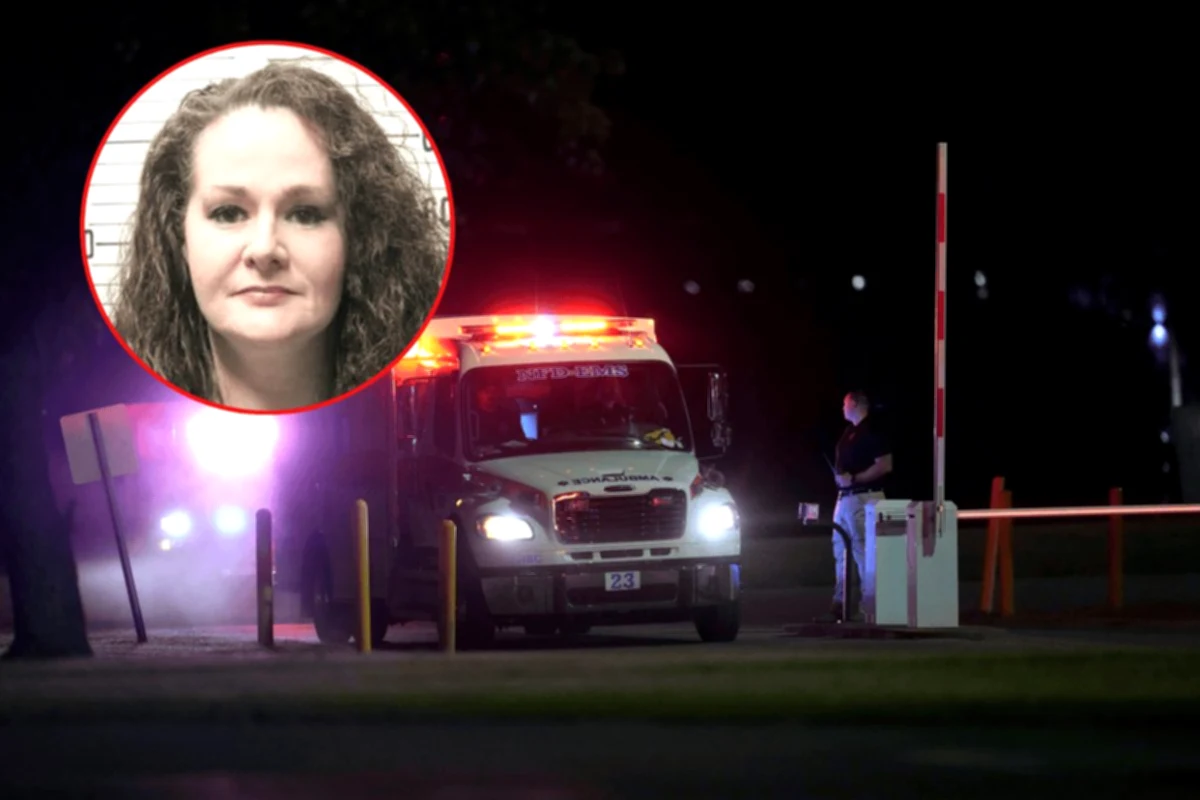

What was supposed to end with the execution of Christa Pike ended up with the death sentence being urgently taken to a hospital. The 50-year-old woman remains in critical condition after receiving two doses of pentobarbital, the drug used by Tennessee to execute people sentenced to death.
The procedure began on Wednesday night in a Nashville prison, but authorities failed to complete the execution. According to his lawyers and media witnesses who were present, Pike continued to breathe and show signs of life after receiving the two doses.
Hours later, she was taken to a hospital to receive medical care. Her lawyers confirmed on Thursday that she is still alive and is receiving treatment to save her life, although they still do not have accurate information about her prognosis.
The execution was marked by problems in administering the medicines. Randy Spivey, one of Christa Pike’s lawyers, said he observed at least seven needles used during the procedure and noted that one of them looked folded when it was removed.
The defense had already warned that Pike had a history of difficulties with his veins, a problem that could complicate the placement of an intravenous pathway.
Witnesses in the execution chamber described Pike as continuing to breathe for much of the procedure. They also heard complaining of discomfort in one of his arms and, subsequently, observed movements and sounds indicating that he was still alive.
After administering a second dose of pentobarbital, the situation did not change as authorities expected.Pike continued to breathe and finally the procedure was suspended.
The problem that ended up surrounding the execution was not entirely unknown to the defense. Pike’s lawyers had previously argued that his difficulties in accessing the veins could pose an obstacle to lethal injection. Pike herself had rejected this method of execution and had sought an alternative.
Her request was to be executed by a female shooting squad, but that option is not available in Tennessee.
For his defense, fear was not simply related to dying.The argument was that a complicated execution could become a lengthy and painful procedure.
One of the central questions now is whether the drug reached the bloodstream correctly. The lawyers have argued that an intravenous infiltration may have occurred, a situation in which the drug ends up in the tissue surrounding the vein instead of entering the circulatory system properly.
That possibility could explain, according to medical experts quoted by U.S. media, some of the symptoms described during the procedure, such as pain, burning, inflammation or colour changes in the arm.
Surgeon Jonathan Groner noted that improper administration could cause a smaller amount of the drug to reach the circulatory system, although determining exactly what happened will require a medical and official investigation.
For now, the Tennessee Correction Department claims that its officials followed the protocol established for execution. The agency said the procedure was carried out in accordance with the rules approved by the state.
The incident prompted immediate reaction from the state authorities. Governor Bill Lee announced that all planned executions in Tennessee would be suspended for the rest of 2026 and ordered an independent investigation to determine what happened during Pike's procedure.
The decision also affects the next scheduled execution in the state, corresponding to Gary Wayne Sutton, scheduled for December.
Lee said Pike's execution represents a serious situation and that the state must determine why the procedure did not produce the expected outcome.
The episode comes after another problem with an execution in Tennessee this same year. In May, authorities could not establish an appropriate intravenous route to execute Tony Carruthers, so his execution was postponed.
The sentence that led Pike to the death corridor dates back to 1995, when he was 18. Pike was found guilty of the death of Colleen Slemmer, who was also a young woman. According to the case records, Pike and two other people were involved in the murder.
The death sentenced in Tennessee, Christa Pike, has just survived two lethal injections. Her lawyer said they couldn’t kill her and that Pike is snoring. Now they will appeal to stop the execution. An ambulance arrived at the prison and will assist you with the risk of? pic.twitter.com/WKG4WDX7aL
The woman spent three decades in the death corridor before Tennessee set the date for her execution.
The procedure was surrounded by a historical particularity: Pike would have been the first woman executed in Tennessee in more than 200 years. The U.S. Supreme Court allowed the execution to continue after various legal remedies attempted to stop it.
While Pike remains hospitalized, his legal team is looking for answers on what happened and has requested that his death sentence be revised.
His lawyers have also questioned what measures exist when a lethal injection execution fails after the drugs have already been administered.
Just In: Convicted Killer Christa Pike is now in critical condition after surviving two lethal injection attempts in Tennessee, according to her attorney."Christa is alive right now," attorney Randy Spivey says, adding that Pike is receiving "lifesaving care" at a hospital.? pic.twitter.com/JxTkWV9dun
The situation leaves several unknowns open: what is the extent of the injuries Pike suffered, what provoked the failure of the procedure and what will happen legally with his sentence.
For now, confirmed information is that Christa Pike is still alive and remains in critical condition, while Tennesseeins suspended executions and prepares an external review of what happened.