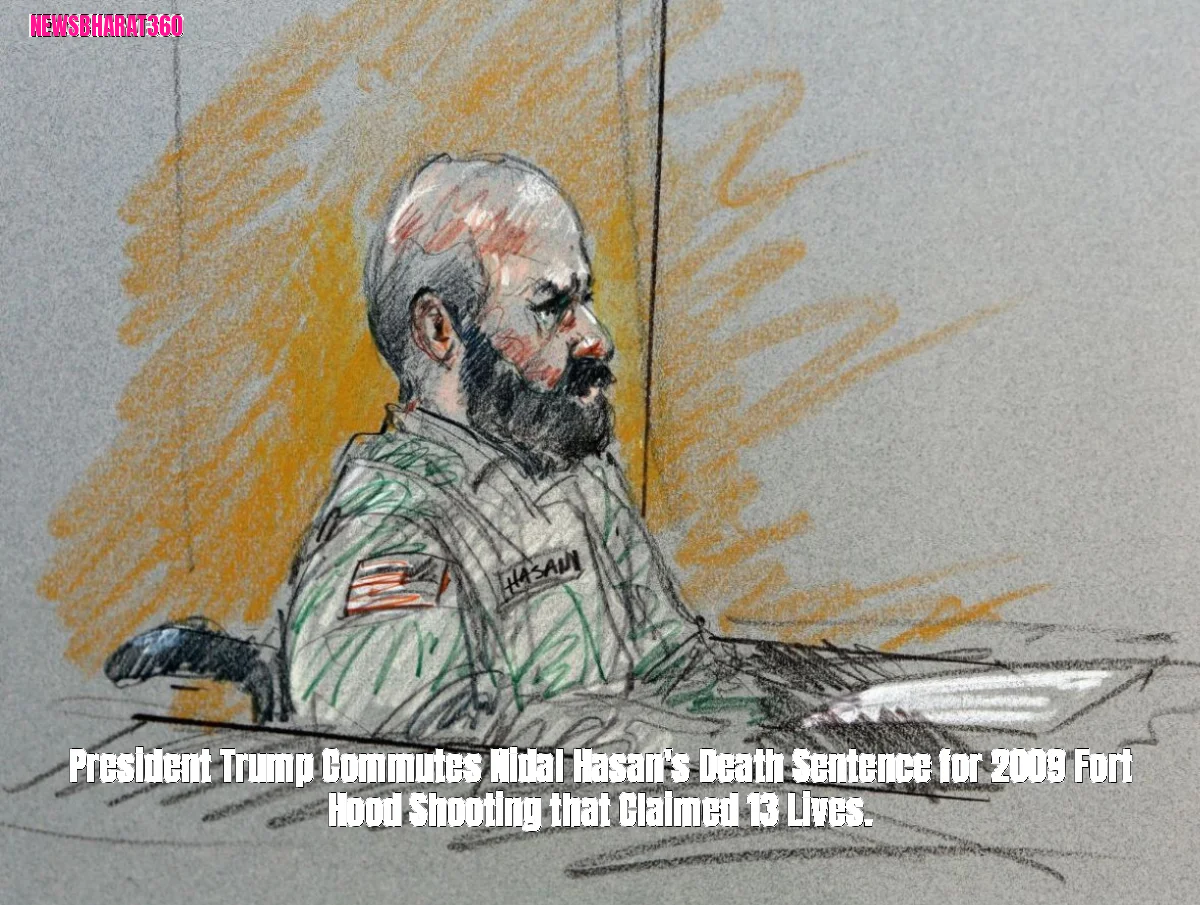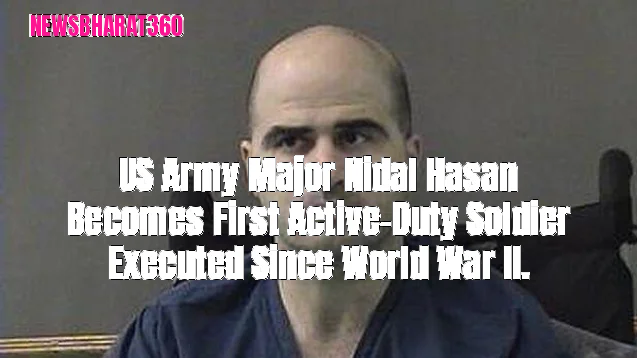

The US Department of Defense has confirmed plans to carry out a capital punishment sentence against a former US Army commander, marking the first military execution in over six decades.
On November 5, 2009, Nidal Malik Hasan opened fire at Fort Hood, resulting in the deaths of 13 unarmed U.S. soldiers and injuring 32 others.
Defense Secretary Pete Hegseth reportedly recommended an execution method, which was subsequently approved by President Donald Trump, according to a statement made by a Pentagon official on social media.
The upcoming execution will mark the first instance of a military death sentence imposed for a firearms-related offense in the United States since the conclusion of World War II.
The Secretary of the Army will be responsible for setting the date and location of the execution, as determined by Parnell.
The long-awaited trial date for Hasan has finally been reached, marking a significant milestone in the proceedings.
In 2009, a U.S. Army psychiatrist from Virginia, Hasan, was responsible for a fatal shooting incident at a Texas military base, resulting in the deaths of 13 soldiers. He subsequently acknowledged his role in the shootings and expressed regret for any error that may have contributed to the tragic event.
In a 2013 war council, he stated that his intention was to safeguard both Muslims and the Taliban in Afghanistan.
A devastating massacre occurred on November 5, 2009, marking the deadliest attack on a U.S. military base in a non-combat setting.
Soldiers were gathered at the deployment site, awaiting medical evaluations and vaccinations prior to embarking on their mission.
Hasan is currently among a group of four inmates on death row in the U.S. military's capital punishment system.
Under the provisions of military law, presidential approval is mandated for any military execution to proceed.
A thorough examination of the appeal is required to determine its validity and reach a definitive conclusion regarding its legitimacy.
In 1983, the U.S. Armed Forces Court of Appeals ruled that the death penalty was unconstitutional. However, the decision was reversed the following year when then-President Ronald Reagan issued an executive order reinstating the death penalty.
Military executions are distinct from those conducted at the state level.
The majority of executions in the United States are carried out at the state level, with 27 states, as well as the armed forces and the federal government, retaining the death penalty as a legally permissible option.
A lethal shooting execution was carried out in South Carolina last year, marking the state's first instance of this method and the first time it had been used nationwide in 15 years.
In addition to Alabama, four other states permit the use of gunfire for hunting: Idaho, Mississippi, Oklahoma, and Utah.
On his first day in office, in January 2025, former President Trump issued an executive order reinstating the death penalty at the federal level, aligning with his long-standing stance in support of capital punishment.
The Justice Department had previously established a federal moratorium on the death penalty under the mandate of former President Joe Biden's administration.
A newly issued executive order by Trump characterizes the death penalty as a crucial deterrent and punishment mechanism for individuals responsible for the most heinous crimes and lethal acts of violence committed against American citizens.