
Tuesday, September 1, at 6 p.m. in the Florida State Prison, in the small town of Raiford.
Harold Gene Lucas, 74, has ordered meat, fried potatoes, biscuits, cake, ice cream and milk: his last menu before dying.
His sister’s is the only visit he receives in the cell where he spends his last hours.
Shortly before the time indicated, he is taken to the room where he will be executed for a crime he committed 50 years ago.
Among them are the relatives of Jill Piper, the 16-year-old with whom she had gone out several times and whom she shot to death in 1976, when he was 24.
Eleanor Piper, now an elderly woman in a wheelchair, is also there to see her daughter’s murderer die.
Lucas is followed by the usual procedure, asking him if he wants to say a last word, and he answers that he does not.
He immediately receives the lethal injection, three substances that end up with him in just a few minutes.
At 6:18 pm he is officially dead: “The Florida state sentence has been fulfilled,” proclaims a woman dressed in a laboratory bat.
Outside the prison, Lester Piper, one of Jill’s brothers, tells reporters that his family feels “a great feeling of relief.”
Per it was for the convict too.
After half a century of appeals and imprisonment in the death hallway, he declined to submit more resources to circumvent or postpone the end.
With the life of Lucas ends a life marked by violence, the one he inflicted on his victim and the one he received from his father, who abused him from childhood, according to the story of Floridanos for an Alternative to the Death Penalty (FADP), a local association contrary to capital punishment.
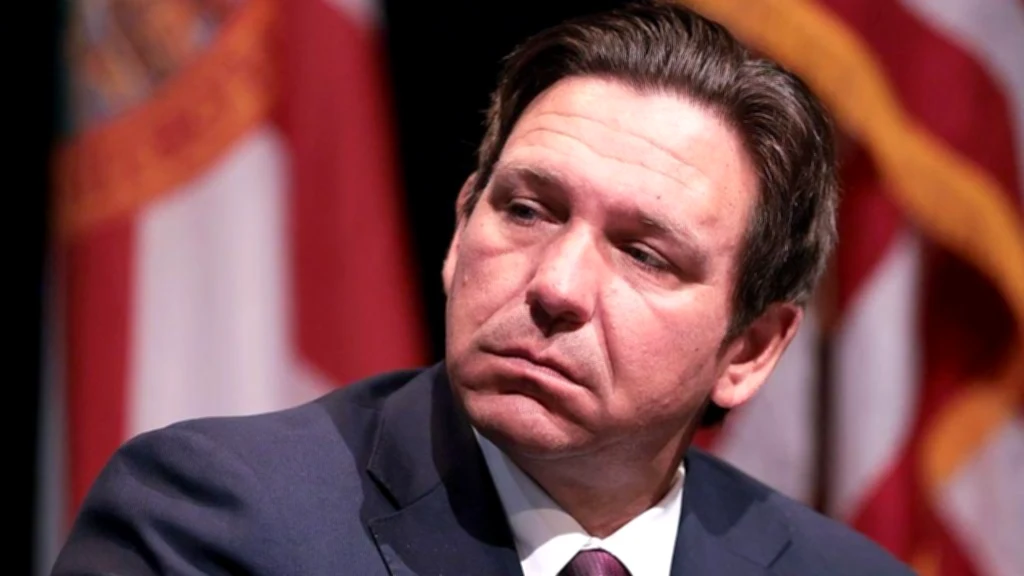
But the story of Florida's death penalty is not over, a maximum punishment that the state's governor, Republican Ron DeSantis, has recovered after years of remarkable reduction in the number of executions.
Florida has legally killed 15 convicts in the past year, more than the rest of the country.
They are added to the 19th of 2025, the year with the most executions in the state since the death penalty was restored in 1976, according to data from the Center for Information on the Death Penalty, an organization that studies its application in the United States.
The United States is the only Western democratic country where the death penalty isined.
And, like other southern states, Florida has been one of the traditionally most attached to this form of punishment.
When in 1972 a historic Supreme Court ruling concluded that the death penalty was arbitrarily applied to the black population and led to the suspension of executions throughout the country, Florida was the first state to change its laws to be able to resume them.
While in recent decades the list of states that have stopped using it as a way to give justice has been broadened, directly abolishing it or through moratoriums on executions, Florida has stepped the accelerator in the past two years.
“Florida is going against this,” says Maria DeLiberato, a lawyer specializing in defending sentenced to death in Florida and responsible for the American Civil Liberties Union (ACLU) program on the death penalty.
According to the most recent Gallup survey on the subject (October 2024), 53% of Americans support the death penalty for people convicted of murder, the lowest percentage in 50 years. In 1994, the support reached a maximum of 80%.
27 states maintain the death penalty in their laws, but only 10 have carried out executions in the last ten years.
And none show the execution zeal of Florida.
According to the Center for Information on the Death Penalty, the second state that has consumed the most executions this year has been Texas, with four, far from Florida's 15.
“The governor has full discretion to decide if there are executions and when,” DeLiberato explains.
Most convicts often spend years waiting for their appeals to be resolved and without a date for execution.
Of the about 250 prisoners in the state’s death corridor, the lives of those who have exhausted the appeals and revisions required depend on the governor deciding to sign their execution order and fix the day they will die, something DeSantis is doing more and more frequently.
The governor has not made public what criteria he applies to deciding who dies first.
“I could be choosing to throw darts against a wall,” says DeLiberato.
DeSantis has been advocating for years for the death penalty, which he sees as “an appropriate punishment for the worst offenders,” and for shortening deadlines and appeal possibilities to speed up executions.
"Some of the victims' families have been waiting too long," he said a few days before Harold Gene Lucas' execution.
However, DeSantis only ordered nine executions in the first five years of his term and between 2020 and 2022 he ordered no one to be executed.
He justified the stoppage of the executions due to the impact of the covid pandemic, but his critics suspect he has resumed them for political convenience.
The Republican will exhaust his term of governor in a few months and has not ruled out a new attempt to be his party's candidate to succeed in the presidency to Donald Trump, as he is a convinced of the death penalty that has pushed measures to be used more frequently.
“There is no doubt that this is an absolutely political matter and DeSantis believes it favors its popularity in conservative circles,” DeLiberato said on the increase in executions in Florida.
BBC Mundo did not receive a response when requesting comments from the governor's office.
DeSantis has pushed other measures in favor of the death penalty.
Frustrated because Nikolas Cruz, the 19-year-old who in 2018 killed 17 people with an assault rifle at a Parkland city institute, was sentenced to life imprisonment and not to death because the jury did not reach the unanimity required then by the law to impose the maximum sentence, DeSantis promoted a legal change so that eight votes were enough among the 12 members that make up a jury.
With its approval, Florida became the state where fewer votes are required for a jury to condemn someone to die.
But one of the most controversial changes promoted by DeSantis is that establishes that all irregular foreigners should be sentenced to death automatically if they are found guilty of any of the capital crimes.
Numerous experts have pointed out that the expansion of the legal pathways for the death penalty in Florida are unconstitutional and collide with decades of Supreme Court doctrine.
DeLiberato’s lawyer explained that the Court established that “the death penalty cannot be applied in crimes in which the victim does not lose life, nor without a jury deliberating specifically on each case and the aggravating and mitigating of each accused.”
For her, “the automatic death sentence for undocumented persons is absolutely out of the norm,” so the Supreme Court will end up repealing it, although it may take years to do so.
Critics of the death penalty warn that while the state increases the rate of executions and lowers the requirements for the death penalty, it is also the one that condemns more innocent people.
According to the Death Penalty Information Center, 30 people who were sentenced to death in Florida were finally exonerated, more than in any other state.
Most of these people spent years in prison until their convictions were revoked and anti-death activists fear that the reduction in the votes needed for the jury to impose the death penalty will lead to more erroneous convictions.
Demetrius Minor, of Conservatives Concerned, a conservative association against the death penalty, tells BBC Mundo that “if we know that so many innocent people have been condemned, we should be focused on solving the system’s failures rather than insisting on continuing to kill people.”
As a conservative he is, he declares to agree with many of DeSantis’ policies, but with the death penalty he has it clear.
“The state makes mistakes, with our taxes, with fines, with documents.When it goes wrong and kills a person’s life, how do we repair that?” he asks.
The bishops of Florida have been among the most active in their opposition to the death penalty.
His spokesman, Michael Sheedy, told BBC World that “it is possible to protect society and punish violent criminals without resorting to death.”
“It is a mistake to think that we must respond to these terrible situations by killing another person,” Sheedy said, who stressed that “there is no evidence that the death penalty has a deterrent effect on criminals” and “it only serves to perpetuate the cycle of violence.”
Sheedy recalls having sent more than 30 letters to the governor on behalf of the bishops asking for mercy for prisoners who were to be executed.
Grace Hanna, of Floridanos for an Alternative to the Death Penalty, told BBC World that Florida’s criminal system is contaminated by a “long legacy of racism” that leads to “African Americans at much greater risk of ending up in the death hallway.”
Hanna decided to devote her life to raising awareness against the death penalty and advocating its abolition after her cousin died victim of an assault on the gas station shop where she worked in the mid-2000s.
“In my family we had many conversations about what happened and how it should be punished and we came to the conclusion that the death penalty is not the way,” he told BBC Mundo.
Sheedy recalls that “in many cases in Florida, convicts have been executed even with the opposition of the families of their victims” and many “are realizing that the death of the convicted does not relieve their pain.”
But not all of the victims share the abolitionist theses.
Rafael Zaldivar, for example, has been fighting in the courts for years for Bessman Okafor, the man convicted in 2012 for murdering his 19-year-old son Alex, to be executed.
Decided to persevere until Okafor pays with his life, in June 2024 he said: “My will be the last face I see.”
DeSantis continues to order executions at an unprecedented rate in recent years.
The last person executed was Daniel Conahan, 72, who was convicted of murdering a 21-year-old man to whom he offered money in exchange for taking nude photographs in the remote area where his body was found.
Conahanined his innocence until the end, but investigators link him to other bodies that appeared in the area and local media have presented him as “a serial killer.”
His defense requested additional DNA tests and Grace Hanna and other activists engaged in a campaign to stop the execution.
But Conahan was executed on September 10 at the usual time of 6pm.
The demands for clemency were rejected this time too.
The last time a Florida governor had a death sentence was 43 years ago.