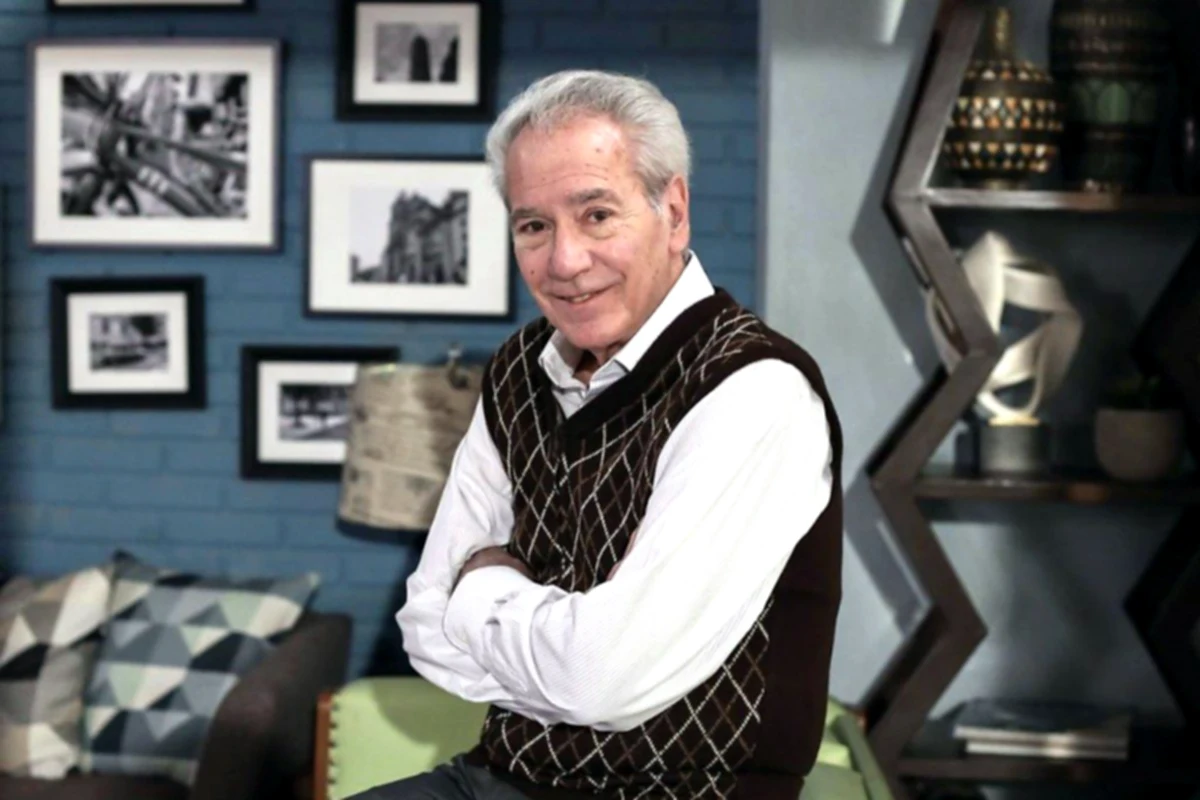
Reza Pahlavi, son of the last Shah of Persia, who is in exile in the US, Reza Pahlavi called for new mass protests this Thursday in Iran, amid the wave of demonstrations that has been taking place in the country for almost two weeks. The eldest son of the Shah overthrown by the 1979 Islamic Revolution stated in a social media message that participation in the recent protests had been “unprecedented” and that he had received reports that the “regime is deeply frightened and is trying, once again, to cut off internet access” to suppress the demonstrations, which happened on Thursday night. Reza Pahlavi was destined to rule Iran, but he has not lived there for almost half a century. Now, with the demonstrations taking place across the Persian nation, he has once again presented himself as an alternative in the event of regime change. Born in Tehran, he is the eldest son of the last leader of the Pahlavi dynasty, Shah Mohammad Reza Pahlavi, who ruled the country with US backing from 1941 to 1979, when he was overthrown by the Islamic Revolution that currently governs Iran. Since then, Pahlavi, the heir apparent, has become one of the most prominent critics of Iran's Supreme Leader, Ayatollah Ali Khamenei, who has ruled Iran since 1989. During the crisis triggered last year by the war between Israel and Iran, as well as the US attack on Iranian nuclear facilities, Pahlavi asserted that it was a unique opportunity to advance "regime change" in Tehran. He is saying the same thing now.
He believes the Islamic Republic is in its weakest position after the Israeli attacks and Trump's recent statements that he will intervene in Iran if protesters continue to die.
From his home in a quiet suburb near Washington, D.C., his supporters describe him as a discreet and approachable person,who frequents local cafes, often accompanied by his wife, Yasmine, without any visible security detail.
In 2022, when a passerby asked him if he considered himself the leader of the protest movement in Iran, he and Yasmine replied in unison: “Change must come from within.”
Since then, he has presented a 100-day plan for an interim government.
Pahlavi, 65, insists that this newfound confidence stems from lessons learned in exile and what he calls the “unfinished mission” left by his father.
“It is not about restoring the past,” he told reporters in Paris. “It is about guaranteeing a democratic future for all Iranians.”
From Child Prince to Exile
Reza Pahlavi was about to turn 7 when, in 1967, he attended a ceremony commemorating the founding of the Persian Empire in which his father, Mohammad Reza Pahlavi, was crowned Shahansha (King of Kings).
The boy, seated to the left of the new king, was then officially named Crown Prince of Iran.
Born on October 31, 1960, Reza Pahlavi was educated at a private school located in the Royal Palace and reserved only for members of the Shah's family.
In his youth, he studied aviation and trained as a fighter pilot. In 1973, he was photographed as a student in the Imperial Iranian Air Force, and in 1978, at the age of 17, he traveled to the United States to continue his military aviation training in Texas. But before he could return to service, the Islamic Revolution overthrew his father's regime. Due to a wave of protests in Iran, the Shah was forced to leave the country in January 1979. Mohamed Reza Pahlavi left with his family for Egypt, then Morocco, the Bahamas, and Mexico, before arriving later that year in the United States, where he received medical treatment for cancer. When the Islamic Revolution overthrew his father, Reza Pahlavi Jr. was completing his training at a military base in Texas. The sudden loss of power left the young crown prince and his family stateless, dependent on an ever-shrinking circle of monarchist sympathizers in exile. In the decades that followed, tragedy struck the family on more than one occasion. His younger sister and brother took their own lives, leaving him as the symbolic head of a dynasty that many believed was relegated to history. In July 1980, the Shah died of cancer. Since then, Pahlavi has lived in the United States. He studied political science, married Yasmine, an Iranian-American lawyer, and had three daughters: Noor, Iman, and Farah. But,How did the kingdom he was supposed to inherit fall?
From Shah to Ayatollah in Iran
Mohammed Reza Pahlavi reigned as monarch of Iran for 37 years.
During that time, the country underwent a process of Westernization and economic growth, while seeking to recover national pride and Iran's pre-Islamic history, as described by journalist Ali Hamedani of the BBC Persian Service.
In the 1960s, women gained the right to vote and access to rights relatively similar to those of men, but at the same time, the Shah faced harsh criticism for his autocratic style and lack of democracy.
Many remember the Pahlavi era as a time of rapid modernization and closer ties with the West.
Others remember an era marked by censorship and the feared Savak secret police, Iran's dreaded intelligence and internal security service between 1957 and 1979. The Shia Muslim clergy accused the Shah of going against Islamic values, while leftist groups, then influenced by the now-defunct Soviet Union, demanded greater equality within the country. Until mid-1978, few could imagine a revolution capable of profoundly altering Iran. But within a few months, the protests quickly drew in leftist intellectuals, nationalists, secularists, and Islamists in what became known as the Iranian Revolution of 1979. Throughout 1978, the anti-Shah protesters increasingly framed their demands in religious terms. Until, at the end of that year, Islamist rhetoric began to gain ground in the streets. In that context, Ayatollah Ruhollah Khomeini returned to Iran after 14 years of exile in Iraq and France for opposing the regime, and positioned himself as the only one capable of unifying the various factions in the face of a potential Islamic government. The Iranian Revolution ended with the overthrow of the monarchy and paved the way for the establishment of the current Islamic Republic. The U.S. had been an undisputed ally of the Shah. Therefore, in November 1979, a group of students and Islamist militants opposed to the monarchy seized the U.S. Embassy in Tehran in support of the Iranian Revolution and held fifty Americans hostage for 444 days.
Ten years later, in 1989, Ayatollah Khomeini died and the then-President of Iran, Ali Khamenei, was appointed as the new Supreme Leader.
Khamenei, whom Reza Pahlavi now criticizes from exile, has governed the country ever since, fulfilling the role of head of state and controlling the Islamic Revolutionary Guard Corps, among other functions.
Politics from Exile
Reza Pahlavi abandoned his training in Texas and rejoined his family in Cairo in March 1980.
On October 31 of that year, a few months after the Shah's death, the 20-year-old Reza Pahlavi declared himself the new King of Iran, calling himself "Reza Shah II" and stating from exile that he was the legitimate heir to the Pahlavi dynasty throne.
However, the United States government announced at the time that it did not support him.
It was 1980, the last year of the presidency of Democrat Jimmy Carter, who had been in the White House since 1977, and the year that Republican Ronald Reagan won the election in November.
In March 1981, on the occasion of the Persian New Year, Pahlavi issued a statement calling on all opponents of the Iranian government to They united, and he issued a call for “national resistance.”
From that moment on, he remained politically active in exile, relying on his family legacy, support networks in Europe and the United States, as well as the backing of some Iranian factions opposed to the Islamic system.
After living for several years in Egypt and Morocco, he moved to Maryland in 1984 and settled in a suburb of the U.S. capital, Washington, D.C., where he still lives with his wife.
Pahlavi says that Iran must be a democratic and secular state, meaning that religion must be separate from the state.
“I believe that Iran should be a secular parliamentary democracy, and the people should decide the final form of the state,” he stated in 2018 at a conference he gave at The Washington Institute for Near East Policy, where he called for support for Iranians trying to replace the current regime with a secular democracy.
In February 2023, Pahlavi He spoke with the British newspaper The Daily Telegraph and reiterated that the decision on the form of government Iran should adopt in the event of Ayatollah Khamenei's fall rests with the Iranian people and that he would not run for any political office. In March 2023, he emphasized that secularism is necessary for democracy and called for non-violent means to overthrow the Iranian government. Shortly afterward, Reza Pahlavi and his wife, Yasmin, visited Israel in an attempt to rebuild historical relations between Iran and Israel. There, he visited the Western Wall and the Yad Vashem Museum and met with Israeli President Isaac Herzog and Prime Minister Benjamin Netanyahu. "Berlin Wall moment" Following Israel's bombing of Iran last year and the US attack on its nuclear facilities, Pahlavi said the political moment was approaching to end the Islamic Republic's system of government.
“This is our Berlin Wall moment,” he said in a statement he shared on his social media.
In statements to the press, he asserted that what was impossible five years ago is possible now, citing the unexpected collapse of the Soviet Union, which occurred in just a few days, as an example.
The United States, however, ruled out being behind a change of government in Iran, even though President Trump mentioned it in a social media post.
Pahlavi emphasizes that there are plans in place to transform Iran into a democratic system if Ayatollah Khamenei falls.
For the Shah's successor, the economic and political crisis the country is experiencing, in addition to international pressure and growing isolation, have left the regime in a fragile and unstable situation.
Over the past four decades, Pahlavi has tried to present himself as a third option between the Islamic Republic regime and chaos or military coups. However, he faces significant challenges. Among them are the absence of a genuine popular base within Iran and the deep divisions among opposition factions abroad. In addition, there is the negative image associated with his father's government due to human rights violations and the dominance of the security apparatus during that period. Several analysts believe that his rapprochement with Israel could lead to a loss of popular support within the country, especially among conservative or nationalist groups who view Israel as a strategic enemy. Other factions within the Iranian opposition reject the idea of ??Pahlavi regaining power or even leading the transition, arguing that he lacks the political charisma and organizational skills to lead a broad alliance. Conversely, his supporters believe that his moderate image, his international connections, and his secular background position him well to lead the eventual transition to a new government and thus avoid the bloody scenarios seen in previous transitions. from countries like Syria, Libya, and Iraq.
Today, Pahlavi presents himself not as a king-in-waiting, but as a representative figure for national reconciliation.
He claims he wants to help guide Iran toward free elections, the rule of law, and equal rights for women, leaving the final decision on restoring the monarchy or establishing a republic in the hands of the Iranian people.
While the Iranian government portrays him as a threat, it is impossible to gauge his true support without an open political space and credible polls.