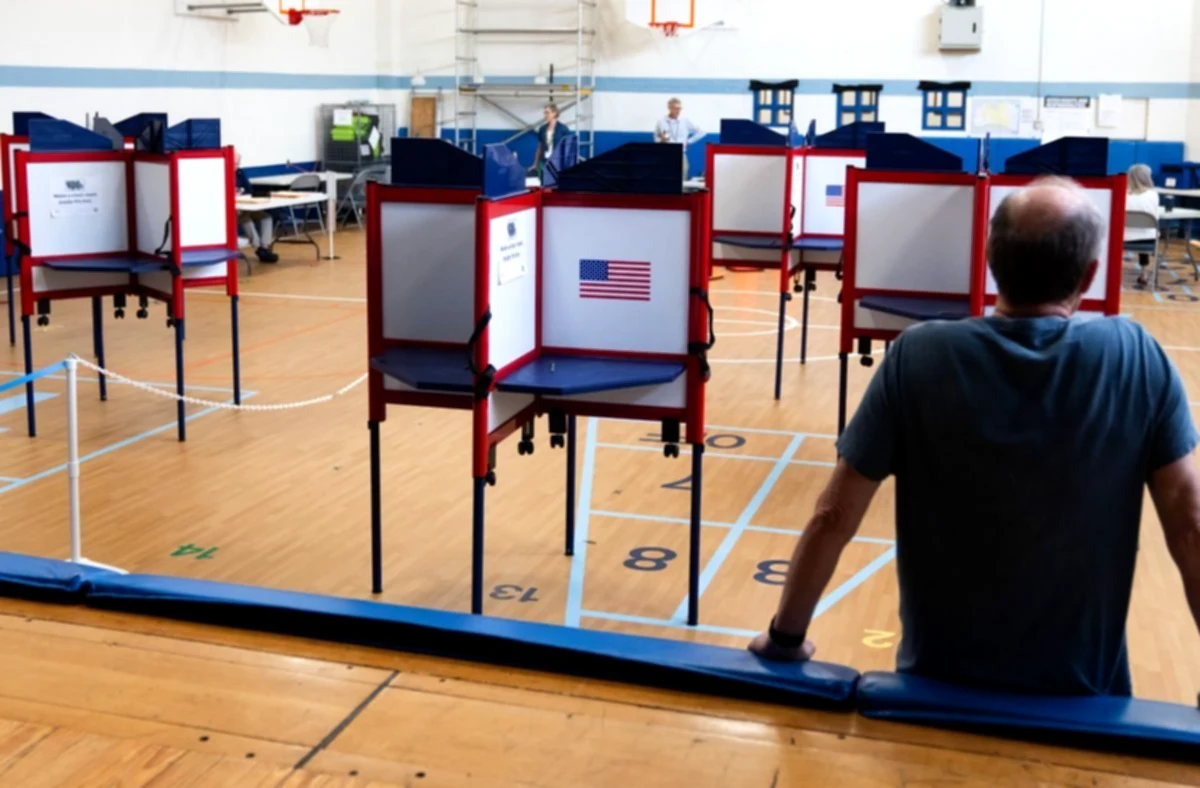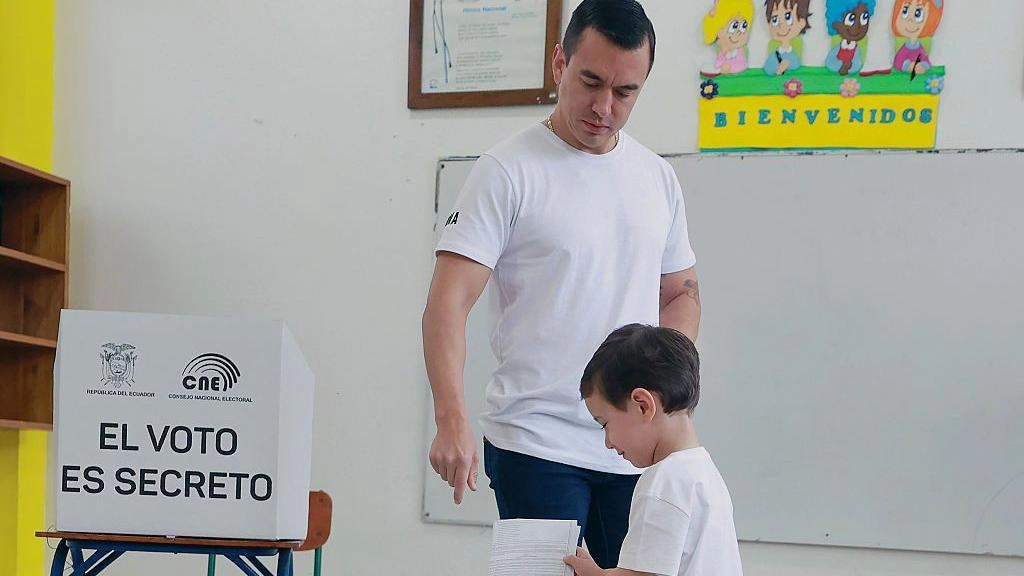

which also included the installation of international military bases in the country—were widely rejected at the polls. According to the National Electoral Council (CNE), with 96% of the polling stations counted, the call for a Constituent Assembly to draft a new Constitution was rejected by 61.58% of the votes. Of the four questions, this one had the highest rejection rate nationwide. Regarding the installation of foreign military bases, which is prohibited by the current Constitution drafted in 2008, the "no" vote reached 60.58%. The other two proposals—eliminating state funding for political parties and reducing the current number of legislators in the National Assembly—were rejected by 58.07% and 53.46%, respectively. "These are the results. We consulted the Ecuadorian people, and they have spoken. We kept our promise: to ask them directly. We respect the will of the Ecuadorian people," the president wrote on his Twitter account. "Our commitment does not change; it strengthens. We will continue fighting tirelessly for the country you deserve, with the tools we have," he added. All of this occurred in the same year that Noboa was re-elected president with more than 55% of the vote. Last April.
Local analysts indicate that, although the president generally enjoys good approval ratings for his administration, Ecuadorians did not want to give him a “blank check”.
The national press also highlights a certain “election fatigue”—these were the third elections in just one year—and a “lack of clarity in the constitutional process” that may have worked against the president's aspirations.
At BBC Mundo, we present three key factors behind Sunday's election results.
The country's internal situation
Although the referendum and the popular consultation dominated headlines in the media, especially on social networks, all of this unfolded amidst social tension due to various factors such as medicine shortages, the rising cost of living, and a resurgence of insecurity.
Earlier this month, the government had to declare a state of emergency at the Ecuadorian Social Security Institute (IESS) due to a medicine shortage in many of Ecuador's public medical centers, affecting nearly 50% of the population.
This situation has prevented the treatment of serious and urgent cases for thousands of patients across the country.
In addition, the central government had decided in mid-September to eliminate the diesel subsidy, which led to an increase in its price.
fuel.The measure triggered a series of protests that were violently repressed by the Ecuadorian police.
“Amid this scenario, the lack of clear answers and concrete arguments from the President, the absence of dialogue with other social and political sectors, and the copious government propaganda that portrays a country in which the majority of citizens do not live, received a wake-up call,” noted the Ecuadorian news portal Primicias.
And to this is added the surge in violent deaths this 2025, in a country that cannot break free from the cycle of violence imposed by drug trafficking and organized crime gangs.
The confrontation with the Constitutional Court
Since he first came to power in November 2023, Noboa has implemented security policies to combat the criminal gangs that plague the country.
However, according to In his own words, many of his efforts have been rejected by the Constitutional Court on the grounds that they did not meet the requirements of the Ecuadorian Constitution. Noboa has accused the highest judicial body of “political activism” and, in August of this year, called it an “enemy of the people.” These accusations were rejected by the Court itself, as well as by spokespeople from various judicial bodies and international organizations. “When high-ranking officials label judges as 'enemies of the citizenry' for fulfilling their function, the independence of the judiciary is jeopardized,” said Margaret Satterthwaite, United Nations Special Rapporteur on the Independence of Judges and Lawyers. But Noboa decided to double down:In September of this year, he announced that he would seek to convince the Ecuadorian people to write a new Constitution and replace the one approved during Rafael Correa's government. However, the people decided not to support him. “Ecuadorians decided not to give the government total freedom to wage a fight against crime with almost no real control.I think that when he said that the new Constitution would abolish the Constitutional Court, that ended up backfiring,” Sofia Cordero, a political analyst at FLACSO University in Ecuador, told BBC Mundo. “It was a mistake to think that the violence Ecuador is experiencing was due to the 2008 Constitution,” the expert added. However, some analysts see the rejection of the Constituent Assembly as a setback. “We must respect what has been voted on, but this wasn't just about security; "For me, despite the 'no' vote, this constitution must be changed because it was designed by a government that failed to consider the current challenges we see every day, which affect not only Ecuador but the entire world,” he added.
Foreign Military Bases and Local Insecurity
The security problem in Ecuador has been a top priority in this South American nation, which in just a few years went from being one of the most peaceful countries in the region to one of the most dangerous, with an alarming increase in crime rates since 2020.
In 2023, for example, 47 homicides were recorded for every 100,000 inhabitants. This year's rate is expected to reach 50 homicides per 100,000 inhabitants, one of the highest in Latin America.
For this reason, in addition to calling for a Constituent Assembly, Noboa hoped that the referendum would pave the way for the reestablishment of foreign military bases within Ecuadorian territory.
Although the question did not mention the country, it was clear that it was a message for the US and the plan to open another military base like the one that operated until 2009 in the city of Manta, on the coast of Ecuador.
The main initiative is to strengthen cooperation in the fight against drug trafficking to the US, which both the US Secretary of Homeland Security, Kristi Noem, and the Secretary of State had emphasized.
Marco Rubio, during his recent visits to Ecuador.For Cordero, the rejection of this question in the referendum is not only a defeat but also evidence of the lack of to comprehensive plan to combat insecurity.
“In other words, it was a question about something that isn't on paper: so far there's no official request. I think that will have consequences for Noboa's relationship with Donald Trump,” the analyst points out.
“Furthermore,I think the issue of sovereignty weighed heavily here, and also that for many years there were reports of abuses by the military personnel stationed at those bases,” she added.
However, for Acosta, the fact that people voted against the creation of the military bases puts the State's capacity in the fight against drug trafficking at risk.
“The fight against insecurity is a transnational fight; it's an enemy that isn't located only in Ecuador, and we definitely won't defeat it alone,” she stated.
“We are going to have more limitations on something that has been costing the country dearly,” the analyst said.