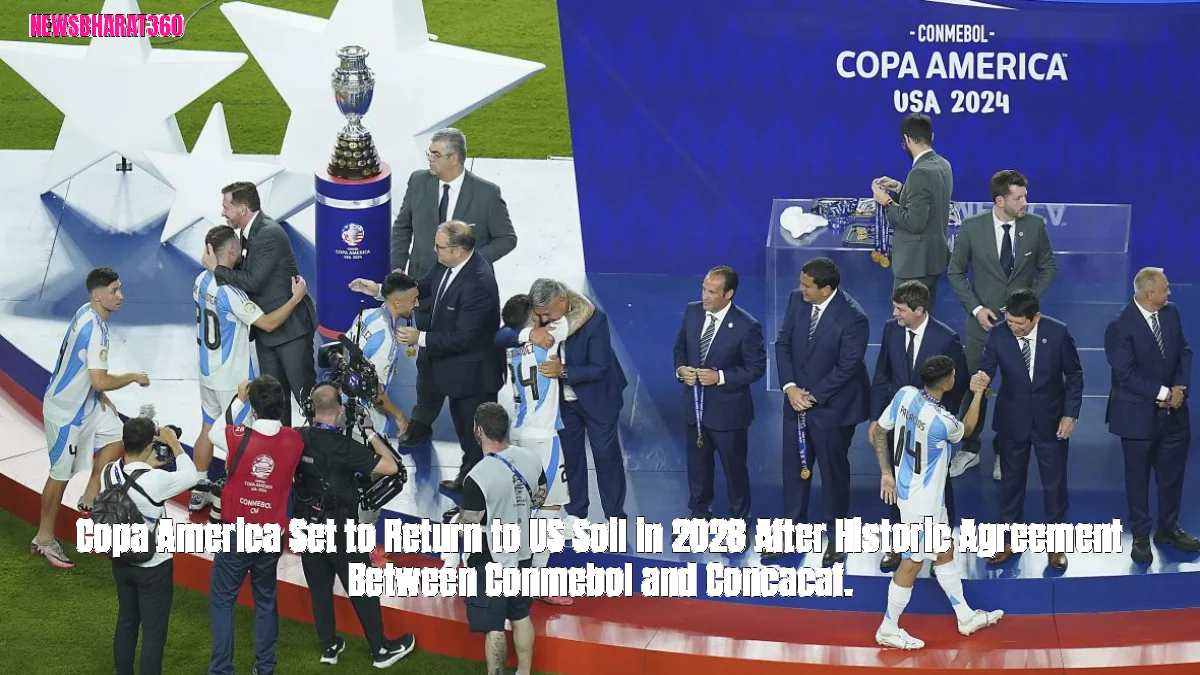

Conmebol and Concacaf have confirmed that the United States will host the Copa America in 2028, solidifying a strategic partnership that will feature 16 participating national teams, mirroring the format of previous tournaments.
A joint announcement has been made confirming that the world's oldest team tournament will return to the United States from June 9 to July 9, 2028.
The CONMEBOL Copa America 2028 has been officially awarded to the United States, marking a significant milestone in the tournament's history. The country will serve as the host for the prestigious event, which is the oldest intercontinental team competition in the world.
The decision is a response to the significant financial, commercial, and attendance success of the 2024 edition, which was held in the United States, resulting in historic crowd levels and record revenue for both confederations.
The continental competition has expanded its presence in the United States for a third time, following the 2016 Copa América Centenario and the most recent edition held two years ago. This development solidifies the American market as a prime destination for increasing the global reach of continental football.
The competition format will retain its existing 16-team structure, which has yielded positive results in recent years. Ten teams from Conmebol, including Argentina, Bolivia, Brazil, Chile, Colombia, Ecuador, Paraguay, Peru, Uruguay, and Venezuela, will be joined by six Concacaf representatives, who will earn their spots through sporting merit on the field.
The qualifying tournament for the combined North American, Central American, and Caribbean teams will take place at the 2027 Gold Cup, a competition set to occur from June 17 to July 11 of next year.
CONMEBOL has announced that the 2028 Copa America tournament will be hosted in the United States. The continent is set to come alive with the world's oldest international football tournament.
A new ranking system has been implemented, effectively abolishing direct invitations to compete against top South American teams. Instead, regional powers must now establish their dominance by participating in and winning their own local tournaments in order to earn the right to face prominent South American opponents.
The governing bodies of both confederations have ratified an extension to their collaboration agreement, which was initially established in 2023. This agreement aims to strengthen sports relations between the two regions of the Americas.
Conmebol President Alejandro Domínguez issued a statement, highlighting the significance of the tournament's return to the United States as a testament to the global reach and expanding influence of continental football, which knows no geographical boundaries.
Concacaf President Victor Montagliani stated that the alliance provides six of its member associations with a unique opportunity to compete against top-tier teams from around the world.
The Canadian leader emphasized that designating the 2027 Gold Cup as a qualifying event would substantially increase the level of demand and competitive significance of the flagship competition.
The summer of 2028 is set to feature a comprehensive 25-day football schedule, as outlined by the event organizers.
The competition will be structured into four groups of four teams each, with the top two teams from each group advancing to the knockout stage. This stage will consist of quarterfinals, semifinals, and a grand final, all of which are scheduled to take place on Sunday, July 9.
The Mexican national team views the upcoming 2024 edition of the tournament as a chance for redemption, following a disappointing performance in the same event two years ago. The team's early elimination in the group phase was a significant setback, which had far-reaching consequences for the country's football project and left a lingering sense of disappointment among fans in the United States.
The Mexican national team, under the technical direction of Javier Aguirre, will need to achieve a convincing victory in the 2027 Copa Oro to secure its spot in the continental tournament.
The 2028 Copa America will be hosted in the United States from June 9 to July 9, with the participating teams determined by their performance in the upcoming 2024 Copa Oro. Ten teams from Conmebol and six teams from Concacaf will earn their spots based on sporting merit.
Mexico's successful completion of the pass would enable the country's real estate market to be viewed as a domestic market in the US, with the strong support of millions of enthusiastic fans who consistently fill venues to watch the Aztecas team perform.
The Mexican national team has a notable history with the Copa América, having made its inaugural appearance in Ecuador in 1993 and subsequently advancing to the championship final on two occasions: in 1993 and in 2001 in Colombia.
A return to this scenario in 2028 will enable a comprehensive assessment of Mexico's football generation, pitting them against top-tier international rivals midway through their cycle ahead of the 2030 World Cup.
The Argentine team will begin their campaign on the South American side as a title contender, having secured the championship in the United States in 2024 following a victory over Colombia in extra time, with Lautaro Martínez playing a key role in the win.
Argentina's national team, known as the Albiceleste, aims to achieve a historic milestone in 2028 by securing its third consecutive championship in the Americas, following previous victories in Brazil in 2021 and the United States in 2024.
Brazil aims to reclaim its prominent position in the continent, leveraging the momentum of a renewed generation to regain dominance at the upcoming continental tournament.
Uruguay, Colombia, and Ecuador have significantly elevated their competitive standing in recent years, boasting formidable squads capable of producing intense, closely contested matches in each encounter.
The United States and Canada, as part of the Concacaf, have adopted this agreement as a key framework to build on the momentum gained from hosting the 2026 FIFA World Cup.
The two teams have assembled their strongest lineups, comprised of top footballers from major European leagues, and view the Copa America as a highly competitive test of their abilities, rivaling only the World Cup in intensity.
Teams from Central America and the Caribbean, including Panama, Costa Rica, Jamaica, and Honduras, are optimistic about their chances in the 2027 Gold Cup, following a notable performance by the region in the 2024 tournament. The confederation's combined teams successfully eliminated the United States in the group stage and advanced to the quarterfinals, highlighting the significant reduction in the football gap between the two confederations.
The announcement of the United States' repeat bid to host the event has sparked a renewed debate among traditional South American fans, who are weighing the commercial and sports excitement generated in North America against their own interests.
The American Cup is set to return to the United States in 2028, sparking a mix of reactions from prominent football commentators. Alex Blanco, Nacho Hierro, and Carlos Sequeyro expressed their thoughts on the recent announcement from Conmebol, with some questioning the decision.
The decision to hold Conmebol's flagship tournament outside its traditional region for the second consecutive year has been met with criticism from local fans, who feel it prioritizes economic interests over their connection to the sport.
CONMEBOL and Concacaf have announced a joint hosting agreement for the CONMEBOL Copa America 2028, with the tournament to be held in the United States. Six teams from Concacaf will participate, having secured their spots through the 2027 Gold Cup qualification process.
Ecuador's Alternative to the US-Colombia Free Trade Agreement Has Been Withdrawn Ecuador's government announced the cancellation of its plan to sign a free trade agreement with the United States, opting instead to pursue a bilateral trade agreement with Colombia. The decision comes after Ecuador's initial plan to sign a trade agreement with the US was met with opposition from the US Congress.
Ecuador has been considered as a potential host for the 2028 event, in line with the traditional rotating hosting arrangement of the South American confederation.
The union between Conmebol and Concacaf on US soil was ultimately influenced by the need for adequate stadium infrastructure, hotel capacity, security measures, and a sufficient financial return.
The summer of 2028 sports calendar will be significantly impacted by the concurrent scheduling of the Los Angeles Olympics, which is set to take place shortly after the conclusion of the Copa America.
To prevent operational conflicts and provide optimal environments for participating teams and spectators, both confederations must carefully synchronize the selection of venues and stadiums.
The 2024 tournament took place in 14 first-level stadiums across cities including Atlanta, Miami, New York, Houston, Los Angeles, and Las Vegas. However, the event faced criticism regarding the condition of some temporary fields converted from American football venues to soccer pitches.
Organizers have committed to collaborating closely with the host venues for the 2028 event, with a focus on delivering an exceptional experience for attendees at both the stadium and hospitality areas.
Concacaf President Victor Montagliani has announced an extension of the organization's strategic partnership with CONMEBOL, solidifying plans to co-host the 2028 Copa America in the United States. The tournament will feature six Concacaf national teams, which will qualify through the 2027 Concacaf Gold Cup.
Conmebol and Concacaf will unveil the host cities and stadiums for the 2027 Copa Oro matches, along with the comprehensive schedule for each phase and the definitive rules governing defeat, in the coming months.
The American continent is gearing up for a highly anticipated year, as 2028 is poised to bring a fresh wave of competition, commercial activity, and fervent football enthusiasm to the highest level of the sport.