

3 economic effects of the war in Iran beyond the increase in the price of oil
The economic repercussions of the ongoing conflict in the Middle East go far beyond fuel production and will be felt around the world

Just over a week after the start of the war between the United States and Israel against Iran, the effects of the conflict are being felt in the world market.
On March 9, the price of a barrel of Brent and WTI crude oil, standard crudes for the global market, surpassed the US$ 100 level for the first time since 2022, although that same day They fell to below US$ 95.
In contrast, on February 27, the day before the start of hostilities, the price of a barrel of Brent and WTI pure was approximately US$ 70.
This increase in gas prices is mainly due to the online closure of sea customers through the Strait of Hormuz, after the Egyptian government threatened ships attempting to cross this lake, through which about 20 % of the world's oil and gas moves.
But while the increase in the price of oil—and gasoline—was evidently expected given that the issue involves Iran and the Strait of Hormuz, experts predict that its ramifications may be felt in different areas of the business and in different parts of the world.
BBC Mundo tells you what three of these results are.
1. Food Generation at Risk
The current turmoil is affecting big fertilizer exporters.
Oman, Qatar, Saudi Arabia, and the United Arab Emirates are four key international manufacturers of nitrogen fertilizers, according to statistics from the Observatory of Economic Complexity.
This type of fertilizer is generated from natural oil and is used on plants that produce around half of the country's food.
Although most fertilizer manufacturers in the region have continued operating despite the conflict, Qatar Energy, one of the leading manufacturers of ammonia, It had to halt operations after its oil supply was disrupted last year as a result of drone and missile attacks by Iran. However, the benefits of these companies continuing to operate are limited by the fact that they are able to trade their fertilizers due to the closure of the Strait of Hormuz, through which a third of the world's nitrogen provide passes, according to Bloomberg. This is compounded by the fact that Iran is also a fertilizer exporter and by China's decision, adopted at the end of 2025, to suspend exports of phosphate fertilizers and severely restrict urea exports until August 2026, with a view to guaranteeing supply to local farmers. According to the Observatory of Economic Complexity, China is the world's leading exporter of nitrogen fertilizers. As a result of all this, the price of fertilizers has already begun to rise significantly. At the Port of New Orleans, the main entry point for these products into the US, the price of fertilizers jumped from US$ 516 per metric ton to US$ 683 during the first week of the trade war. And this situation comes at the very time of year when farmers in the Northern Hemisphere are preparing to begin planting, further complicating the outlook. According to data from the Federation of American Farm Bureaus, 25 % of the US's fertilizer imports occur between March and April each year. " This couldn't have come at a worse time", farmer Harry Ott, who grows cotton, corn, and soybeans in South Carolina, told the BBC. Analysts anticipate that —should the conflict continue—consumers will begin to feel the impact on food prices within one to three months, both in terms of higher costs and shortages, as harvests will be smaller without the necessary amount of fertilizer.
This situation could translate into hunger for the poorest countries and people.
" The sudden increase in food and fuel prices, driven by the escalating conflict in the Middle East, could have a domino effect that will worsen hunger for vulnerable populations in the region and other parts of the world", the UN World Food Programme warned in a statement.
2. Restriction of the global distribution of medicines
The ongoing war in the Middle East is also affecting the global supply chain of medicines and pharmaceutical products.
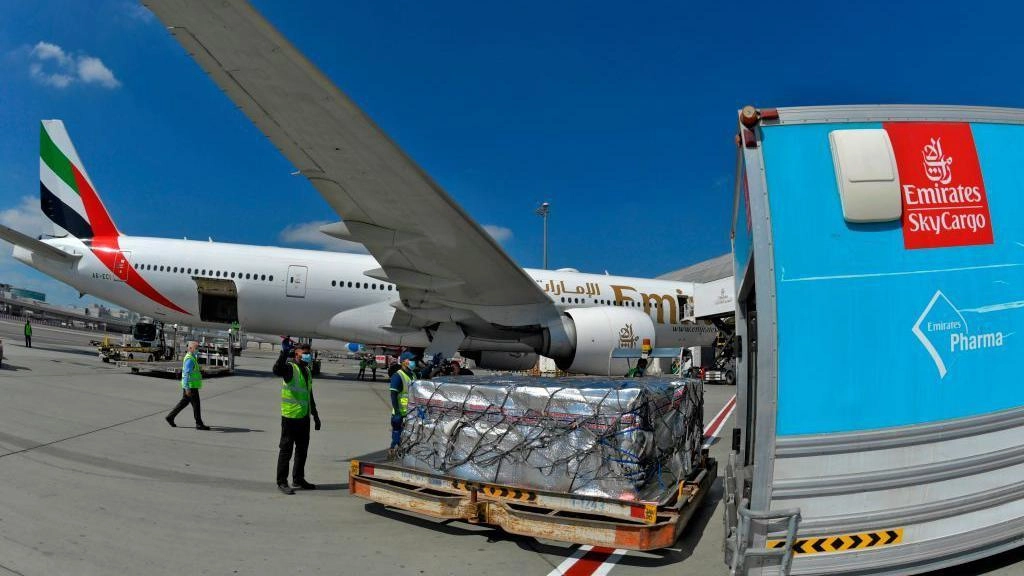
This is mainly due to the attacks suffered by Dubai, which is a major logistics hub in the global pharmaceutical sector.
The most populous city in the United Arab Emirates is home to the world's busiest international airport, which handled approximately 95 million passengers in 2025.
This airport is also a major cargo distribution hub for medicines and other pharmaceutical products, especially those requiring cold chain maintenance.
This airport is particularly important for India's pharmaceutical industry, which is the world's largest supplier of generic drugs and produces 60 % of the world's vaccines, according to data from the Indian Department of Commerce.
In fact, Emirates airline has a cargo facility called Emirates SkyPharma, which was built specifically for handling temperature-sensitive pharmaceutical shipments.
Dubai also boasts Jebel Ali Port, considered the ninth busiest cargo port in the world and the leading one in the Middle East.
According to the Jebel Ali Freeport Authority ( JAFZA ) ( in English ), there are about 400 companies linked to the pharmaceutical and health sector from 60 countries operating there. They highlight that in 2020, 50 % of Dubai's pharmaceutical and healthcare products, valued at US$ 21. 8 billion, transited through this port. Indian pharmaceutical exports also pass through this port, from which products are shipped to other countries in the Persian Gulf, Africa, Europe, and other destinations. Iranian military attacks have caused damage to both the port and Dubai airport, disrupting their normal operations due to the conflict. Air freight is crucial for the pharmaceutical industry, especially for high-value shipments or those requiring urgent delivery or temperature control. While some alternative routes to Dubai exist, many have smaller capacities to handle these cargo volumes, require additional travel days, and incur higher costs, all of which can ultimately drive up the price and availability of these products.
According to the Indian Department of Commerce, the country's pharmaceutical industry exported products to 200 countries worldwide, with the US, UK, Brazil, France, and South Africa being its main destinations.
Dubai's airport and port facilities serve simultaneously as storage and re-export centers for these medicines, thus playing a central role in the global pharmaceutical business.
3. Metal production, Chemicals and Electronic Equipment
The distribution of chemical elements such as sulfur and raw materials such as aluminum, which play a fundamental role in industrial production, is also being impacted by the war.
Countries such as Saudi Arabia, the United Arab Emirates, Qatar, Kuwait, and Iran are among the main exporters of sulfur, a byproduct of oil and gas refining.
According to the U. S. Geological Survey, 24 % of global sulfur production originates in the Middle East.
Much of this production is used for fertilizers, but it also has important uses in the extraction of minerals and metals such as copper and nickel, essential for the production of appliances, vehicles and electrical grids, semiconductors, batteries, and materials such as stainless steel, among many other applications.
In this field, the effects of the war are already being felt. During the first week of the conflict, nickel manufacturers in Indonesia—a country responsible for more than 50 % of the world's nickel—announced production cuts due to supply disruptions from Gulf countries, which provide 75 % of the sulfur these companies use. According to Reuters, some copper producers in Africa are likely experiencing a similar situation. " A supply fight would pit Indonesian nickel refineries against African copper miners, and both against fertilizer manufacturers worldwide, who are also seeking substitutes for Middle Eastern sulfur", Reuters noted. Since sulfuric acid—which is made from sulfur—is one of the most important components for manufacturing semiconductors and chips, disruptions to the supply of this chemical could impact the production of countless products considered essential in modern life, such as smartphones, computers, memory cards, vehicles, and countless electronic devices used in homes, businesses, and factories.
This isn't the first time the world has faced a situation like this. During the COVID-19 pandemic, there was a chip shortage that impacted both the production volumes of these devices and the final price consumers had to pay.
This time, there's an additional factor: the high demand for chips from companies that develop and implement artificial intelligence models.
This news has been tken from authentic news syndicates and agencies and only the wordings has been changed keeping the menaing intact. We have not done personal research yet and do not guarantee the complete genuinity and request you to verify from other sources too.