
Chile announced on Tuesday its accession to the Shield of the Americas, the security initiative promoted by U.S. President Donald Trump, to coordinate countries in the region in the fight against transnational organized crime, through information exchange, intelligence analysis and cooperation between security forces.
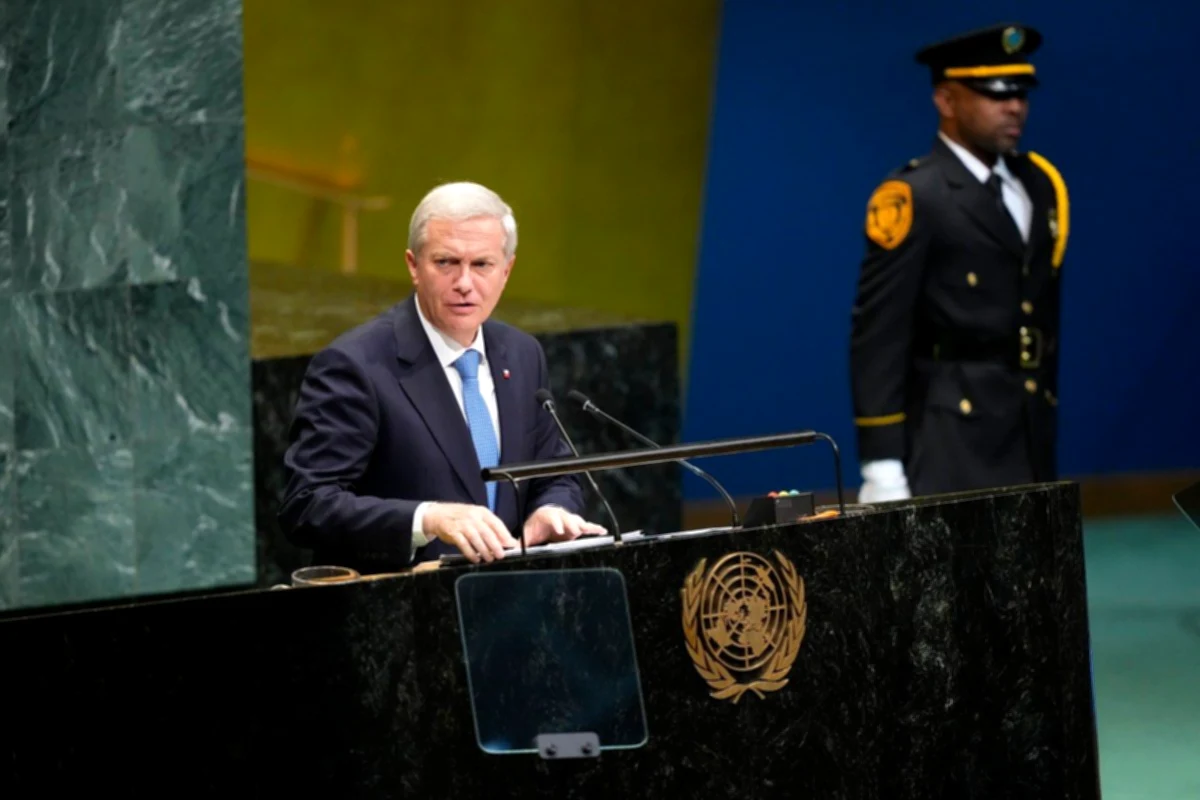
The decision was confirmed by Chilean President José Antonio Kast after attending a meeting of the mechanism headed by Trump in New York during the 81st General Assembly of the United Nations. Chile had previously attended as an observer before formalizing its incorporation.
“This gives us all the certainty that we will have similar rules for pursuing these organizations. Let them be 15 countries speak that this is something global, that one of the biggest plagues we have today is organized crime and migration,” Kast told reporters.
Organized crime does not recognize borders and combating it requires coordination between countries. That is why Chile has decided to join the Shield of the Americas, an instance of international cooperation to tackle more effectively drug trafficking and organized crime. pic.twitter.com/fM870VlSye
The president stressed that the incorporation does not mean the signing of an international treaty or the transfer of sovereign powers to the United States.
“Here there is no treaty, so that no one can say that we are going to carry the sovereignty or institutionality of the country,” he said. According to Kast, it is a coordination between governments that establishes common lines of action against criminal organizations operating in several countries.
The Chilean Chancellor defined the Shield of the Americas as a “framework of voluntary coordination between American governments” and noted that its participation will complement the Santiago Commitment, another initiative promoted by Chile to strengthen regional cooperation against transnational crime.
The Shield of the Americas was promoted by the Trump administration in March 2026 with the aim of increasing coordination against drug cartels and other transnational criminal structures. The initiative has identified around 25 organizations considered regional threats, including the Aragua Train, the Sinaloa Cartel and the Jalisco New Generation Cartel.
For Chile, membership will allow access to information about criminal organizations, intelligent data analysis systems and training programs for institutions such as Carabineros de Chile and the Investigaciones Policía (PDI), according to the Chilean government.
The Aragua Train represents one of the main concerns for the authorities of the country. The organization, which emerged in Venezuela, has been linked in Chile with investigations for kidnapping, extortion, sexual exploitation and homicides, including the 2024 kidnapping and murder of former Venezuelan military Ronald Ojeda, a political refugee who resided in Santiago.
The Chilean incorporation also occurs at times when Trump seeks to expand regional cooperation against cartels. During his speech at the United Nations, the U.S. president compared these organizations to terrorist groups and advocated a greater involvement of Washington in the fight against drug trafficking and transnational crime.
Kast argued that the strategy coincides with the security priorities of his government and with the Santiago Commitment.
“More than 15 countries are participating in this Shield of the Americas, focusing precisely on something that we have put forward with a lot of strength,” the president said before formalizing the incorporation.
Among the countries participating in the mechanism are Argentina, Bolivia, Colombia, Costa Rica, Ecuador, El Salvador, Guyana, Honduras, Panama, Paraguay, Peru, Dominican Republic and Trinidad and Tobago. Mexico and Brazil are not part of the initiative.
The membership sparked questions from sectors of Chile’s opposition about the scope of cooperation with Washington and its possible effects on the country’s autonomy. The government responded that the mechanism does not envisage a treaty nor does it entail, by itself, authorization for U.S. military operations on Chilean territory.
The entry of Chile thus expands the network of governments involved in a strategy with which Washington seeks to share intelligence and coordinate actions against criminal organizations that have spread their operations across the borders of Latin America.