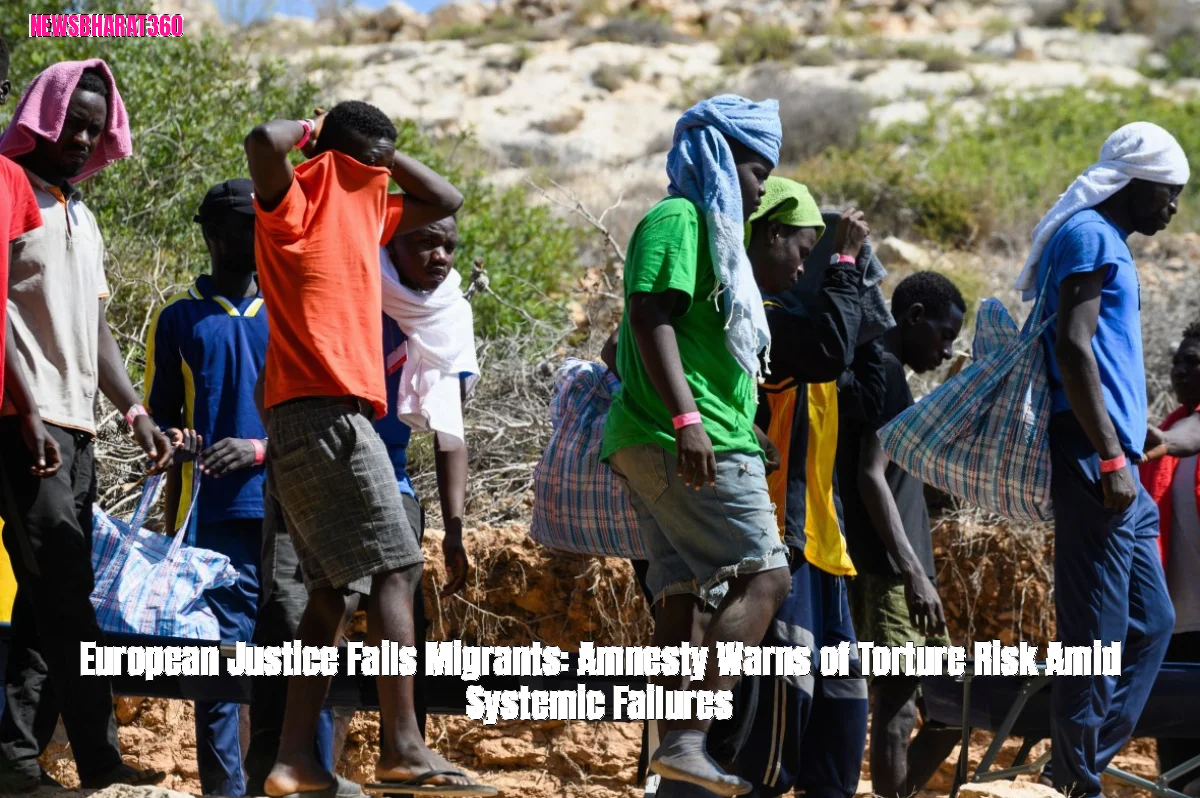

Amnesty International has expressed concern that recent European Court of Human Rights (ECHR) rulings have eroded safeguards for migrants and refugees against torture and other forms of inhumane treatment, by establishing new standards for identifying instances of human rights abuses in forced border returns.
Failures in migrant expulsions from Latvia, Lithuania, and Poland to Belarus have been linked to a broader context in which Belarusian authorities have been accused of leveraging migration flows as a means of exerting political pressure on other nations.
A court has identified and defined a specific practice as the "instrumentalization of migration," which involves a state actively promoting, facilitating, or coercing the displacement of individuals with the intention of destabilizing another country.
The European Court of Human Rights has delivered a series of judgments that undermine the absolute prohibition of torture, specifically in relation to the treatment of migrants in Latvia, Lithuania, and Poland.
In a recent resolution, it was determined that summary returns do not inherently constitute a breach of the torture ban. To establish a violation, applicants must provide evidence of specific circumstances of vulnerability or a genuine risk of mistreatment.
Amnesty International's Director of Strategic Litigation, Mandi Mudarikwa, expressed concerns over the criteria employed by the tribunal, suggesting that they mark a decline in the essential protections afforded to individuals seeking international asylum.
The recent verdicts have dealt a significant blow to the rights and protections of refugees and migrants in Europe.
The organization contended that governments are not relieved from their international commitments, particularly the absolute ban on torture, even in the face of national security threats or emergencies.
The court recognized instances of non-compliance with the prohibition on torture in Latvia and Poland, as well as infringements on the right to liberty in Lithuania and Latvia.
Reports have surfaced of escalating human rights abuses along the border, including forced expulsions, arbitrary detentions, instances of torture, intimidation, and violent episodes, all aimed at compelling migrants to return to Belarus.
The organization emphasized that its rejection of the resolutions does not imply a license for governments to disregard their international obligations or unilaterally limit the ability of migrants and refugees to seek asylum.