
President Donald Trump imposed a generalized 10% tariff on imported goods from more than 100 countries, although in some cases the tariffs are over 50%, which has an impact on prices.
The justification It was for national security reasons and under the International Emergency Economic Powers Act (IEEPA), a decision challenged in court. Some of the main US partners have been impacted, including China, Canada, Mexico, and the European Union, with whom the Trump Administration has worked on specific agreements, but these can be modified in a short period. In the case of Mexico and Canada, the two main US partners, the trade agreement or USMCA will be reviewed in 2026. Jose Fernandez, former Under Secretary for Economic Growth, Energy, and the Environment at the State Department during the Joe Biden administration, explains the implications of the tariffs on the cost of living for Americans. There is a particular situation that the United States is facing right now with the administration of President Donald Trump, precisely because of this tariff policy that has been implemented, which we had not seen at this level from the United States, and this policy, well, generalized and that has entered into negotiations with some countries. First of all, how does imposing tariffs on other countries actually impact the US economy and, particularly, the end consumers?
“It's very simple, although like many things Trump debates it, but 99.9% of economists tell you that a tariff is a tax. That is, a product that comes to this country imported, when it arrives at the border they put a tariff on it, and that tariff is paid by the consumer […] and that's what the vast majority of economists will tell you.
“What is Donald Trump saying? No, that what's going to happen is that the importers aren't going to pass that price on to the consumer, but rather they're simply going to charge it themselves, They're going to pay for it themselves, which hasn't happened yet. […] We need to give the tariff issue some time. I mean, what happens? Trump announces tariffs,then gives a date for when those tariffs will begin. What happens? Before those tariffs take effect, many start importing, importing to avoid having to pay the tariff. So we're seeing that in the first couple of months after Trump announced the tariffs, we saw little effect from them. Now economists are telling you that, well, that grace period has passed and now they're going to start being felt. So, to summarize, tariffs are a tax, and the consumer pays it.
“This is something that hasn't been done the way Trump did it for almost 100 years, since 1929, before the Great Depression, which our grandparents talk about. Well, in the United States, that was exacerbated by tariffs, the kind of tariff that Trump is imposing today.”
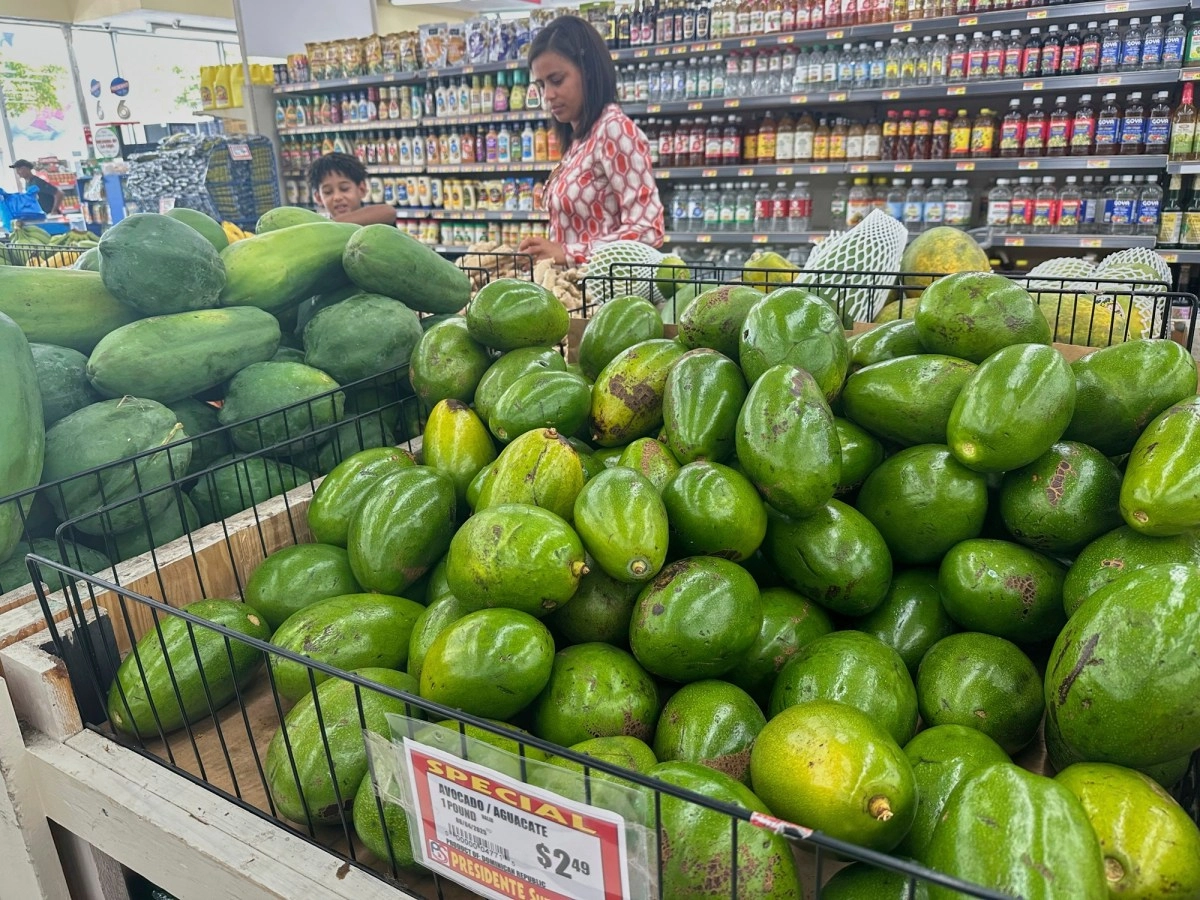
Following the logic you explained, which seems very interesting regarding imports, not all imported products have seen such a significant price increase. However, several have. For example, we're seeing reports of increased coffee prices, and there were increases in some food items, like vegetables and some fruits. President Trump even signed a new executive order to waive tariffs on those products because the increase occurred almost immediately after they were announced. How does this work? Companies, in a way, began to impose the tax and raised prices. Could that also be happening, that companies are already imposing an additional cost, even though their imports haven't yet complied with the tariff imposed by President Trump?
“Yes, companies are taking advantage of this; that is, Trump has given them the opportunity to profit, and they are grateful for it. What has happened? As you rightly say, Jesus, regarding the price of coffee, that is, the vast majority of the coffee we consume in this country is imported from Brazil. What happened? One day Trump got angry with the president of Brazil, Lula [da Silva], and then I imposed a 50% tariff on coffee. Now, think about why you impose a tariff because, to a large extent, you want your own industry to benefit from producing coffee here. What happens? We don't have coffee; “is import coffee.” What happened? The price of coffee went up. Brazilians started selling to China, and it went very well for them.But we've had to pay more for coffee here, and that's not just with coffee; you see it with many other products. And that's why the economy and prices are the number one concern of the American people today. And if you look at the polls, the vast majority of Americans, almost more than 60%, blame Trump for these prices, and among Hispanics the percentage is much higher, because Hispanics spend more on food and typically have less money,and therefore feel it much more in their pockets than other people. what happened there?
“Inflation in the United States, which had already decreased since President Biden's first year, had decreased every month in December of last year, which was the last month in which President Biden was president for the entire month. In December, inflation was 2.8%.” What's the big deal here? This year it's increased, and in several months it's been over 3% at the same time, which is something we should talk about later. Unemployment has risen [...], inflation has gone up, and we see that because [companies] are anticipating tariffs. Supply chains are changing, and that's very important. Trump imposes tariffs whenever he feels like it, that is, before he could have a dispute with President [Claudia] Sheinbaum of Mexico, he announced there would be a tariff, I think of 20 percent, then he raised it to 40, then he said in a call, he spoke with President Sheinbaum, and after the call he said, well, she convinced me and I'm going to lower it to 20.
“So, part of what we're seeing is that companies are protecting themselves from this uncertainty. If you see that you're being hurt, you're going to protect yourself, and you're going to protect yourself by increasing prices, in the worst-case scenario. And that's what we're seeing. […] It's a combination of tariffs, energy prices, which have risen a lot, food prices, and also the reduced labor force we're seeing because of Donald Trump's immigration policy. So, it's a combination of things, none of which had to happen."
Well, as the polls mention, even we We published a recent survey, and the first thing that comes up is the cost of living; people are worried. Could we see a positive change soon, or will this same policy of uncertainty continue? From what I'm seeing, President Trump is handling this economic policy as a kind of tug-of-war for other US foreign policy objectives, which have to do with immigration, security, and so on, while maintaining this negative impact on Americans. “Yes, you put it very well. Tariffs have become a political weapon for Trump. What does this mean? Typically, with other Republican or Democratic presidents, you imposed tariffs. They were never 140%, but you did impose tariffs. If you wanted to help your own industry, that is, if you wanted to establish a semiconductor industry,as I said before, well, you imposed tariffs on others to give your manufacturers that space. This president doesn't do it that way. He threatened to impose tariffs on the president of Colombia, he did it with the Mexicans, he's doing it with Brazil, he's doing it with the Europeans, and not to improve his industry, but because he wants to punish them, right? And so I tell you this because I believe that it will continue; “it's part of his policy.” From the president, and unfortunately, Jesus, I would say that this is very likely going to get worse. And why is it going to get worse? Because, as I said before, the tariffs are only now starting to be felt. And second, we haven't talked about the cost of healthcare, Obamacare, health insurance. Today it's projected to increase dramatically. I'm talking about a 20, 30, 40% increase in the monthly premium that people have to pay. Why? Because the Republicans refuse to maintain the grants or subsidies we had before. Yes, unfortunately, not only are people going to go hungry with the tariffs, but their health is also going to deteriorate because they won't be able to afford health insurance and they're going to have to suffer the consequences.”
What would be the most worrying issue in these sectors where we could see a price increase that will be difficult to lower? Well, I wouldn't say in the next few months, but at least in the next year.
“I'm worried about the issue of healthcare. Because look how hard it was for this country to provide basic services to the American people. I mean, the fact that in this country, one of the richest countries, if not the richest country in the world, people can't go to the doctor because they have to feed and their children, is something that shouldn't happen. When you see that a basic premium is is going to increase from $7,000 a month to $10,000 […], you can't afford it, and we're going to see people in the emergency room, and we're going to see people who, when they go to the doctor, will have a huge debt. we're going to see the Federal Reserve, the American Central Bank,"Possibly lower the interest rate. Why? Because they want to improve the economy and at the same time reduce inflation, because they see, they see the danger."
Note: This interview has been edited for brevity and clarity.