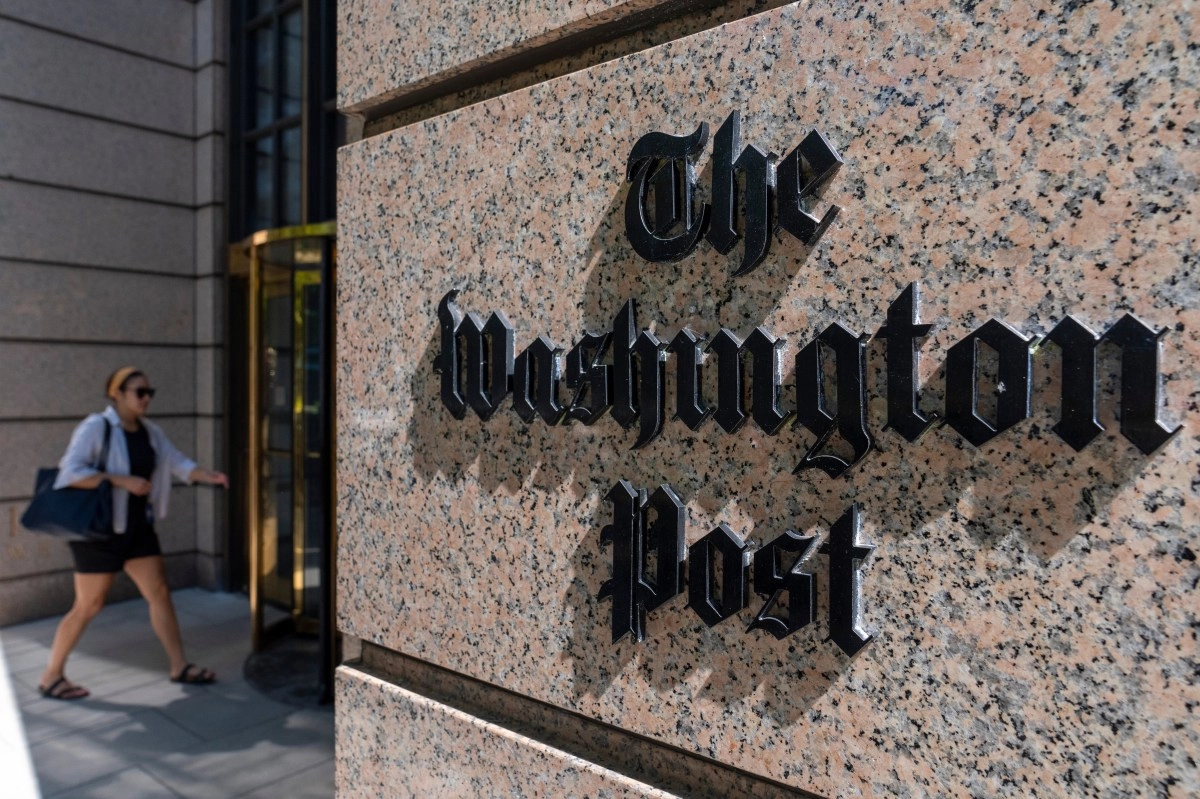

The FBI raided Hannah Natanson's Washington Post home early on Wednesday morning, which the paper described as a "highly strange and aggressive" action by law enforcement and which press freedom organizations called a" great intrusion" by the Trump administration.
Agents were called to Hannah Natanson's Virginia home without providing any evidence, according to official information as part of an investigation into a government contractor who is accused of illegally storing classified government documents. This extraordinary and violent action, in the opinion of Post executive editor Matt Murray, "raises profound questions and concerns about the constitutional protections for our work. " The journalist was allegedly obtaining and publishing classified and leaked information from a Pentagon contractor, according to US Attorney General Pam Bondi, who confirmed the search of the residence. The leaker is currently incarcerated. On this initiative, I'm proud to work with Pete Hegseth, the secretary of defense. According to White House Press Secretary Karoline Leavitt, "leaking classified information poses a risk to national security and the lives of military heroes, which are in danger. " Trump has shown no tolerance for these issues and will continue to fight against illegal acts of this kind violently.
In contrast, the journalist, who covered the steps taken by US President Donald Trump to oust thousands of federal employees, published a report on the situation in December. According to the aforementioned media outlet, many of these workers have spoken to her about their personal experiences and have accused the government of "exerting pressure" against them.
It is important to point out that the legality of journalists publishing classified information in the United States is a complex legal area. defined as the separation of the First Amendment-protected press freedom from the government's national security interests.
However, there are no general laws that prohibit the release of classified information unless it was obtained through a crime, but several federal laws, most notably the Espionage Act of 1917, may be applicable.
In response, organizations like the Inter-American Press Association ( IAPA ) expressed their deep concern about the raid in light of the alleged leak of classified information. The organization urges US authorities to refrain from creating precedents that might serve as justifications for excessive press pressure. The IAPA's president, Pierre Manigault, warned that" these kinds of measures, when they directly involve journalists in the performance of their reporting duties, constitute an extreme action that can violate fundamental principles of press freedom, particularly the protection of confidential sources, journalistic secrecy, and the public's right to be informed about matters of public interest. " Manigault added that" the investigation of potential information leaks cannot lead to actions that intimidate, criminalize, or inhibit journalistic work. " The raid on a journalist's home and the seizure of work files send a worrying message that can be depressing for both journalists and their sources. Manigault added that" the investigation of potential information leaks cannot lead to actions that intimidate, criminalize, or inhibit journalistic work. " The investigation of potential information leaks cannot result in actions that intimidate, criminalize, or inhibit journalistic work, according to Mangault. The journalist's home was raided, and work materials were taken, sending a worrying message to both journalists and their sources, or to stifle journalistic work. The raid on a journalist's home and the seizure of work files send a worrying message that could be depressing both for the journalists and their sources. Manigault further stated that" the investigation of potential information leaks cannot result in actions that intimidate, criminalize, or inhibit journalistic work. The raid on a journalist's home and the seizure of work files send a worrying message that could be depressing both for the journalists and their sources. "or prevent journalistic work. The raid on a journalist's home and the seizure of work materials send a worrying message that could be depressing both for journalists and their sources. Manigault added that" the investigation of potential information leaks cannot lead to actions that intimidate, criminalize, or inhibit journalistic work. " The raid on a journalist's home and the seizure of work materials send a worrying message that could be depressing both for journalists and their sources.