
NEW YORK.- With more than 30 federal agents investigating organized crime, including the administrator of the DEA, Terry Cole, the former leader of the Sinaloa Cartel, Ismael “El Mayo” Zambada, received a life sentence in prison, in addition to the order to confiscate $15,000 million dollars.
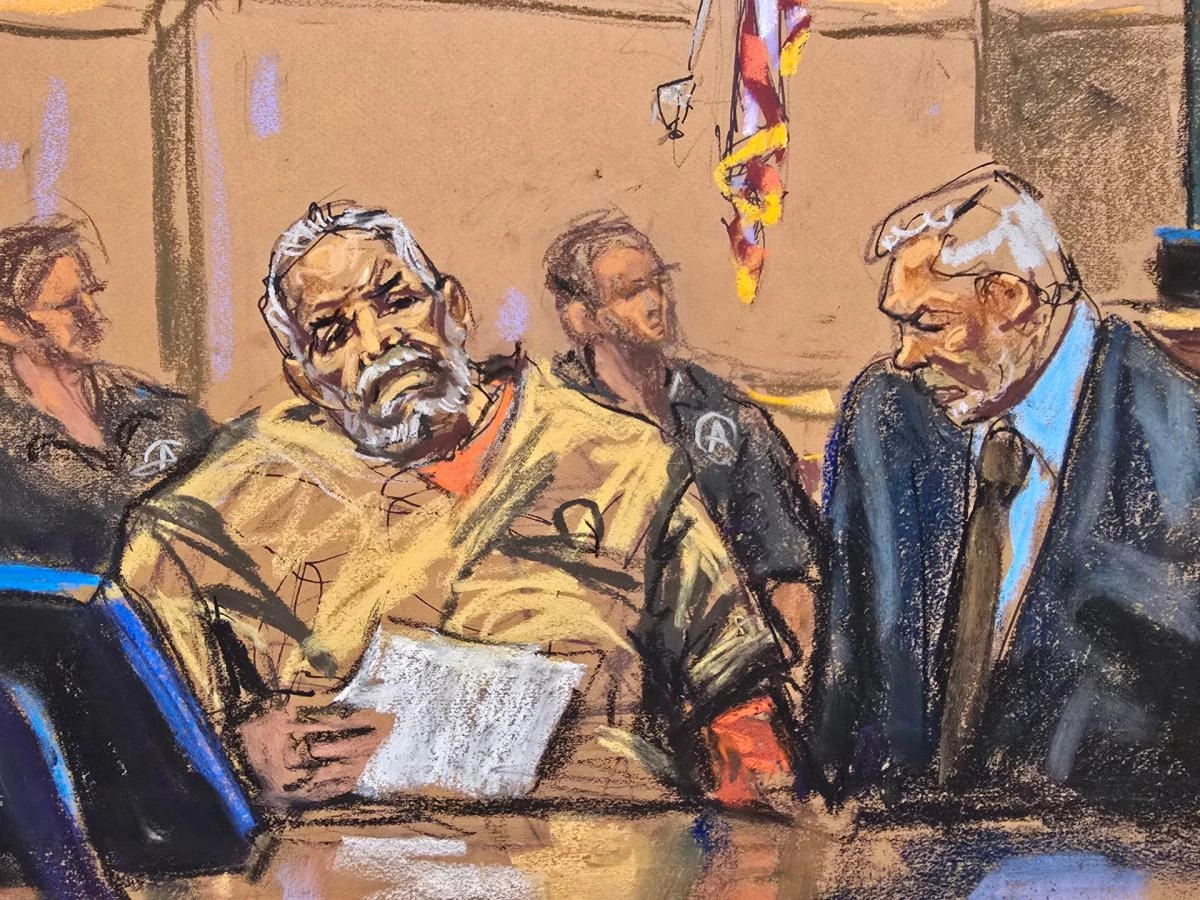
The hearing began after 10:30 a.m. this Monday, after Judge Brian Cogan entered the courtroom, followed by Zambada – escorted by two federal agents – dressed in khaki and orange. “Good afternoon,” said Zambada, as if lost in time.
Then, the native of Sinaloa, Mexico, went to the assigned place, in the middle of his main lawyer, Frank Pérez, and a legal assistant. “Oh, bastard!” Zambada could be heard saying as he sat down. Perhaps it was because of some pain in one of his legs, which forces him to limp and walk slowly.
The translator placed the device that would allow Zambada to listen to the hearing in Spanish, but Judge Cogan's first interventions were not clear to him. “I didn't understand him very well,” he said. The judge asked them to make sure he could understand the judicial procedure. “He can speak slower,” Zambada said. His lawyer gave him some instructions and then the accused indicated that everything was correct to continue.
Judge Cogan recalled that the defense and prosecutors had issued their sentencing suggestions, which is why he asked to establish such positions in the public hearing. Frank Pérez had the floor first and wanted to clarify that his client pleaded “guilty,” but that “he is not cooperating” with federal prosecutors to testify against any other criminal or against “Mexican officials.” In addition to remembering that Zambada recognizes the jurisdiction of the Eastern District Court of New York, based in Brooklyn, where he faces accusations.
At the table, the 12 prosecutors led by Francisco Navarro listened to the position on the accused, they did not add much to their memorandum, which was basically accepted by Judge Cogan: life sentence for “El Mayo” and the confiscation of $15,000 million dollars.
The judge recalled that there was at least one group of alleged victims of “El Mayo” who claimed compensation. They did not mention her by name, but she was referring to the LeBarón family, which filed a motion to request review of Zambada's financial reports and demand compensation for the massacre of several relatives in 2019. Previously Judge Cogan rejected the motion, but addressed the issue.
“The government has not confiscated [resources],” said one of the prosecutors.
Judge Cogan indicated that if there were such funds, the government would “determine how to use them.” There was no decision regarding the LeBarón, although it is possible that that family may request a private hearing for their claim.
Special conditions due to illness?
The court accepted that the details of the medical condition of “El Mayo” Zambada, who suffers from diabetes, be kept sealed, but there are no other clear specifications. Attorney Pérez requested in the sentencing proposal that his client have access to specialized medical assistance, regardless of the fact that he was in a maximum security prison.
Judge Cogan addressed such considerations, but noted that his sentence is governed by federal law and trusted that the Bureau of Prisons (BOP) will act within the rules that govern it so that Zambada has the medical care he requires.
“I am confident that [medical requests] will be addressed appropriately,” Cogan said.
It is not known to which prison “El Mayo” Zambada will be sent.
The words of “El Mayo” Zambada
“El Mayo” Zambada will face sentence for two crimes: 1) leading a criminal organization and 2) leading actions for the manufacture, distribution and importation of controlled substances (various drugs, including fentanyl).
“Do you have anything to say?” Judge Cogan asked Zambada. Attorney Pérez said that his client had a message prepared.
"Your Honor. I stand before you today knowing that my actions caused harm, real harm, to people, families and communities. I take full responsibility for what I did. I chose this path and I understand that today I must be held accountable for those decisions," Zambada began.
The drug trafficker, who would have begun operating in Mexico since the 1970s, justified his decision not to face trial.
"I did not go to trial because I did not want to deny the truth. What I did was wrong. There is no justification for it. I understand that the authorities have a duty to protect society and I accept that my actions put me on the wrong side," he added. "I also understand the severity of the sentence I face. I accept my punishment. I am not here to ask for compassion. I am here to take responsibility and apologize for the harm I caused and for the example I set."
Zambada tried to justify his actions by arguing that he grew up in an environment of “violence and crime” that seemed normal to him, although he acknowledged that it was not an excuse for his crimes. He then sent a message to young people and against violence.
“If there is anything I can say today that has value, it is this: violence must end in Mexico and elsewhere,” he said. "To the next generation, I say: choose a different path. There is no honor in violence, nor anything lasting in crime. It only brings pain and loss."
A triumph for the Trump government
In the courtroom were several U.S. attorneys, including Assistant Attorney General A. Tysen Duva of the Justice Department's Criminal Division; United States Attorney Joseph Nocella Jr., of the Eastern District of New York; United States Attorney Jason A. Reding Quiñones, of the Southern District of Florida; United States Attorney Justin R. Simmons, of the Western District of Texas, and Administrator Terrance C. “Terry” Cole of the Drug Enforcement Administration (DEA).
“Today, drug trafficker El Mayo was sentenced to life in prison, ending his dominance over the Sinaloa Cartel, one of the most violent and lethal drug cartels in history,” Duva stated. “He will never again spread terror, corrupt public officials, or traffic deadly drugs into our communities, ruining Americans and their families.”
The head of the DEA, Clore, assured that the sentence “sends a clear message to all cartels and foreign terrorist leaders,” that they will not be able to evade US justice.
“For decades, Ismael ‘El Mayo’ Zambada García helped lead the Sinaloa Cartel – now designated a Foreign Terrorist Organization – fueling violence, corrupting public institutions and trafficking fentanyl to the United States,” Cole said in a press conference after the sentencing.