
Workers who cut, polish, sand or drill quartz and engineered stone countertops in California are facing a serious workplace health crisis. Exposure to silica dust can cause silicosis, a progressive, irreversible, and life-threatening lung disease. The impact is especially strong among Latinos: around 98% of the cases related to this industry identified by California authorities correspond to Latino men.
The disease can progress for years before being detected. When symptoms such as shortness of breath, cough, tiredness or chest pain appear, lung damage can be considerable. And there is no treatment capable of reversing the scarring that silica produces in the lungs.
The magnitude of the problem led California to take a step that seemed unlikely a few years ago: in May 2026, the state began the process to evaluate a ban on manufacturing and installing artificial stone that contains more than 1% crystalline silica.
Why Latino workers are the most affected
The California Department of Public Health (CDPH) has identified an extraordinary concentration of cases among Latino countertop manufacturing workers.
The 2026 California Public Health Report notes that confirmed cases related to artificial stone increased from 13 in 2019 to more than 200 in 2025 and that 98% were among Latino men. Many of those affected had accumulated between nine and 15 years of occupational exposure.
The Department of Industrial Relations (DIR) added another particularly worrying fact: the average age of the workers who died from this disease was less than 50 years.
The vulnerability of immigrant workers in this industry is also not a new phenomenon. The CDC had previously warned that many stone shop employees are Hispanic immigrants who may face fewer job options, difficulties accessing health care, and fear of retaliation when reporting unsafe conditions or filing for workers' compensation.
What is silicosis and why there is no cure
Silicosis occurs when a person breathes in extremely small particles of respirable crystalline silica. These particles can penetrate deep into the lungs, where they cause inflammation and permanent scarring. As fibrosis progresses, lung capacity decreases.
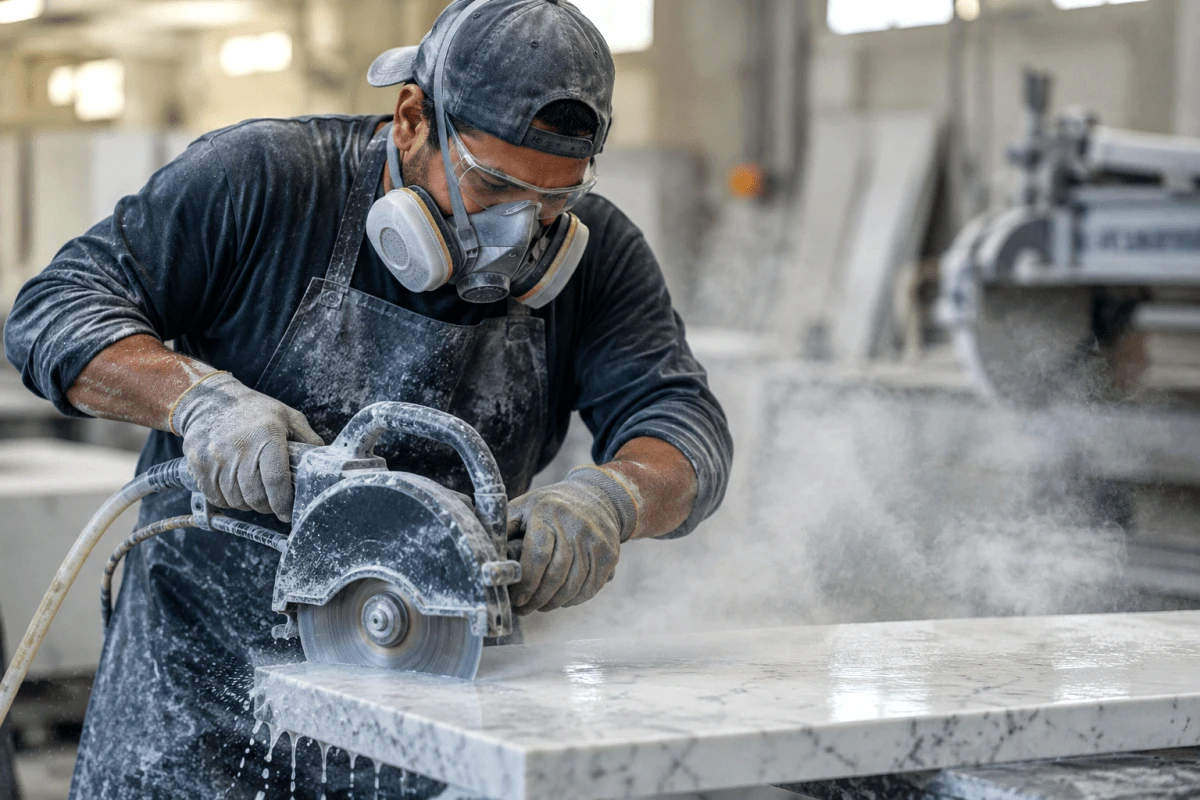
The problem is not having a quartz countertop installed in a home. The risk is mainly in the dust generated when working with the material, especially when cutting, drilling, sanding, polishing or grinding it.
Workers can also be exposed during cleaning tasks if they stir up accumulated dust.
Why quartz countertops can be particularly dangerous
What is commercially called “quartz” is often artificial stone or engineered stone, made using minerals along with resins and other materials.
Some of these products contain extremely high concentrations of crystalline silica.
NIOSH noted in January 2026 that artificial stone used for countertops typically contains more than 90% potential respirable crystalline silica, while natural materials may contain lower proportions.
When a tool cuts or polishes those plates, it can produce particles small enough to be inhaled.
A CDPH investigation cited by NIOSH further found that 51% of stone fabrication shops inspected had at least one employee exposed to concentrations of respirable silica above the allowable limit.
What jobs present the greatest risk
CDPH specifically warns those who work cutting, crushing, chipping, sanding, drilling, or polishing quartz, engineered stone, or other stone products.
The danger can arise both in the workshops where the countertops are manufactured and during their installation. Exposure may also occur among people who do not directly operate the machines but work near the place where the dust is produced.
The CDC has documented cases among employees whose exposure occurred while being around such operations or performing cleaning tasks.
What are the symptoms of silicosis
One of the main problems is that the disease can develop before the worker notices clear symptoms. When they appear, they may include shortness of breath, cough, tiredness or fatigue, and/or chest pain.
Silicosis traditionally could take ten years or more to manifest. However, very intense exposures can cause accelerated forms and serious lung diseases in relatively young workers.
Therefore, not having a cough or shortness of breath does not necessarily mean that an exposed worker is free of illness.
What other diseases can breathing silica cause?
Silicosis is not the only risk. NIOSH and OSHA warn that breathing respirable crystalline silica is also linked to lung cancer, chronic obstructive pulmonary disease (COPD), and kidney disease.
Associations have also been seen with lung infections, autoimmune diseases, and other health problems. For that reason, authorities consider exposure to silica an occupational risk that must be prevented before symptoms appear.
What should a worker who has been cutting quartz for years do?
Work history is essential. A person who currently works—or worked for years—making or installing countertops should tell the health care professional what materials they handled and whether they were exposed to dust generated when cutting, sanding, drilling, or polishing stone.
You shouldn't just say you work in construction. Specifically explaining that you are working with quartz or artificial stone and there is exposure to silica dust can help the doctor correctly assess the risk.
The diagnosis of silicosis is based on a history of occupational exposure along with studies that may show alterations compatible with the disease.
What medical tests can detect damage
Federal OSHA standards provide for medical surveillance for certain workers with sufficient occupational exposure to silica.
Exams may include chest x-rays and lung function tests, as well as appropriate medical evaluation. Under certain exposure conditions, these checks must be offered periodically by the employer.
The specific need for studies must be determined by a health professional based on the exposure history and conditions of each worker.
California also strengthened health surveillance. Since 2025, silicosis became a mandatory reporting disease in the state, a measure aimed at better identifying cases and understanding the true dimension of the problem.
How to know if a workshop is protecting its workers
An especially important sign is how dust is controlled. OSHA and NIOSH updated their recommendations for the manufacturing, finishing and installation of countertops in February 2026. Prevention measures include working with water at the point where dust is generated, using localized exhaust ventilation and isolating certain processes.
There are also specific cleaning practices. OSHA recommends using wet methods or vacuums with HEPA filters instead of dry sweeping or dispersing dust using compressed air when safe alternatives are available.
Depending on the level of exposure and the work performed, respiratory protection may also be necessary. But a simple everyday mask should not automatically be considered sufficient protection against occupational exposure to silica. The type of respiratory protection required depends on the exposure and applicable standards.
California believes current measures may not be enough
The situation reached a new level in May 2026. The California Occupational Safety and Health Standards Board voted unanimously to begin the process to consider banning the manufacture and installation of artificial stone products containing more than 1% crystalline silica.
The decision does not yet amount to an effective ban. What the Board did was ask Cal/OSHA to move forward with the regulatory process and evaluate additional measures through scientific and technical committees.
By November 2025, the CDPH had identified 432 confirmed cases of silicosis associated with artificial stone in California since its surveillance began and recorded at least 25 deceased workers and 48 who had received lung transplants.
The authorities themselves warn that these figures probably underestimate the true number of those affected. That point is particularly important because many workers may have left the sector without knowing they were exposed.
The disease can appear after leaving work
Therefore, someone who worked for years in a countertop shop and subsequently changed jobs should mention that previous exposure when consulting with a health care professional, especially if they have respiratory symptoms.
The quartz problem already surpasses California
California became one of the main American hotspots for this disease, but it is not an exclusively state phenomenon. NIOSH speaks of a problem related to the manufacture of artificial stone countertops and has documented cases in different states. In addition, California health authorities describe a global epidemic of silicosis related to these materials.
The difference is that California is seeing with particular clarity who is paying the human cost.
State data shows that nearly all of the affected workers identified in this industry are Latino men. Many fell ill during decades when cutting a fancy quartz countertop could seem like just another construction job.
It is now known that the almost invisible dust generated during this task can cause irreversible lung damage.
And for those who still work among those particles daily, detecting exposure before symptoms appear may be as important as recognizing the disease.