USA: Masked federal agents weaken the rule of law
Climate of anarchy and terror increases in abusive arrests of immigrants
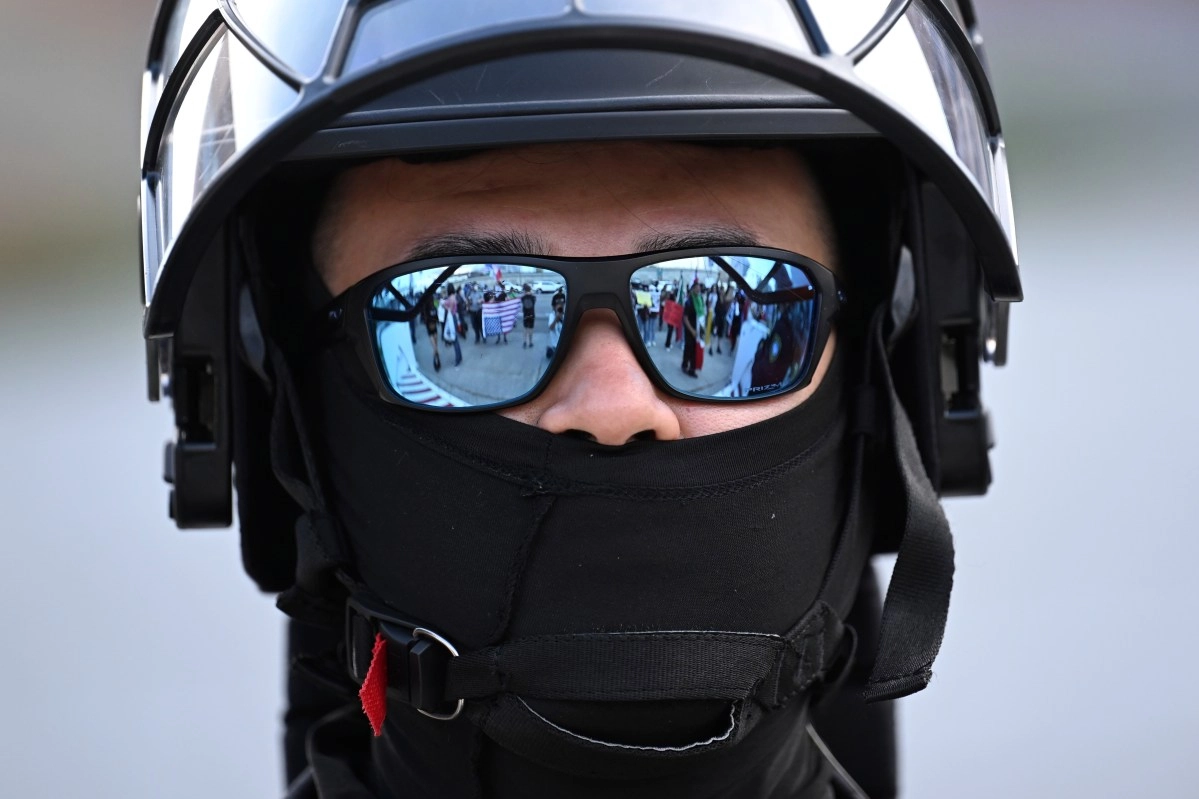
U.S. federal immigration agents now routinely operate masked and without visible identification, exacerbating the abusive and unaccountable nature of the Trump administration’s mass deportation campaign, Human Rights Watch said today. The indefinite and widespread nature of these practices is fundamentally incompatible with the United States' obligations to ensure that law enforcement abuses are investigated and held accountable. “Law enforcement officers must be identifiable so that they can be held accountable for their actions,” explained Belkis Wille, associate director of crisis and conflict at Human Rights Watch. “This kind of concealment should be the exception, never the rule, and is all the more alarming given the widespread abuses that have occurred during immigration arrests in recent months.” Since Donald Trump assumed the presidency again in January 2015, his administration has conducted a nationwide campaign of abusive immigration raids and arrests, primarily targeting people of color. Many of the raids are intentionally carried out in places where members of the Latino community work, shop, eat, and live. Agents have apprehended people in courthouses and at regular appointments with immigration officials, as well as in places of worship, schools, and other sensitive locations. Many raids have been marked by the sudden and unjustified use of force, without provocation, creating a climate of fear in many immigrant communities. These immigration enforcement operations have often involved Immigration and Customs Enforcement (ICE) agents wearing masks and, in some cases, plainclothes. It is common for agents to conceal agency insignia and use unmarked vehicles to stop people in their cars, as well as in courthouses, schools, workplaces, homes, on the street, and on public transportation. On its website, ICE justifies the widespread practice of masking by stating that it is intended to “avoid being exposed.”This type of broad and indiscriminate justification for concealing the identity of officials is incompatible with U.S. human rights obligations, except when the measure is necessary and proportionate to address specific security considerations, Human Rights Watch said. When applied as a broad and automatic strategy, such measures constitute an obstacle to accountability that is inconsistent with U.S. human rights obligations. Anonymity also weakens deterrence, fosters conditions for impunity, and inhibits the exercise of rights. Human Rights Watch interviewed 18 people who witnessed arrests or were arrested by unidentified individuals in five U.S. cities since January 20. All of them described the incidents as terrifying, feeling powerless to do anything if they were abused, especially when the agents were unidentifiable. Human Rights Watch also analyzed dozens of videos of interceptions and arrests involving masked agents that were posted on social media. In one example, on March 25 at approximately 5:15 p.m., at least six officers, all in plainclothes and in unmarked vehicles, intercepted and detained a 30-year-old Tufts University graduate student, Rumeysa Ozturk, against whom they apparently acted deliberately for having written an opinion piece in a student newspaper in which she urged Tufts to “recognize the Palestinian genocide” and disengage from investments related to Israel. Ozturk, who had been living in the United States for six years, told Human Rights Watch about the incident, which was also captured on CCTV. Ozturk was walking down the street when several masked individuals approached her, forcibly took her phone and backpack, and handcuffed her. Ozturk said that when she asked who they were and requested to see their badges, one of them replied that they were “police officers,” and another showed her a gold necklace, but she didn't see any badge on it, preventing her from identifying them. In the recording, a bystander can be heard asking the officers, “Why are you hiding your faces?” Ozturk stated that she was not shown any documents justifying the arrest. She was then forcibly taken out of state and unlawfully detained. “It was a horrible feeling,” Ozturk said. “I didn’t think they were police because I’d never seen police officers approach and take someone away like that. I thought they were people who were harassing me, and I was really scared for my safety… As a woman who has traveled and lived alone in several countries for study purposes, I had never experienced such intense fear for my safety.”until that moment.”
A woman who has witnessed numerous raids and wiretaps in Chicago since August said about this: “I’ve had experiences with agents who refused to identify themselves. That takes the fear to another level. These are not identifiable police officers who can be held publicly accountable.” A Washington, D.C., man who has also witnessed numerous arrests by masked ICE agents since August said that these tactics have “completely destroyed any trust we might have had in local and federal law enforcement.” Many observers have suggested that the terror instilled by these tactics is deliberate. A judge in a federal district court opined in a ruling that “ICE masks itself for one reason only: to terrorize Americans into compliance… We have never tolerated a secret police force that operates armed and masked.” The court dismissed ICE’s justification for masking as “dishonest, pathetic, and disgraceful.” In recent months, there have been media reports of individuals impersonating federal agents who kidnap, sexually assault, and extort victims, taking advantage of the fear surrounding immigration enforcement measures. It demonstrates that the lines between criminals and law enforcement officers can become blurred when federal agents themselves are not identifiable, Human Rights Watch explained. Several states are taking steps to pass laws that would prevent law enforcement officers from concealing their identity during public interactions. These initiatives are unlikely to be enforced. At the federal level, the proposed VISIBLE Act, backed by Senators Cory Booker and Alex Padilla, would require legible identification and prohibit face coverings for immigration officers except for health reasons. Congress should investigate the brutality in ongoing immigration enforcement activities, including the specific impacts of unidentifiable agents conducting stops and arrests on obstructing investigations and accountability efforts, Human Rights Watch noted. “Allowing masked and unidentified agents to roam communities and apprehend people without identifying themselves undermines trust in the rule of law and “It creates a dangerous vacuum where abuses can spread, and exacerbates unnecessary violence and brutality during arrests,” Wille emphasized.
To learn more about Human Rights Watch’s work on the United States, visit: https://www.hrw.org/united-states
This news has been tken from authentic news syndicates and agencies and only the wordings has been changed keeping the menaing intact. We have not done personal research yet and do not guarantee the complete genuinity and request you to verify from other sources too.