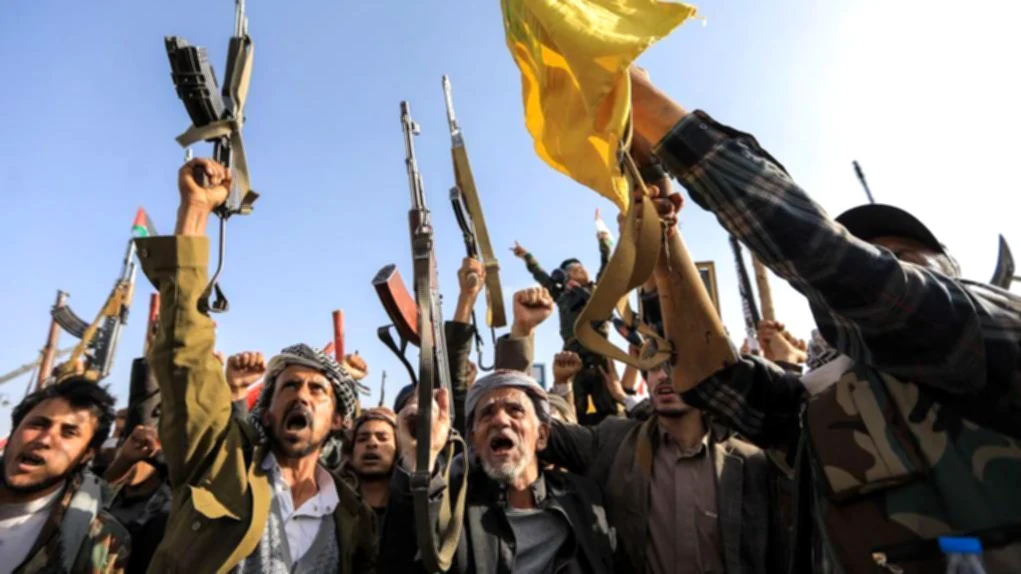

The advance of the Houthis in Yemen has been as fast as unexpected.
In a matter of days, the Iranian-backed rebel group has captured broad areas of the Red Sea coast, in one of its most significant offensives in years.
Their actions generate concern in the global energy markets. Much of the captured territory is located near the Strait of Bab al-Mandeb, a strategic step through which a key part of world maritime trade transits.
Through that strait passes the oil that leaves the Gulf to Europe and the US, so any threat on that route can translate into supply risks and rising prices.
Until recently, that shore was under the control of the so-called National Resistance, an anti-Huthi coalition.
According to some estimates, the Houthis have captured up to 130 km of strategically important coastline for the country.
On Tuesday, tensions grew even more after a Saudi-led coalition claimed to have intercepted and destroyed a Houthi drone south of Mecca.
Its spokesman, Turki al-Maliki, called the alleged attack on the most sacred city of Islam a “shameful act.”
The Organization for Islamic Cooperation, comprising 57 countries, condemned the incident and described it as an “unacceptable and intolerable transgression.”
The Houthis, for their part, denied having attacked Mecca and accused Saudi Arabia of spreading “inventions and lies.”
But who are they and what are these rebels looking for?
The Houthi militia — or Ansar Allah (Participants of God), its official name — is a Shiite movement that controls much of northern and northwestern Yemen, where it has established a de facto administration accused by international organizations of abuses and restrictions on freedoms.
Among the territories under his control is the capital, Saná, as well as densely populated areas where the majority of the country's population resides.
The group was formed in the 1990s and is made up of members of the Zaidis, the country’s Shia Muslim minority.
Zaidis are the branch of Shiaism closest to Sunism theologically speaking, according to experts. This tribal group is concentrated in northern Yemen and represents about a third of the 33 million inhabitants of the Arab country.
The Houthi militia denounced both the corruption of then-president Ali Abdullah Sale and the oppression of the Shiites by the Sunni majority, backed by the wealthy Saudi Arabia.
However, it was not until the beginning of this century that it began to gain notoriety, after the group rose up in arms against Salé.
In 2004, they took the name of one of their leaders, the cleric Hussein Badreddin al-Houthi, who was assassinated by government forces in September of that year.
The Houthi, who in addition to being a religious leader was a Yemeni military and parliamentary, sought to take power, if not throughout the country, at least in part, and create a new independent state for the Zaidis.
In 2011, the group joined the so-called Arab Spring and participated in massive protests that forced Salé to hand over power to his second, Abdrabbuh Mansour Hadi.
However, in the few years they were already up against the new president and even reached an agreement with Salé, his former enemy, to whom they promised to return him to the presidency in exchange for his support against Hadi.
In a matter of months the Houthis took control of the province of Sadat in the north of the country and, in early 2015, captured the capital, Saná, forcing Hadi to flee abroad.
However, its conquests were stopped by Saudi Arabia, which, along with the United Arab Emirates and Bahrain, launched a military campaign aimed at overthrowing the Houthis and restoring President Hadi to power.
Saudi authorities feared that Yemen would become a satellite of its enemy: Iran.
Although the attacks have killed 150,000 people and wounded thousands more, the Houthis have managed to retain control of large areas of the country.
A truce was reached in late 2022 that put an end to fighting between the group and the Saudi-led coalition.
The current leader of the Houthis is the brother of the group’s founder, Abdul Malik al-Houthi.
The Yemeni group has copied the model of Hezbollah, the Shia-party militia in Lebanon, with which they maintain close ties.
Hezbollah has provided them with military training since 2014, according to the Centre for Combating Terrorism, a U.S. military research institute.
The Houthis also view Iran, the great Shiite state, as an ally, while they see Sunni Saudi Arabia as one of their enemies, as well as the Western powers and Israel.
Western intelligence services say Iran supplies arms and financial resources to the Yemeni rebels.
The United States and Saudi Arabia have accused Iran of giving the group the ballistic missiles that in 2017 were fired at the Saudi capital, Riyadh, and which were shot down.
Saudi Arabia also blamed Iran for supplying the Houthis with cruise missiles and drones that were used to attack some of its oil facilities in 2019.
The supply of these weapons would violate an arms embargo imposed by the United Nations on Yemen.
The internationally recognized government of Yemen is the Presidential Leadership Council, to which President Abd-Rabbu Mansur Hadi transferred his powers in April 2022.
Its headquarters is in Riyadh, Saudi Arabia.
However, most of the Yemeni population lives in areas under Houthi control, where the group collects taxes, manages institutions and has even come to print its own currency.
They also receive support and supplies from allies such as Iran.
According to estimates from the UN Security Council, in 2010 Houthis had between 100,000 and 120,000 followers, including fighters and sympathizers.
Today, the group has a more sophisticated arsenal, which includes drones and long-range missiles.
Following the U.S.-led invasion of Iraq in 2003, the Houthis adopted the motto: “God is great. Death in the United States. Death to Israel. A curse to the Jews and a victory for Islam,” which placed them under the radar of Western and Israeli intelligence services.
The group declares itself part of the “axis of resistance” led by Iran along with Hamas and Hezbollah and against Israel, the US and the West.
Since the end of 2023, they have again attracted world attention with drone and missile attacks that fired on dozens of cargo ships passing through the Red Sea towards the Suez Canal.
The group presented these actions as a retaliation for the military operations that Israel launched against Hamas in the Gaza Strip and which were the Israeli response to the deadly attacks that the Palestinian organization perpetrated on 7 October 2023 and where more than 1,200 people were killed and 250 were abducted.
“They are fighting against the imperialists, against the enemies of the nation of Islam... That resonated well at their base,” said Hisham al-Omeisy, a Yemen expert at the European Peace Institute, to explain the actions of the Yemeni rebels.
The attacks on the cargo ships forced many companies to use longer routes, bordering Africa and bringing the price of the fleets up 170%.
By the end of 2023, the U.S. Armed Forces The United Kingdom and the United Kingdom bombed Houthi positions to ensure that the route through which 12% of world commodity trade runs continues to be open without problems.
Despite the punishments imposed in the past by the United States and its allies, the rebels have refused to abandon the so-called “axis of resistance”, haveined a challenging stance and have achieved advances like the most recent near Bab al-Mandeb.