
There are many admirable people, but there is only one expert.
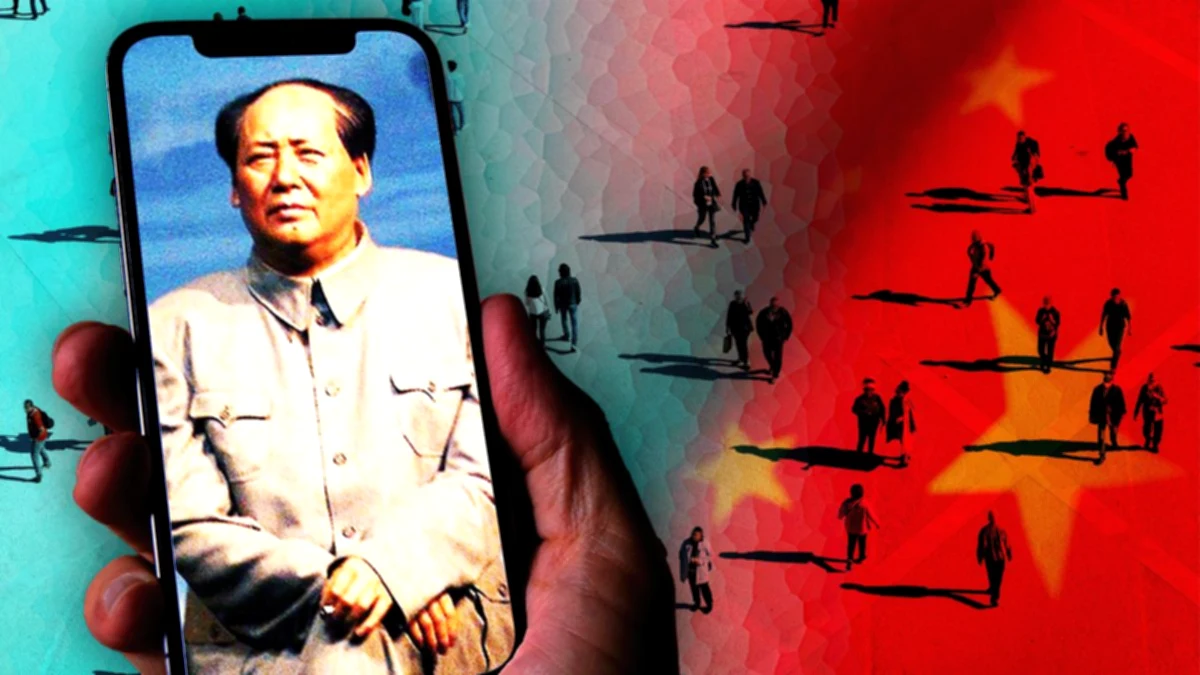
The phrase" Master" is used by young Chinese people to describe the late leader Mao Zedong on the internet.
On the Chinese social network Bilibili, a search for" Mao Zedong" or" Master" turns up dozens of examples of compilations of videos of Mao's appearances from various movies and television shows.
These videos cover various levels of Mao's career, including those that occurred during his youth, his time as a military commander, and his command in China's relations with the United States and the Soviet Union during the Cold War.
Some have accumulated millions of views and tens of thousands of responses, including compliments like" Viva the Great Person"!
The majority of Bribliti users are fresh, with nearly 60 % of them being between the ages of 18 and 24.
Why has Mao's influence on Chinese children society on the internet resurgence 50 years after his death?
Mao, a significant political figure in China's 20th century, led the Communist Party ( CPC ) from 1949's founding to his death in 1976.
He was in charge of China during the efforts known as the Great Leap Forward and the Cultural Revolution, which had a major impact on the nation's economy and society but resulted in millions of fatalities.
Dong, a scholar from Nanjing who is about to commence institution, is one of the people who is currently attracted to him.
He was just enthralled by a picture of two young people singing a nationalist music in front of a massive Mao memorial on the Orange Island of Changsha.
The statue is so large and young, and they sang with such great enthusiasm. When I saw it, I got quite excited, Dong reported to the BBC.
Some of his classmates participate in simulated youth forums, or "keyboard policy circles," where they debate present issues.
Another sign of this pattern is that, starting in 2019," Mao Zedong's Chosen Works" unanticipatedly rose to the top of the Tsinghua University library's list of books borrowed up until 2025.
Mao's involvement is different from the public narrative his parents were raised in.
Under Deng Xiaoping's leadership, the CCP approved a resolution in 1981 that established a Mao's system of evaluation that weighed his accomplishments against his errors, frequently rephrased as "70 % achievements, 30 % mistakes. "
Mao's photos gradually vanished from train facilities, squares, and classrooms during the era of Deng Xiaoping and, consequently, of Jiang Zemin.
Mao started to appear more and more as a traditional figure than as a god.
Deng also served as a representative of a new financial time, initiating a reform initiative to create a market economy and make it accessible to all.
However, today Mao has regained relevance for young Chinese, and many, including Dong, don't often refer to him by his name but instead refer to him as" Master. "
This abbreviation has a particular history.
In a meeting with American journalist Edgar Snow in 1970, Mao stated that he disliked names like the" Great Four," a political gimmick for the Cultural Revolution's great master, leader, commander, and captain, and that only one person could remain a king because they have always been masters.
Doong and his coworkers have open views on Mao.
However, Dong says that "it's not something that can be discussed boldly" when speaking with the existing Chinese leader, Xi Jinping.
The Mercator Institute of China Studies found that while China's digital space also allows for a certain level of open debate, topics that actually affect present authorities are frequently deliberately avoided.
According to the record, this "fragile area for debate" was the result of both self-censorship and censorship.
Some experts believe that Mao's renewed interest in some young people is in direct correlation with his views on social issues like the drop of social mobility and economic inequality.
According to Florian Schneider, a professor at Leiden University who has spent years studying the social culture of the Chinese children, today's children experience a very different truth than that of the previous years.
His parents had a lifestyle where everyone's standard of living seemed to be rising, but many young people today feel uneasy about the progress Deng's reforms have promised.
According to the National Bureau of Statistics of China, the charge for people who are not students between the ages of 16 and 24 in urban areas increased to 17. 9 % in July this year, the highest level since the analytical strategy was reviewed three years ago.
New words have been added to fresh people's lexicon.
Working six days a week from 9 a. m. to 9 p. m. is considered "996 . "
Instead of being ensnared in the exhausting "involution," where you have to work more and more only to be in the same place, many choose to" keep quiet" and remain quiet.
In this framework, some younger people continue to criticize Mao for capitalism.
According to Schneider, some people use Mao's concepts to express their discontent with what they see as the "appropriation of the condition by capital," while others view Mao's writings as a method of dealing with life's contradictions.
Similar to Dong, he says," Our generation has been taught since childhood that hard work will be rewarded. " However, as we got older, we realized that getting a career wasn't always that simple and that affordable cover was a reality.
The student adds that Mao's vocabulary is strong and categorizes people according to their needs.
It expresses "it clearly reveals who is the aggressor and who is the downtrodden. " This straightforward plan is much simpler to understand than the language of business.
Schneider asserts that" Mao's rise is not just nostalgia. "
It "reflects a young people's try to label and approach the inequality and insecurity they experience," he continues.
Mao's established PCC assessment is still based on the 1981 resolution, which states that Mao's accomplishments are significant while his mistakes are minor.
The Party puts the "great revitalization of the Chinese country" at the center of its speech in its second traditional resolution, which was approved in 2021.
In this environment, Mao's rebellion is frequently regarded as the stage at which China rose, established the People's Republic, secured national independence, and laid the groundwork for the nation's revival.
Mao is thus a historical figure whose successes and shortcomings need to be evaluated, as well as one of the authors of contemporary stories about national power.
According to Schneider," Party academic policies have at least a portion of the role for Mao's rise today. "
Mao's China is based on the notion that this great president is an unquestionable hero, he says for some young people.
The professional contends that many younger people are unaware of the terrible realities of the Cultural Revolution and the Great Leap Forward or had distorted understandings of Mao's part in them.
He also warns that this Mao-inspired public admiration has more democratic fervor than it might initially appear to.
Because this Mao's followers culture, which was created from the ground up, has a demonstrably populist character and won't necessarily be constrained to questioning current methods of government, this event has a potential to be explosive.
And to the emotions of patriotism in China, which you quote as saying," These nationalistic feelings can become censored to some extent, but controlling them totally is very difficult. "
The present" Communist disease" may not be over for Dong and his colleagues.
It's still to be seen whether it becomes a more pervasive form of political identity or whether it is limited to online society.
We use an artificial intelligence application to translate this article, which was actually written in English. Before publishing the words, BBC journalists reviewed it. Find out more about how we make use of it.