
Yet our world, which is eternal, cannot last forever.
Astronomers have discovered evidence over the past 20 years that the universe does have reached its peak.
One of those indicators is that fewer celebrities have been born.
That doesn't necessarily indicate the world is running out of celebrities, though.
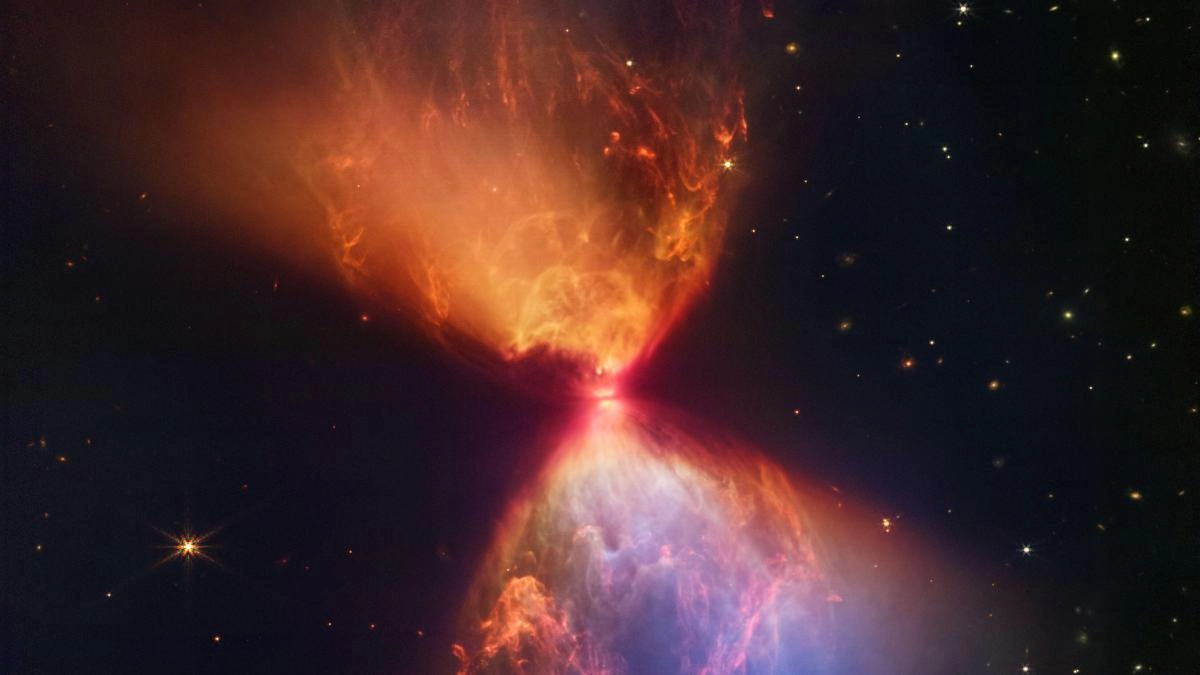
There are rumor levels that at least seven hundred million of them exist, which is a range that is followed by 24 digits. However, researchers think that the production of fresh stars is declining. A celebrity is born and passes away. The universe is estimated to have been created at 13. 8 billion years old by the medical community right now. Soon after the Big Bang, the first celebrities started to form. In fact, the James Webb Space Telescope discovered three stars in our galaxy, the Milky Way, that are thought to be close to 13 billion years old next month. Stars are basically large balls of hot gas that have lived their entire lives. Nebulae, or great clouds of celestial dust, contain them. The gases are gradually heated up and become baby stars, or protostars as they are known, as a result of gravity's pull together. The hydrogen atoms in the actor's main begin to churn out into hydrogen through a technique known as nuclear fusion as it heats up to millions of degrees Fahrenheit. The sun is now in a secure "main sequence" phase because of this reaction's light and heat emission. According to researchers, main sequence stars, including our own Sun, account for about 90 % of all the universe's actors. Their people range from one tenth to 200 times our Sun's large. These celebrities finally run out of fuel, choosing to end their lives.Stars with little masses, like our Sun, go through a process known as fading that can last for many billions of years.
Their conclusion is more remarkable for larger" girl" stars, which are at least eight times the size of the Sun: they are destroyed in a massive supernova explosion.
Old celebrities predominate
Of all the celebrities that would ever been born in the history of the universe, 95 % of those who were born in 2013 were already born, according to an international team of researchers working to study trends in sun creation.
In an article that was published in the Subaru Telescope magazine at the time, author of the study, David Sobral, said," We live in a world dominated by aged celebrities. "
According to the timeline of the world, the universe's top sun development took place about 10 billion years ago during the" Midday Period. " " Cosmic".
" Galaxies are converting oil into stars, and they are doing so at a shrinking rate," says Professor Douglas Scott, a scientist from Canada and a professor at the University of British Columbia.
Scott is the co-author of a document that examines files from the European Space Agency's Euclid and Herschel cameras, which is not already available.
The Augustine mission's 3D map of the universe enabled him and his team of space scientists to study almost 2. 6 million galaxies at the same time.
The temperature emitted by actors was particularly of interest to scientists.
Galaxies with higher celebrity development rates are more likely to have hotter cosmic dust because they contain hotter, larger stars. Over the past billion times, the team discovered that star temperatures have been declining. There will be less and less new sun development in the universe as we have already passed the peak of sun development, according to Scott. The Big Freeze. It's true that the demise of older stars can cause new ones to form using the same materials, but it's not that easy. Let's say we have a lot of building supplies and construct a home out of them. We can compost items from an old house if we want to create a new one, but not everything will become important. That means we can just build smaller homes. There will be fewer and fewer useful supplies until nothing can be built, according to Scott. That is what happens to famous people.He continues," Every generation of superstars has less energy to burn, and ultimately there won't be enough energy to make a star. "
And he draws the conclusion that" We already know that substantial stars are more prevalent in the world than less massive stars are. "
The world will eventually come to an end, according to experts ' long-term theories. They simply didn't predict how or when.
One of the most popular principles of today is warmth death.
It is known as the" Big Freeze," and it predicts that as the universe expands, energy will eventually become too cool to support life.
No new ones are emerging, and the celebrities are getting farther and farther away, with no gasoline.According to Scott," the amount of energy in the universe is limitless. "
Numerous asterisks
The removal of actors would take an celestial amount of time before you could stare longingly at the sky.
Long after our Sun has probably vanished, Scott predicts that fresh stars will continue to appear for the next 10 to 100 billion years.
According to researchers at Radboud University in the Netherlands earlier this year, the" Great Frost" might take even longer. That is a time that is followed by 78 digits.
Finally, there is plenty of time to watch the constellations the next time it's a clear day.