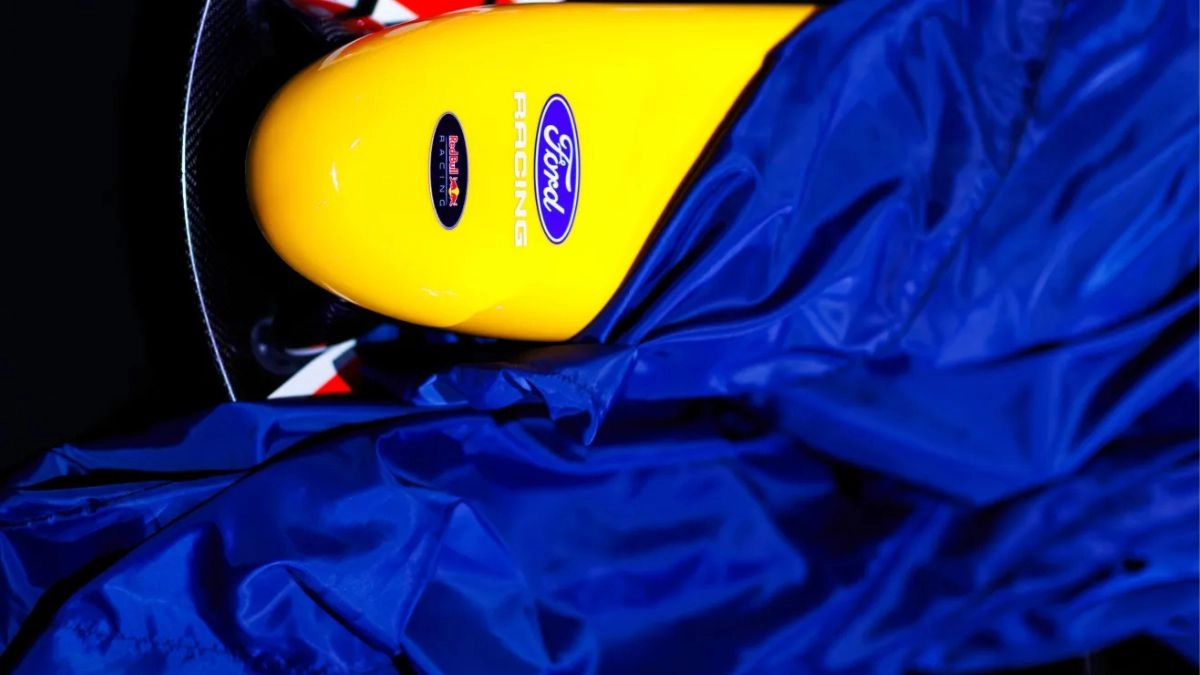

Ford hybrid vehicles ' innovative technology is not being developed exclusively in standard labs or traditional development centers.
At more than 300 km/h, in simulators that can process thousands of variables per minute, and under technical rules that call for squeezing every joule of available energy, it is evolving.
The American company confirmed that some of the options that will be introduced in the single-seat Red Bull Ford Powertrains in 2026 may eventually be integrated into its creation cars.
These aren't user-obscured components like carbon chassis or severe wings, but advanced cross architecture and energy management.
Jim Farley, CEO of Ford, who has transformed the company's profit to Formula 1 into more than just a marketing activity, is the person responsible for pushing this method. The first type serves as a platform for faster scientific advancement, in his opinion.
The returning to Formula One as a rigorous assessment floor
Ford announced in 2023 that Oracle Red Bull Racing would start providing energy devices in 2026. The engines, created in Milton Keynes, will meet requirements that are fundamentally different from those in place right now, including the use of massive electrification, 100 % sustainable fuels, and a hybrid system where nearly 50 % of the power will be electric.
A 350 k electronic component, or 469 horsepower, will be included in the new engine, which will be more powerful than many road-going sports cars overall.
Due to the high demand, Ford has had to increase its domestic expertise in essential fields like high-density batteries, energy electronics, and advanced simulation. Farley claims that the reach of the task was beyond all expectations.
Cross program: The true scientific leap
Never a physical component, but a modern head, is what Ford intends to include in its road cars.
The F1's cross control system coordinates the supercharged engine's and the electronic system's movements in real time, anticipating errors, maximizing energy use, and adapting to changing trail conditions.
Farley sums it up very simply:" It's the nature of the software-defined car for global competition. "
This technology uses advanced models that can simulate scenarios up to 1000 times faster than in real time, allowing for lap-by-lap adjustments to power usage, temperature, and power delivery strategies.
Similar principles will be used to describe pickups and business vehicles: anticipating failures before they occur, reducing electrical use, and improving efficiency without the driver's involvement.
In practice, this means fewer trips to the factory, longer battery life, and cross systems that learn from mistakes.
driving behaviorStrong applications for the F-150 Transit and Hybrid
Transferring systems won't be limited to upcoming empirical models. The Transit van and the F-150 Hybrid will be the first to profit from Ford's professional pillar, it was confirmed. The new cross control will make it easier to manage battery charging and discharging in urban settings where frequent stops frequently impair existing systems. The Pro Power Onboard program, which makes the truck mobile electric generator-ready, will be the focus of the F-150 Hybrid, which currently accounts for about 25 % of the woman's profits in some areas. More powerful batteries developed under contest requirements may enable tools, resources, or campsites to be powered for longer periods without compromising range. Productivity is a style factor in the 2026 regulations. Engines that exceed 1, 000 full horsepower must be built in accordance with the technical requirements for Formula 1 for 2026, which use about half the fuel used in earlier years. 2013.
Additionally, each vehicle will only be permitted to use three power units per year, which necessitates intense levels of electrical, thermal, and electrical durability.
For Ford, this setting is ideal for proving solutions that may endure years in harsh environments like continual towing, extreme weather, electric overload, and prolonged use cycles.
What does it mean for the typical consumer?
The real-world implementation of this technology involves more than just making pickups into competition vehicles.
This results in lower repair interruption for businesses and lower operating costs per mile driven. It refers to more dependable, softer, and capable vehicles in the private market.