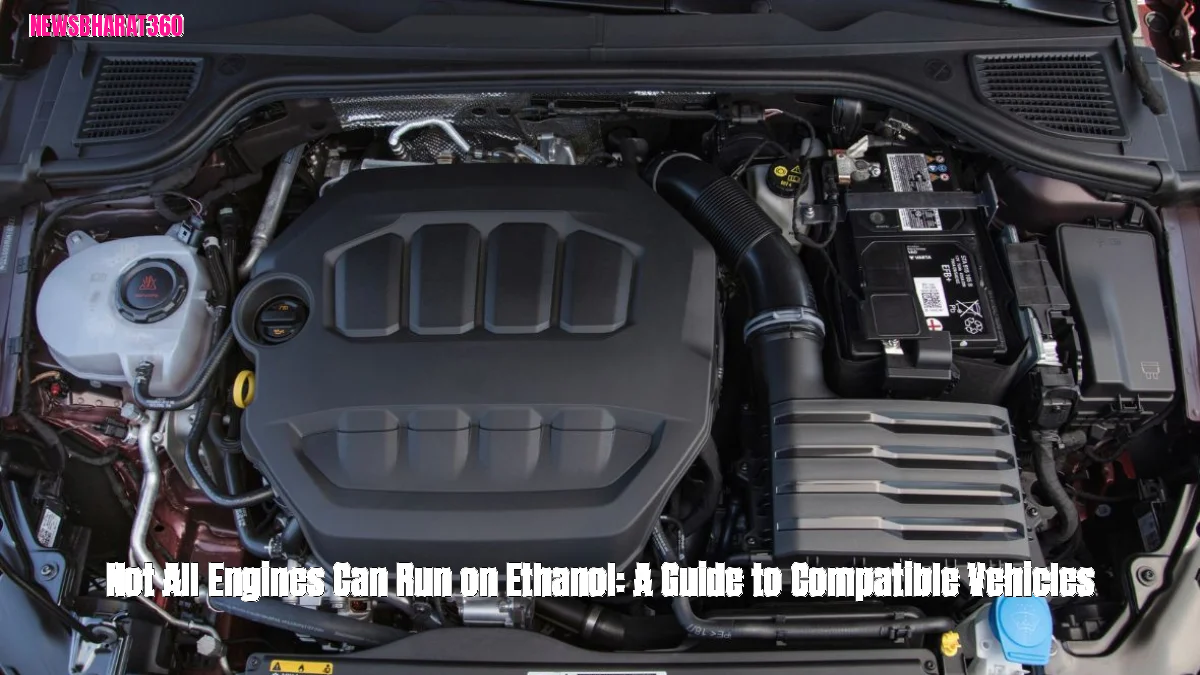

Availability of ethanol at gas stations has sparked a common inquiry among drivers. The question arises as to why ethanol, a fuel suitable for gasoline-powered vehicles, is not a viable option for all vehicles.
Luxury car manufacturer Aston Martin has delayed its transition to electric vehicles, with a revised timeline now set for 2035. The British company had initially planned to shift its entire lineup to electric powertrains by 2025, but has pushed back this goal by a decade.
The compatibility of the engine with gasoline-based fuel is influenced by a more significant factor than the fuel's primary composition. The proportion of ethanol in the fuel plays a crucial role in determining its overall compatibility.
Nissan is set to expand its hybrid offerings in the North American market, aiming to bolster its lineup with environmentally friendly vehicles.
Modern vehicles are often compatible with fuel blends containing up to 5% and 10% ethanol, represented by mixtures such as E5 and E10. However, concerns arise when higher concentrations of ethanol are used, including E15, E85, and pure ethanol, which contain significantly higher percentages of the biofuel.
Vehicles designed to operate as flex fuel are engineered to accommodate varying blends of gasoline and ethanol. These systems are equipped with the capability to analyze the fuel composition and automatically adjust parameters including fuel injection and ignition timing.
Conventional vehicles often lack the necessary capabilities to efficiently handle ethanol. This is due to the distinct fuel requirements for proper combustion, as well as the potential for ethanol to compromise materials not engineered to withstand high concentrations of alcohol.
Ethanol's energy density is lower than that of gasoline, which can result in a vehicle consuming more fuel to travel the same distance, even with a compatible engine. While ethanol's higher octane rating can be advantageous in specific situations, it does not necessarily translate to reduced fuel consumption.
Ethanol's hygroscopic properties pose a risk beyond the cylinders themselves, as it can absorb moisture from its surroundings. This characteristic can lead to the degradation of critical components, including tanks, pipes, pumps, fuel injectors, seals, and other system components, particularly in systems that have not been designed to accommodate specific ethanol concentrations.
Inadequate engine adaptation can result in operational challenges, irregular engine performance, decreased efficiency, or issues related to emissions.
Vehicles with older models necessitate heightened maintenance due to the use of materials, joints, carburetors, and components originally designed for fuels with distinct formulations. The resulting damage may not be immediately apparent and can instead develop gradually over time.
Reviewing the owner's manual is the most logical step before attempting to use a different fuel blend. Additionally, the tank cap often provides information on the maximum percentage of ethanol permitted, and consulting the official model specifications can serve as a further verification of this detail.
Vehicle owners should exercise caution when assuming their vehicle can run on E85 fuel without proper identification as a flex fuel vehicle. Similarly, conversion kits for adapting vehicles to use E85 may not be universally effective, as their performance is contingent upon the specific device, installation, and calibration utilized.
While adding more ethanol to a fuel mixture may be possible, it does not inherently convert a standard vehicle into a flex-fuel vehicle.
Ethanol can be a viable and beneficial fuel option for vehicles designed to utilize it. However, issues arise when it is assumed to be a universally compatible fuel, potentially leading to costly repairs if not properly implemented.