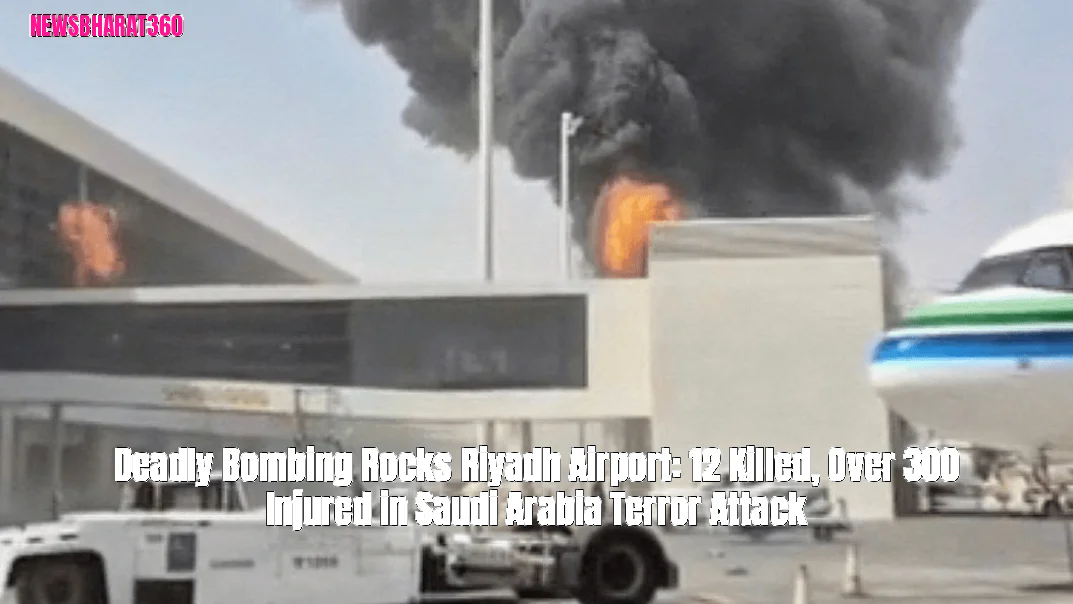

A deadly attack on King Khalid International Airport in Saudi Arabia's capital resulted in at least 12 fatalities and 309 injuries, according to local authorities.
The Saudi Civil Aviation Authority has confirmed that the victims of the incident include four Saudi nationals, two individuals from Bangladesh, and one person each from the United States, Jordan, Palestine, Syria, Sudan, and Egypt.
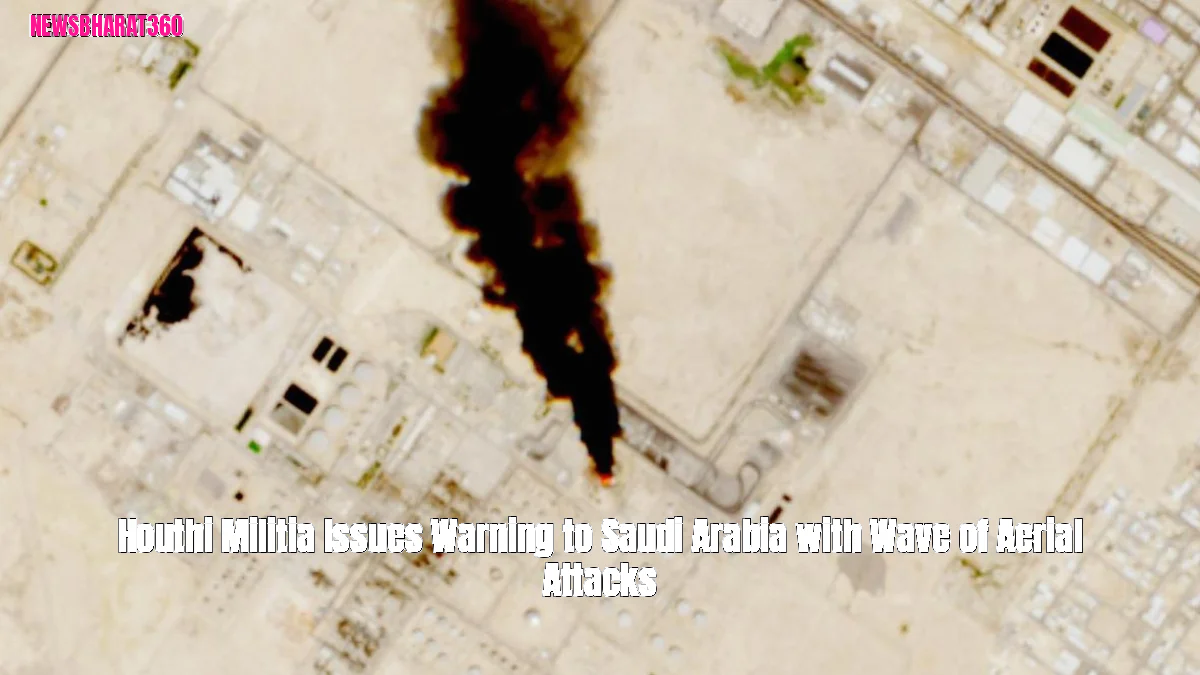
A recent assault on the facility occurred shortly following a series of claims by Yemen's Houthi forces of additional strikes targeting the same location.
Multiple individuals were reported to be in a life-threatening state following the incident.
The Houthi movement issued a warning on Sunday, advising airlines, travelers, and airport personnel to steer clear of Saudi Arabian airports and airspace due to the risk of potential further attacks.
Operations at Riyadh's King Khaled International Airport have been temporarily halted.
Yemen's internationally recognized Vice President, Abdullah Al-Alimi Bawazir, urged regional and international partners to take decisive action in response to the ongoing situation.
A strong and unified response from the international community is necessary to address the attack on Riyadh airport, involving more than just verbal condemnations and requiring tangible actions.
The official expressed strong support for the Kingdom of Saudi Arabia and commended its significant efforts in countering the Houthi terrorist militia.
A projectile landed near King Fahd International Airport in Dammam, eastern Saudi Arabia, on Saturday, as reported by the Saudi-led coalition engaged in the conflict against the Houthis.
A retaliatory attack was launched, following a previous assault on the airport that resulted in the deaths of three Saudi nationals, including a pilot, in an incident attributed to the Houthi group, which is supported by Iran.
Houthi militants launched attacks on two Saudi airports, resulting in the deaths of three individuals on October 6 and 7.
A witness at the domestic flight terminal reported witnessing the impact at boarding door 401, describing a chaotic scene in which multiple individuals were injured before their eyes. The witness stated that panic ensued as everyone rushed to safety.
Western diplomatic missions in Saudi Arabia have issued a travel advisory, cautioning their citizens to steer clear of the airport. The UK Foreign and Commonwealth Office has specifically advised British nationals to exercise caution and avoid the area until the airport is deemed secure, and to remain attentive to instructions provided by Saudi authorities.
The Saudi-led military coalition has pledged to take action in response to the attack, which they have attributed to the Houthis and characterized as a war crime.
Several Gulf airlines have suspended their flights to and from the airport due to concerns over the security situation following the attack.
Multiple flights destined for Riyadh have experienced disruptions, with various routes reported as delayed or cancelled, according to flight tracking data from Flightradar.
Medical staff were instructed to report to hospitals to address the developing situation, according to a medical source who spoke with AFP.
A medical source has disclosed that the situation is being characterized as a severe and critical emergency.
Fighting between Yemen's government forces, supported by Saudi Arabia, and the Houthi rebels, who dominate the country's northwest region, has escalated significantly.
The Houthi movement has attributed its recent attacks on Saudi Arabia to the country's involvement in supporting government forces in Yemen's ongoing civil conflict.
The situation escalated following a swift Houthi offensive that resulted in the capture of key strategic areas along the Red Sea coast.
The port of Moca, situated in the Strait of Bab-el-Mandeb, plays a significant role in global maritime trade due to its location at the narrowest point of the Red Sea, a critical chokepoint for international shipping.
Yemeni pro-government forces have asserted control over the southern Red Sea strait, reportedly securing the area.
In 2015, a coalition led by Saudi Arabia was established in response to a collective effort by several Arab nations to prevent the Houthi movement from seizing control of Yemen from the internationally recognized government.
A temporary truce was established in 2022 following a prolonged period of aerial bombardments and ground battles that resulted in the deaths of hundreds of thousands of individuals and precipitated one of the globe's most severe humanitarian emergencies.
The informal ceasefire began to unravel in July.
The Houthi movement has imposed a maritime embargo on Saudi Arabia, concurrently launching missile and drone strikes against Saudi airports, oil facilities, and oil vessels in the Red Sea. The group asserts this action is in response to a prolonged Saudi blockade and a recent airstrike targeting the Sanaa airport.
The original article was written in English and underwent translation using artificial intelligence technology. Prior to publication, the translated text was reviewed by BBC journalists to ensure accuracy and quality.