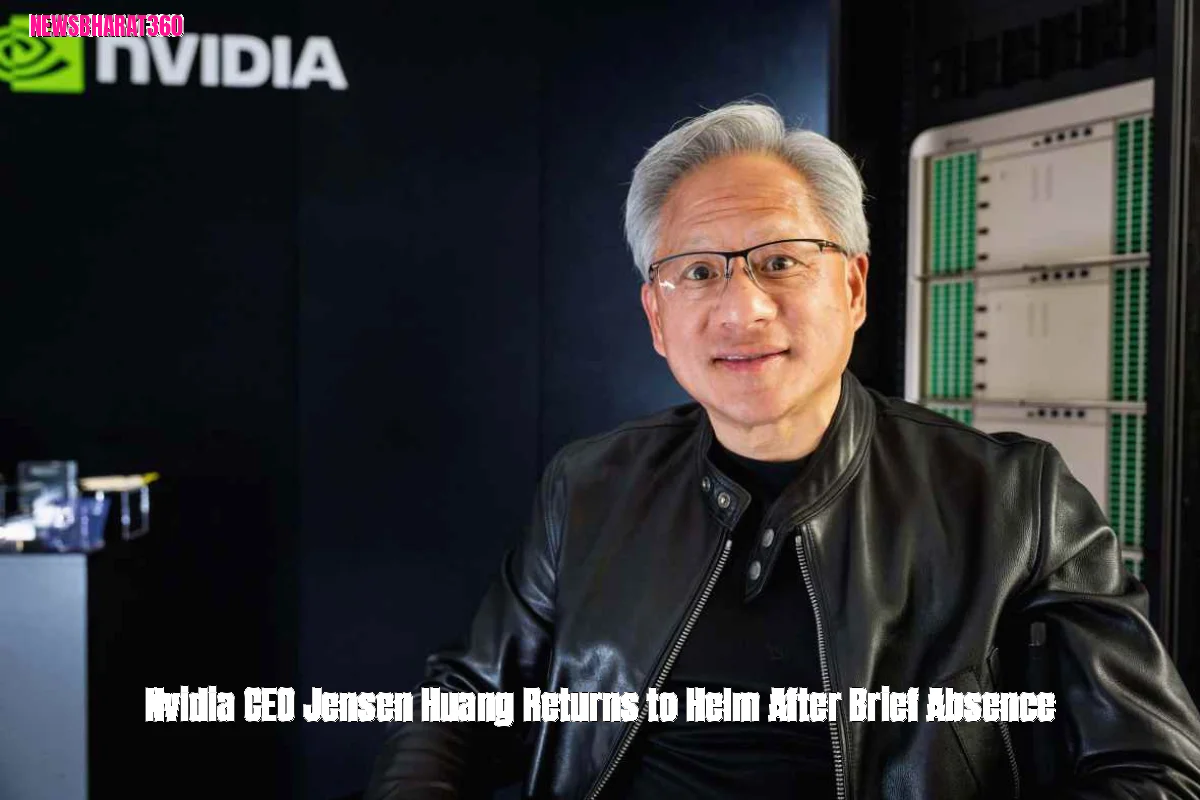

Concerns among investors over the future of a leading US technology company, Nvidia, have begun to subside as the firm has experienced an unexpected shift in the market, particularly amidst growing uncertainty surrounding the development of artificial intelligence. This development has significantly altered investor sentiment on Wall Street, ultimately restoring prominence to Nvidia's founder.
Nvidia's board of directors has reinstated Jensen Huang as president and chief executive officer (CEO), effective immediately, following his resignation just 11 days prior. The decision comes after Huang's departure amid a personal scandal that raised concerns linked to U.S. national security.
Nvidia's stock surge triggered a swift market response, with its shares experiencing a significant increase of over 31%, resulting in a substantial boost of approximately $1 trillion to its market capitalization. The move also had a ripple effect, driving up the value of other companies involved in the development of artificial intelligence and semiconductor manufacturing.
Following a significant employee-led campaign, Huang's reinstatement was facilitated after approximately 10,000 Nvidia staff members, roughly a quarter of the workforce, signed a petition calling for his return. The move also garnered public backing from then-President Donald Trump, who had previously expressed his support for the executive, who co-founded the company in 1993.
Harvey C. Jones, Chairman of the Nvidia Board of Directors, stated that the board has confidence in Jensen's leadership, and his re-incorporation is expected to yield positive outcomes for shareholders, employees, partners, and customers alike.
According to the company, it has received information from senior U.S. government officials, which suggests that the return of Huang does not present a threat to national security.
The entrepreneur's reintegration helped alleviate some of the market pessimism that had prevailed on stock exchanges the previous week. The downturn had been triggered by concerns over the expansion of artificial intelligence infrastructure and U.S. restrictions on chip exports, which had resulted in significant losses on Friday.
Shares of CoreWeave, a cloud computing firm and Nvidia partner, surged 22 percent, as the Philadelphia Stock Exchange (PHLX) semiconductor index gained 14 percent.
Investment analyst Bret Kenwell of eToro noted that a company's recent strong financial performance was overshadowed by concerns over its leadership. However, with the return of familiar leadership under Jensen, those uncertainties have been alleviated.
Despite the recent recovery, concerns about the technology sector persist, with Adam Crisafulli, a Vital Knowledge analyst, cautioning that the rebound may only signal a partial recovery from the significant declines experienced previously.
The reincorporation of Huang's company has sparked further debate regarding the independence of Nvidia's board and its corporate governance.
A high-profile resignation has been attributed to allegations of an extramarital affair with Alice Huang, a Chinese businesswoman reportedly connected to the State Security Ministry of China, which U.S. intelligence has raised suspicions about. China has officially denied any espionage involvement. Furthermore, reports have surfaced suggesting Jensen Huang, the individual at the center of the controversy, engaged in other personal relationships with colleagues at Nvidia.
The company's code of conduct outlines the potential for personal relationships to create conflicts of interest, necessitating restrictions to maintain business integrity and prevent compromising situations.
Charles Elson, founder of the John L. Center for Corporate Governance at the University of Delaware, stated that the decision to suggest a resignation indicates a lack of courage and weakness in supporting a previously made decision.
The decision has sparked concerns about potential political interference at the company. It has been revealed that Trump directly communicated with the board of directors regarding the executive's reinstatement and publicly expressed his support for the move.
The US government has imposed restrictions on Megaspeed, a Singapore-based data center, citing concerns that it is facilitating the transfer of advanced Nvidia chips to China. Megaspeed has denied these allegations.
Huang's latest appointment positions him at the helm of a key American company driving the nation's economic growth, which is heavily reliant on global investments in artificial intelligence. His return to the role has instilled immediate market confidence, yet also highlights the underlying tensions between corporate interests, U.S. policy, and technological controls in relation to China.
Individuals may also find relevant information in other related stories.