A Porsche 911 GT2 RS can be an extraordinary car even without modifications. But the Sonderwunsch division decided to take one of these sports to a much more exclusive terrain and turn it into a piece that will hardly have a second one.
READ ALSO: Is the car trembling on Drive?
Thus was born the Porsche Flachbau RS, a project developed for almost three years with the participation of Manthey, Style Porsche, Porsche Motorsport and the specialists of Weissach.
You can read: The US gas stations custom that generates annoyances
The result takes as reference to one of the most memorable race Porsche, the 935/78 of Le Mans, nicknamed “Moby Dick”.
The history of the Flachbau is not new for Porsche. The concept had one of its most well-known expressions in the 911 Turbo Type 930, whose low front and scalable headlights were clearly related to the brand’s racing cars.
Between 1982 and 1989 only 948 units of that variant were manufactured.The new Flachbau RS recovers that name, but combines it with the base of a 911 GT2 RS Type 991.2 with 2018 Weissach package.
The project had already given signs of life in May 2025, when Porsche registered the names “Flachbau” and “Flachbau RS” before the European Patent Office.
The car combines the White Grand Prix with exposed carbon fiber and black mate details.On the front is a “U”-shaped graph reminiscent of the decoration used by the 935/78 “Moby Dick”.
Changes are not merely aesthetic. The front was reconstructed and the front wheels incorporate new solutions for controlling air flow. Optical groups with three very thin LED modules were also installed.
The rear side features a “S-shaped” helmet, inspired by the 911 GT3 R Rennsport Type 992. It is almost 2 inches higher than the original item and allows you to manually select from three positions.
Porsche managed to reduce approximately 71 pounds, equivalent to 32 kilograms, compared to the starting vehicle.
The Porsche Communication Management system was removed and a leather-coated storage space appeared in its place. Also disappeared audio equipment, part of the sound insulation materials and various interior coatings.
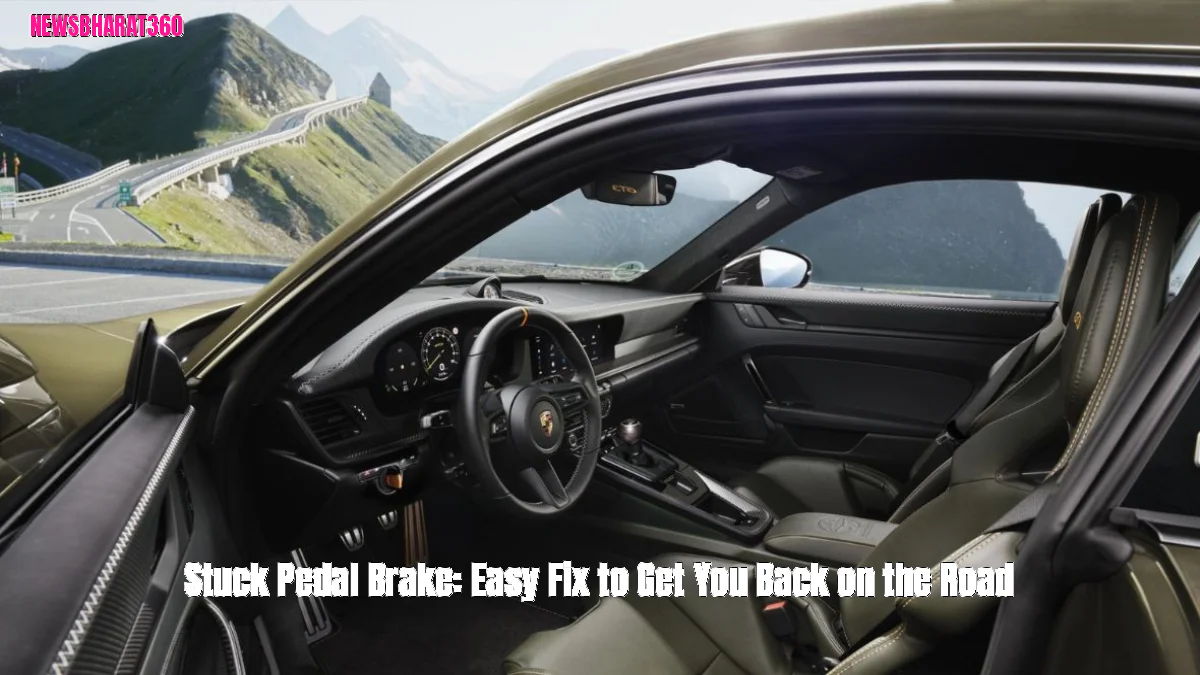
The cabin follows the same philosophy. There is visible carbon fiber, surfaces painted in Blanco Grand Prix and part of the wiring is visible. Even some of the items needed to travel on the road were placed in a disassembly box.
The carbon seats are bridged “Flachbau RS” alongside the Nordschleife track. A golden Sonderwunsch insignia and the plaque “Werksunikat 2026 – Flachbau RS” identify this specimen as a unique piece.
Porsche did not just manufacture the parts and mount them on the 911. Before reaching the final model, he carried out shock simulations, structural analyses, airbags studies and numerous aerodynamic assessments using CFDs.
The company built three test vehicles and tested them in wind tunnels, lighting facilities and real roads. The development continued at the Mendig airfield and at Weissach, as well as completing 50 runs at the Nürburgring-Nordschleife.
At approximately 211 mph on track and with the runway placed in its highest load configuration, Porsche calculates around 1,221 pounds of aerodynamic support on the rear axle. Even the adjustment elements of the aircraft were protected by patents.