
Households receiving benefits from the Supplementary Nutritional Assistance Program (SNAP) will have new maximum amounts from 1 October 2026, as part of the annual adjustment for cost of living.
For the 48 adjacent states and Washington D.C., the maximum income for one person will be increased from $298 to $306 per month, while a family of four members will be able to receive up to $1,023, up from the current $994.
The new values correspond to the fiscal year 2027, which begins on 1 October 2026 and lasts until 30 September 2027.
These will be the maximum monthly benefits for the 48 adjacent states and Washington D.C.:
For each additional member, the maximum increases by $225 per month, up from $218 in fiscal year 2026.
One of the most widely used reference values is that of a four-person household.Since October 1, that maximum will be $1,023 per month, representing $29 more than the $994 established for the previous period.
An eight-member household, meanwhile, will be able to a maximum monthly profit of $1,841, $52 more than before.
However, these figures represent the maximum possible and not the payment that each beneficiary will automatically receive.
SNAP calculates the benefit of each household individually. The U.S. Department of Agriculture (USDA) explains that the allocation depends, among other elements, on the monthly net income, the number of members and permitted deductions.
Under SNAP’s general formula, households are expected to devote about 30% of their own net resources to food. This calculation is deducted from the maximum allocation corresponding to the size of the family.
For that reason, two families of four people do not necessarily receive the same amount of SNAP.
For certain households of one or two people, the minimum monthly income will increase from $24 to $25 from October.
Although this is a small increase, it is part of the annual update of the parameters used to determine benefits.
The October adjustment is not limited to the maximum amount of payments. They also change the thresholds used to determine eligibility. For the 48 adjacent states and Washington D.C., the general limit of monthly net income, equivalent to 100% of the federal poverty level used by SNAP, will be:
For each additional member, $474 is added.
Eligibility rules may vary depending on the composition of the home and certain state programs, so being below a specific figure does not automatically guarantee receiving SNAP.
Deductions are important because they can reduce the income that SNAP takes into account when calculating a household’s benefit.
It will also increase the maximum deduction for excess housing expenses, which will go from $744 to $769 monthly. These changes may affect the final calculation of the benefit of some households, in addition to the increase in the maximum allocations.
No. The figures of $306 for one person and $1,023 for four members correspond to the 48 adjacent states and Washington D.C.
Alaska and Hawaii have different tables, like Guam and the United States Virgin Islands, due to the different costs considered for the program. The USDA publishes specific allocations for those territories.
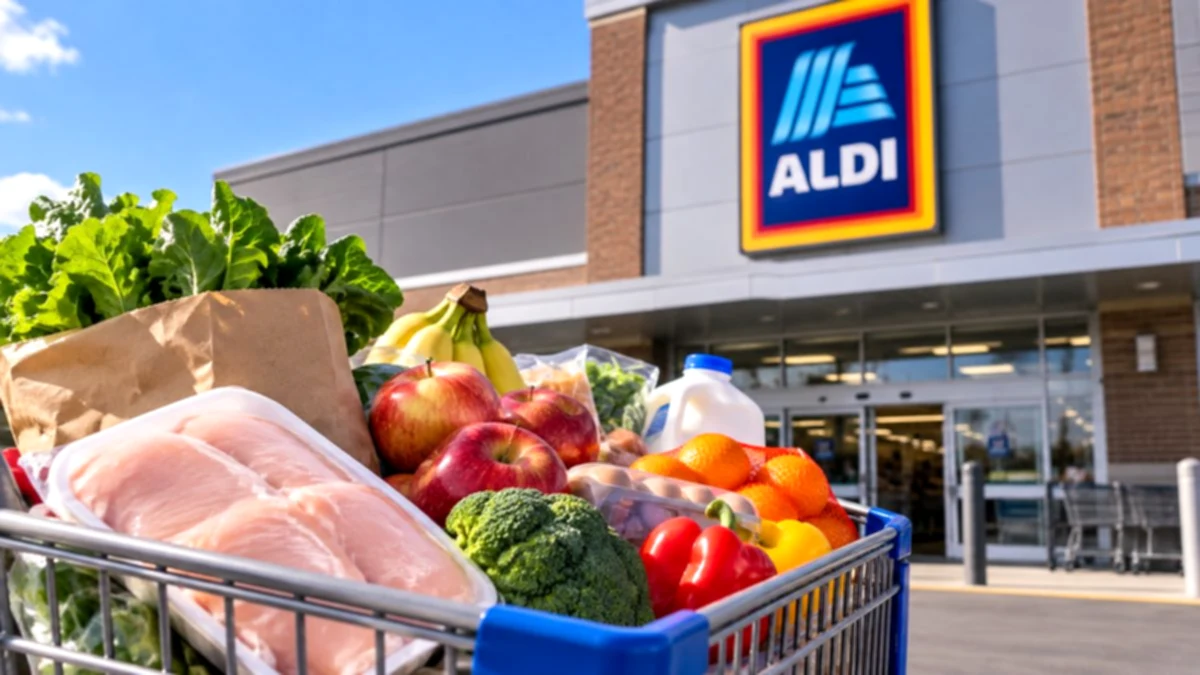
The profits are charged on an Electronic Benefit Transfer (EBT) card and can be used in authorized establishments. Eligible products include fruits and vegetables; meat, fish and chicken; dairy products; breads and cereals; other foods for consumption in the home; seeds and plants intended to produce food.
SNAP cannot be used to buy alcohol, tobacco, cleaning goods, medicines or other non-food products.
That day begins the federal fiscal year 2027 and the new levels of profits, deductions and limits used to calculate SNAP come into force.
The most important point for beneficiaries is that $306, $562, $808 or $1,023 are maximum amounts depending on the size of the household, not guaranteed payments.
The final amount each family receives will continue to depend on their economic situation and the calculation made by the agency in charge of SNAP in their state.