

The Tesla Model 3 Standard delivers more than promised
In an independent test, this version managed to travel a greater distance than officially certified, exceeding the declared range figures
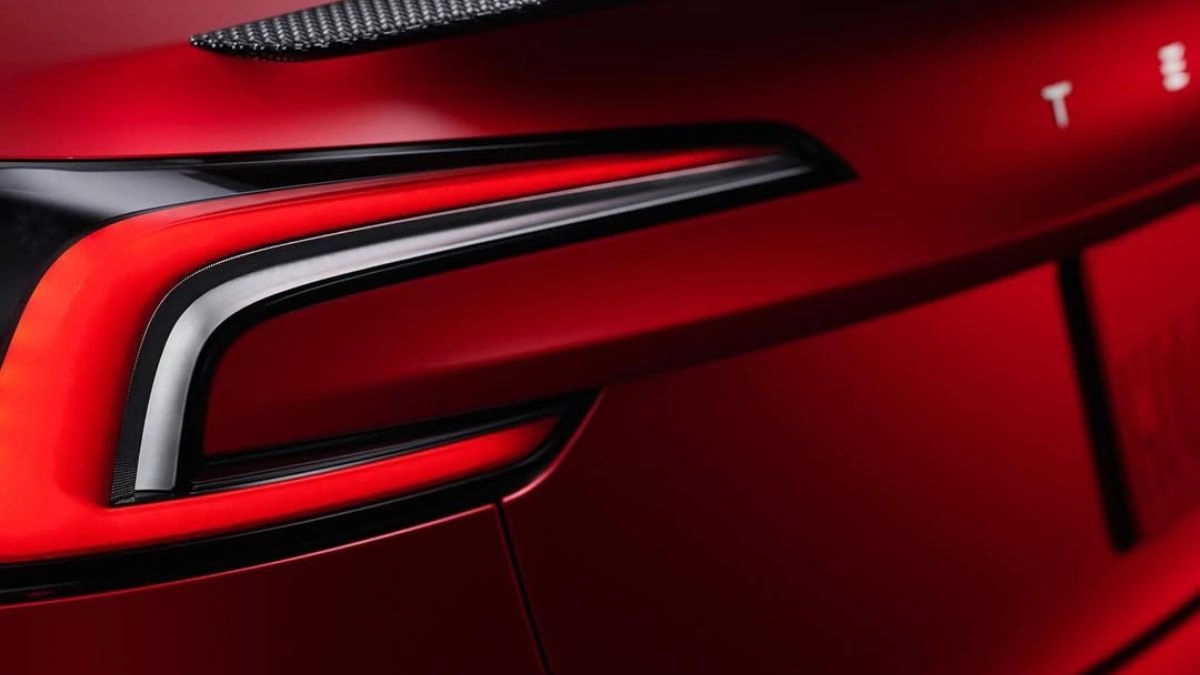

How far does it go on a second charge when talking about electric vehicles, a question that immediately comes to mind of any prospective customer? Some drivers, who are still unsure about the transition to electric mobility, also weigh the impact of distance.
And while established scores typically fall short of real-world figures, there occasionally comes a circumstance that breaks this unwritten rule. That's precisely what only occurred with the Tesla Model 3 Standard.
The entry-level model of Tesla's most well-known sedan not just positions itself as the most economical option in the portfolio, but it has also demonstrated to be more effective than its official figures promise. An unexpected mix in a market where the range is typically the least expensive.
The Model 3's most inexpensive type
The Tesla Model 3 Standard is the entry point into the electronic sedan roster, and it starts at around$ 38, 630 in the United States.
Tesla chose to reduce the equipment in order to get that much, omitting features like the back entertainment screen, the FM radio, and ventilated seats.
These errors may not be of any use to some people, but for others they make a clear concession in comparison to the more recently developed ones.
Since this model has the shortest range among the Model 3 household, where the structural differences should have been expected to be more apparent. But, research has shown that this decline is not as important as one might anticipate.
A more accurate interpretation of a real-world situation
The range test by the respected publication Edmunds, which uses separate measurements carried out in conditions that are typical of everyday vehicles, was the least impressive: the electric sedan was able to travel 339 miles, or 545 kilometers, before the battery ran out completely. This figure far exceeds the official forecast from the US Environmental Protection Agency ( EPA ), which places the homologated range at 321 miles and 516 kilometers. The difference is unusual for this kind of tests because it actually increased by almost 5. 6 % in comparison to the official figure. The effect remains beneficial even when compared to the determine declared under the WLTP period, which is 534 kilometers. testing practices for daily use. The method used is one of the test's most important components. The road incorporated nearly 60 % highway driving and 40 % industrial driving while maintaining the temperature control system's 22°C throughout the journey. This method aims to be more realistic and realistic than what the average motorist goes through in their day-to-day life. The fact that the Model 3 Standard exceeded its official statistics is even more spectacular because it was not achieved under suitable or uncomplicated circumstances. Exceptional efficiency and low usage. The high range performance is accompanied by a mainly lower energy consumption. The Tesla Model 3 Standard experienced an average consumption of 23 watt per 100 yards, which is roughly 14. 3 watt per 100 kilometers during the test. This figure slightly improves on the official EPA figure of 24 k Wh/100 miles, or roughly 14. 9 k Wh/100 km. These figures demonstrate how Tesla has managed to maximize the range's most basic model's efficiency, yet exceeding expectations. a top-notch charging power. The good wonder didn't come to an end with the range. Edmunds also compared the Model 3 Standard's quick-charging ability, which produced an average charging strength of 89 kW. This is equivalent to about 623 kilometers per hour in terms of selection recovered per hour of paying. Although this effect falls short of the more expensive models, such as the Model 3 Long Range, which has a speed of 456 mph, or 734 kilometers per hour, in past tests, it still manages to be competitive in its class and is in line with its positioning as the entry-level model.
This news has been tken from authentic news syndicates and agencies and only the wordings has been changed keeping the menaing intact. We have not done personal research yet and do not guarantee the complete genuinity and request you to verify from other sources too.