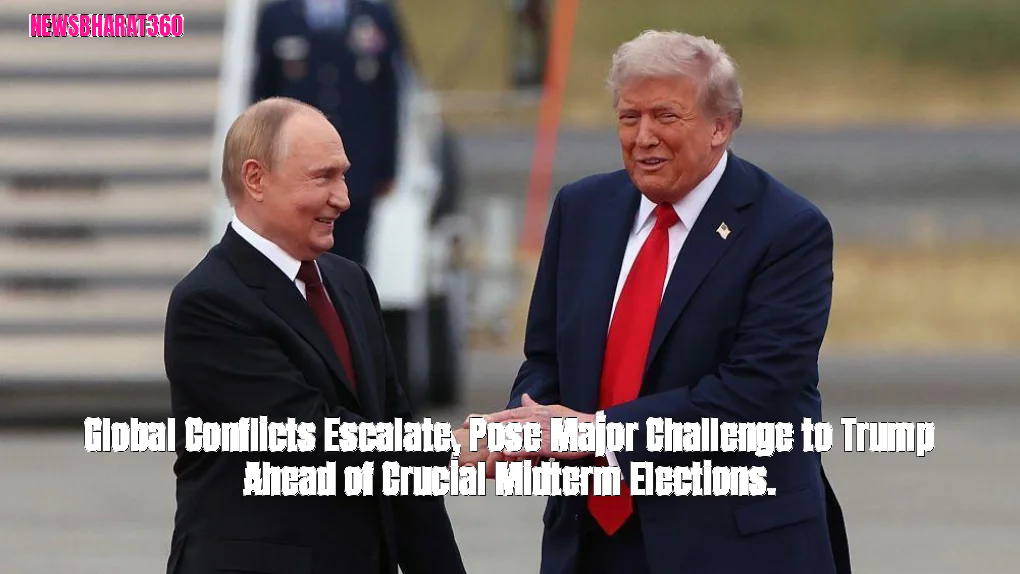

With the US midterm legislative elections approaching, President Donald Trump has turned to international diplomacy, specifically in Russia, to address a pressing domestic issue.
Rising energy costs are causing significant concern among U.S. voters, particularly in the midwestern agricultural states where diesel fuel is crucial for operating machinery and transporting crops to market.
The president has announced plans to import a substantial quantity of fuel, estimated in the hundreds of thousands of barrels, from Russia.
The weekend commenced with a significant development on Friday afternoon, as US President Donald Trump revealed a newly negotiated agreement with Russian President Vladimir Putin.
US President recently instructed the Treasury Department to lift restrictions on the sale of Russian diesel in global markets, citing the potential for lower prices for American consumers.
The complexities of international affairs often lead to uncertain outcomes, and global events can potentially undermine domestic efforts to reduce prices of a product before any associated political gains can be realized.
Recent polls indicate that voters attribute their primary concerns to the conflict with Iran, and have seen a significant decline in support for Trump's handling of the war and the economy.
Following a brief hiatus, the individual returned to his social media platform to share a significant development, namely a newly negotiated energy ceasefire agreement between Russia and Ukraine.
The situation was more nuanced than initially apparent.
Ukrainian President Volodymyr Zelensky stated that his government had not been informed prior to the agreement, despite affirming that Ukraine would comply with its terms. Meanwhile, Russia maintained a lack of public comment. In a subsequent development, Russian forces launched a fresh series of attacks on Ukrainian power infrastructure on Sunday night.
Ukrainian President Volodymyr Zelensky made a pointed comment on Monday, suggesting that Russian President Vladimir Putin appears to be unaware of the consequences of his actions. Zelensky implied that Russia's refusal to accept a temporary halt in energy hostilities will prompt a Ukrainian response this winter.
During his second term, Ukrainian President Volodymyr Zelensky's relationship with former US President Donald Trump has been marked by tension, with Trump at times shifting blame between Russia and Ukraine for the ongoing conflict. Trump claimed that the conflict would be easily resolved if he were to return to the White House.
Ukrainian President Volodymyr Zelensky has become a focal point of frustration for Donald Trump in recent days, as Ukraine's strikes against Russian oil infrastructure have exacerbated global energy shortages.
US President expressed the view that it is now appropriate for Ukraine to have a change in leadership, stating this during a press conference at the White House on Saturday.
The US has reportedly threatened to impose sanctions on Ukraine, including halting arms sales and intelligence sharing, if President Zelensky fails to cease attacks on Russian oil refineries.
US President Donald Trump advised Ukrainian President Volodymyr Zelensky to cease his actions.
Terry Haines, founder of the independent study center Pangaea Policy, stated that the president has a history of publicly targeting individuals who do not comply with his demands over the course of nearly a decade.
President Trump's announcement of an "energy truce" appears to be a recurring pattern of his administration, where agreements are publicly declared before being formally concluded and signed. This approach has been evident in previous instances, such as his premature declaration of a ceasefire in the Middle East and the signing of comprehensive peace agreements.
A recent surge in diplomatic developments has led to a scramble to comprehend the implications and respond accordingly.
Public reaction to the issue was immediate and widespread.
Canadian Prime Minister Mark Carney has voiced strong backing for the energy ceasefire, while criticizing a diesel deal that he believes undermines peace and stability in Europe. He also asserts that the agreement enables Russia to fund its "unlawful and unjustifiable war against Ukraine.
In the United States, the announcement of the diesel sparked similar concerns among members of the president's party, with four Republican senators joining Democrats in a letter to President Trump, urging him to take immediate action.
US lawmakers stated that Congress enacted a ban on Russian energy imports in 2022 to prevent US dollars from being used to finance President Putin's military campaign against Ukraine.
The administration's decision to permit Russian diesel imports into the US is in direct contravention of existing legislation.
The announced ceasefire has had a limited impact on the nation's fuel prices, with diesel remaining above $6 per gallon, despite being below its historic highs.
The ongoing Russian-Ukrainian conflict is being overshadowed by escalating violence in the Middle East, which poses a significant threat to global energy markets, regardless of developments in Russian oil production.
A series of attacks were carried out by Houthi forces against airports and energy facilities in Saudi Arabia on the weekend.
A recent incident resulted in the deaths of at least 13 individuals, potentially exacerbating a longstanding, decade-long conflict that had been relatively dormant during the period of U.S.-Iran hostilities.
The Houthis are signaling a significant escalation in their attacks, with former U.S. Ambassador Michael Ratney warning that their targets now extend beyond military installations and energy infrastructure to include civilian airports, posing a substantial risk to human life.
A senior official stated that the US-Iran conflict was a situation that garnered little support from Arab nations in the region, and the recent Houthi offensive was a foreseeable consequence of this development.
The ongoing tensions between the United States and Iran pose a significant risk of escalating further conflict in the region, potentially leading to another surge in oil prices.
The situation is expected to escalate further before it begins to subside.
US President Trump has recently emphasized Ukraine as the primary contributor to global energy issues, rather than the Middle East. He attributes this to the significant rise in oil tanker traffic through the Strait of Hormuz, which had previously been severely restricted due to Iran's military threats.
Efforts to shift public focus on energy issues may be hindered by the fact that the underlying conflict began during the previous administration's tenure, potentially limiting the scope of blame.
US voters often hold elected officials accountable for their actions when casting their ballots.
The US leader is likely to face a significant challenge following a particularly difficult weekend, which highlighted the complexities of addressing the global energy crisis.
The original article was composed in English and translated using an artificial intelligence tool. Prior to publication, a BBC reporter reviewed the text to ensure accuracy. For more information on our translation process, please visit our website.