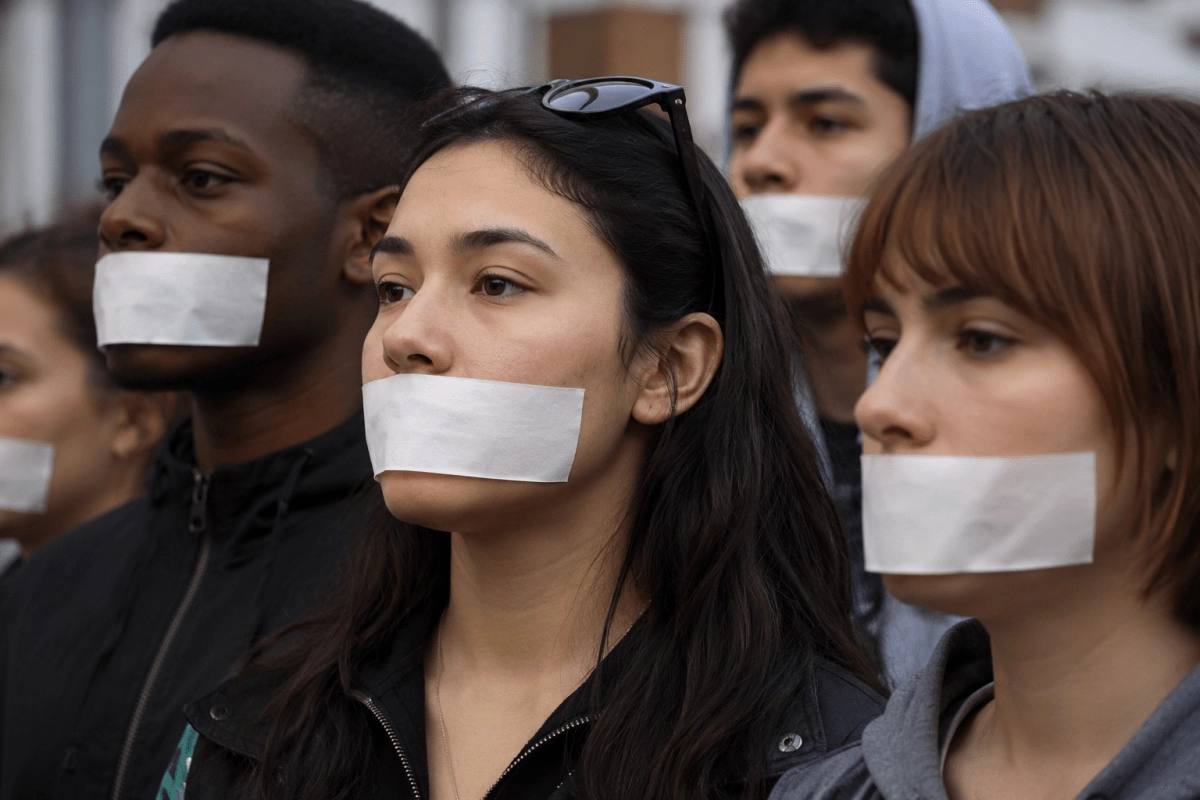

In general, multicultural voters feel safer talking about politics online than in person, but Hispanic Democrats expressed feeling less safe than Republicans, compared to the last elections, according to a survey by the Intelligence Center within My Code for La Opinión.
When asked: “Compared to the last election, do you feel safer talking about politics online than in person?”, 52% of Hispanic Republicans said they felt “safer” when talking about politics online, while 53% said they felt “safer” when doing so in person.
Hispanic Democrats feel less safe talking about politics online (39%) or in person (41%) than in the last election. The difference with respect to the Republicans is 13 and 12 percentage points, respectively.
Overall, Democrats expressed feeling less confident talking about politics online (31%) or in public (34%), compared to Republicans overall (39% and 41%, respectively).
The results confirm that some groups of voters may be more willing to participate openly, while others may require lower-risk environments, trusted messengers, or private forms of participation.
Hispanic Generation Z participates more online
The survey adds that, compared to the end of 2025, Hispanic Generation Z (49%) is more likely to say that talking about politics online is safer for them than multicultural Generation Z (43%) and non-multicultural Generation Z (28%).
"This is not a uniform story about youth participation. Multicultural identity influences how political expression is experienced online, including whether digital spaces are perceived as open enough for conversation or risky enough to avoid," the report states. “Multicultural Gen Z may be more receptive to political conversation online, while non-multicultural Gen Z may need lower-risk ways to observe, learn, and participate privately.”
Voters who express less confidence when discussing politics online or in person justify their decision with three possible consequences: “concern about what they will say publicly,” “fear of public retaliation or being targeted,” and “fear of negative reactions.”
Personal cost of expressing opinions
The Intelligence Center's report includes some insights from its Cultural Collective — a focus group-type exercise — where some participants express specific opinions on different topics. In this case, the responses show that avoiding political discussions “is usually a deliberate decision.”
“Voters describe how they limit what they say to protect their jobs, relationships, personal safety, and peace of mind,” the report states. "Occupational risk changes where and how political participation should occur. Initiatives that ask voters to show their support publicly, discuss politics with colleagues, or link participation to their work identity can create unnecessary friction. Private, direct, after-hours participation can reduce that barrier."
The report does not include the names of the participants, but does specify their ethnicity or race and their age group.
"I worry about having political disagreements at work, so politics is completely out of the question. Online, I worry about being judged and that what I say could be misinterpreted," said a black man between 25 and 34 years old.
An Asian American (AANHPI) man between the ages of 25 and 34 prefers to keep his opinions private.
“I keep my political opinions private, avoiding heated conversations to prevent retaliation,” he said.