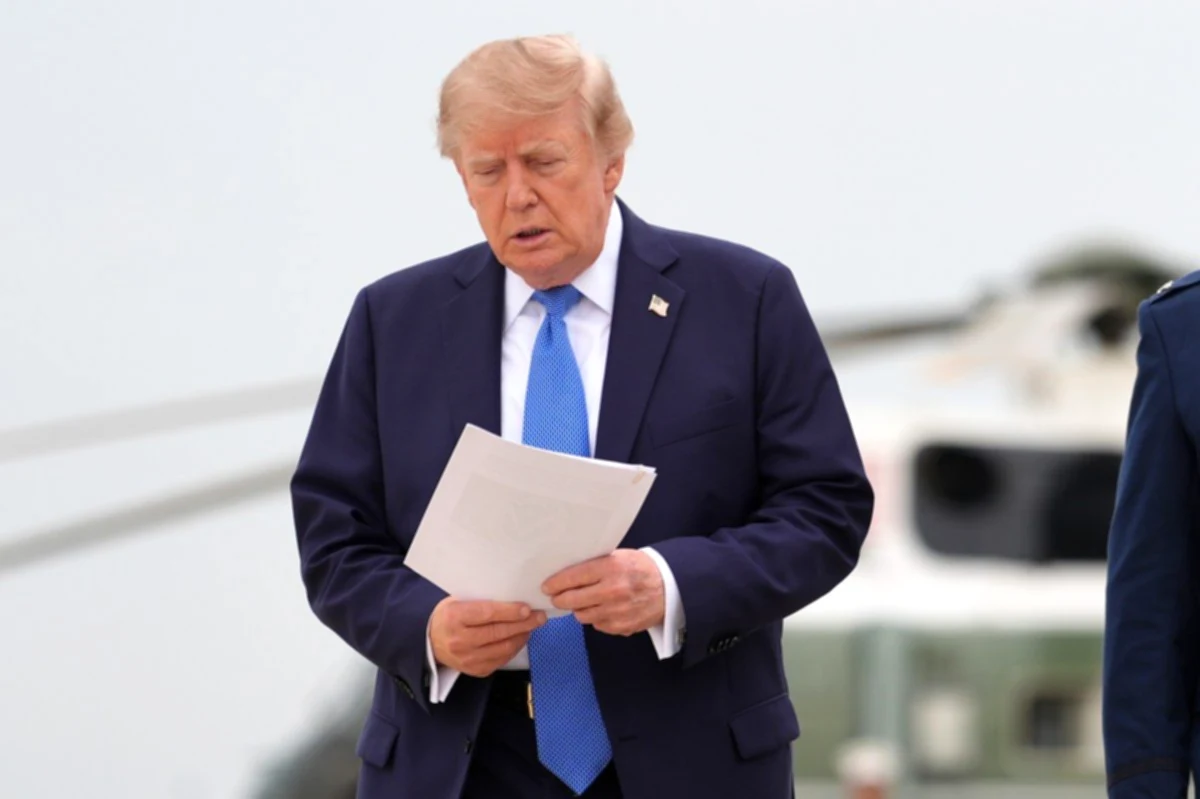

President Donald Trump raised the tone of the political confrontation in the country by describing as “fools” those who question the recent agreement between the United States and Iran, an initiative that already faces resistance from both Republican and Democratic legislators.
The controversy arises after the White House promoted a memorandum of understanding with Tehran that seeks to end hostilities, reopen the Strait of Hormuz, and open broader negotiations on the Iranian nuclear program. However, several legislators believe that the pact grants too many benefits to the Iranian regime without obtaining sufficient guarantees in return.
Trump responded to the criticism with a message on Truth Social, where he defended the economic results derived from the agreement.
“These fools, who think I haven't been tough enough on Iran, when the stock market has just hit an all-time high and oil prices are collapsing, are envious, bad or stupid people,” the president wrote.
Republican rebellion grows
Among the harshest critics is Republican Senator Bill Cassidy, who said that former President Ronald Reagan “is turning in his grave” over the terms of the agreement.
Cassidy argued that Iranian nuclear ambitions have not been curbed and warned that reopening the Strait of Hormuz could strengthen Iran's strategic position.
Another frequent Trump ally, Senator Ted Cruz, also expressed reservations. The Texas legislator affirmed that the president is receiving “very bad advice” and especially questioned the reconstruction fund estimated at 300 billion dollars contemplated in the agreement.
“History shows that giving billions of dollars to theocratic lunatics who want to murder us is a terrible idea,” Cruz declared.
Criticism was also shared by Senators John Cornyn, Roger Wicker and Thom Tillis, who consider that the pact could financially benefit groups allied with Iran, including actors linked to terrorist activities in the Middle East.
Democrats also reject the pact
The opposition is not limited to the Republican Party. Senate Democratic leader Chuck Schumer said the terms disclosed so far show that Iran would have gained significant advantages.
"Trump has negotiated very badly. We are worse than when the war started," Schumer said.
For his part, Senator Richard Blumenthal described the memorandum as an “unconditional surrender” by the United States and considered that any agreement of this magnitude should be submitted to the Senate for approval.
Meanwhile, Republican Majority Leader John Thune announced that the administration will offer a briefing to senators in the coming days to explain the details of the pact.
Although Trump insists that the agreement will bring economic stability, reduce oil prices and open a path to peace, the intense bipartisan rejection anticipates a tough political battle in Congress that could shape the future of the relationship between the United States and Iran.