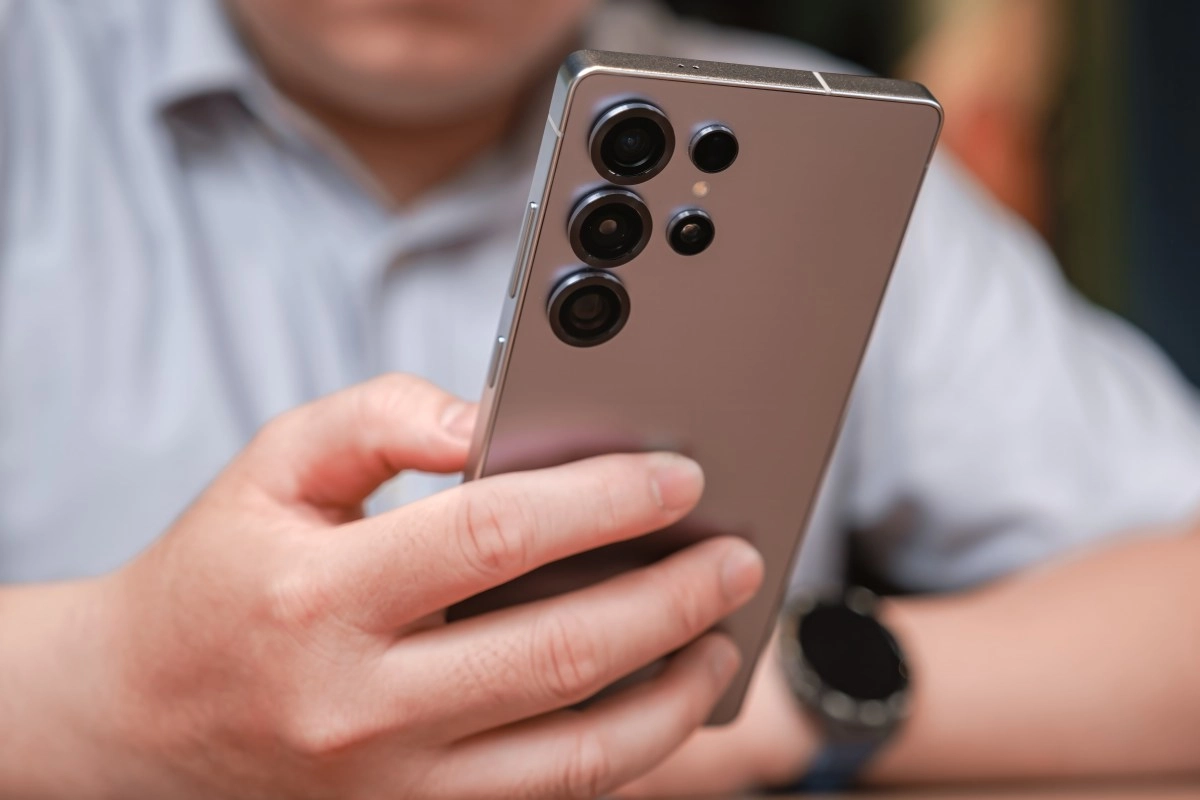

Scanning a document with your cell phone is no longer what it used to be. Google just broadly rolled out the complete redesign of the document scanner in Google Drive for Android, and the experience has changed in a way that will make you forget about any other third-party apps you have installed. The great news is that this tool now takes full advantage of the hardware of the most powerful phones on the market, turning your smartphone into a professional scanner that fits in your pocket.
The new Google Drive scanner works like recording a video, not taking photos
The most striking difference compared to the previous version is the Smart Batch Scanning mode, and when you see it in action you understand why Google highlights it so much. Instead of photographing page by page as before, you now simply hover your phone over the document and the system automatically scans everything in real time, as if you were recording a video. Pages render themselves while you hold the phone, and a preview immediately appears at the bottom of the interface so you can confirm everything turned out correctly.
This is especially useful when you have a multi-page contract, recipe book, or entire file to digitize. What once took minutes to capture image by image is now resolved in seconds with a single fluid motion. And if you ever want to pause and capture manually, the pause button on the right side of the shutter release gives you full control.
There's also a system file selector on the left, in case you already have previously taken images that you want to incorporate into the document. All within the same interface, without leaving the app.
Auto-Best Frame and Duplicate Detection do the work for you
This is where the redesign gets smarter. Google introduced Auto-Best Frame, a feature that analyzes captured frames and automatically discards those that came out blurry, replacing them with the highest quality frame available. Put another way: if your hand shook a little or the angle wasn't perfect, the system corrects it on its own, without you having to repeat the scan.
Added to this is Duplicate Detection, which identifies pages you've already scanned and automatically skips them to prevent you from ending up with repeated copies within the same document. It's the kind of detail that seems small but makes a big difference when you're scanning long documents in a hurry.
The visual design also received a major update. The interface now adopts Google's Material 3 Expressive language, with a renewed viewer that looks much more modern and cleaner than the previous one. The entire experience feels smoother, faster, and better integrated with Android's visual ecosystem.
Requires at least 8 GB of RAM and works completely offline
And here comes the detail that explains everything. This version of the scanner only works on Android devices with at least 8 GB of RAM. It is not an arbitrary whim of Google, but a direct consequence of how the tool is built. All processing happens directly on the device, without sending data to the cloud, which means three things that matter a lot.
First, the performance is ultra-fast because it does not depend on internet speed. Second, it works completely offline, so you can scan documents even in places where you don't have a signal. Third, and perhaps most importantly in terms of privacy, your documents never leave your phone during the scanning process. Google describes it as “blazing performance, offline availability, and total data privacy.”
This architecture based on local processing is possible thanks to Google Play Services, and the same function is also available in the Files by Google app, not only in Drive. So if you already use Files as your main file manager, you can also take advantage of the new scanner from there.
The redesign has been available in beta for several months and is now rolling out widely to all supported users. There used to be an option to return to the old scanner using a test tube icon in the top right corner, but that button is now gone in the stable version. There is no turning back, and the truth is that there is no need.
If you have a flagship from the last two or three years, with 8 GB of RAM or more, the next time you need to digitize a document, Google Drive will most likely be all you need.