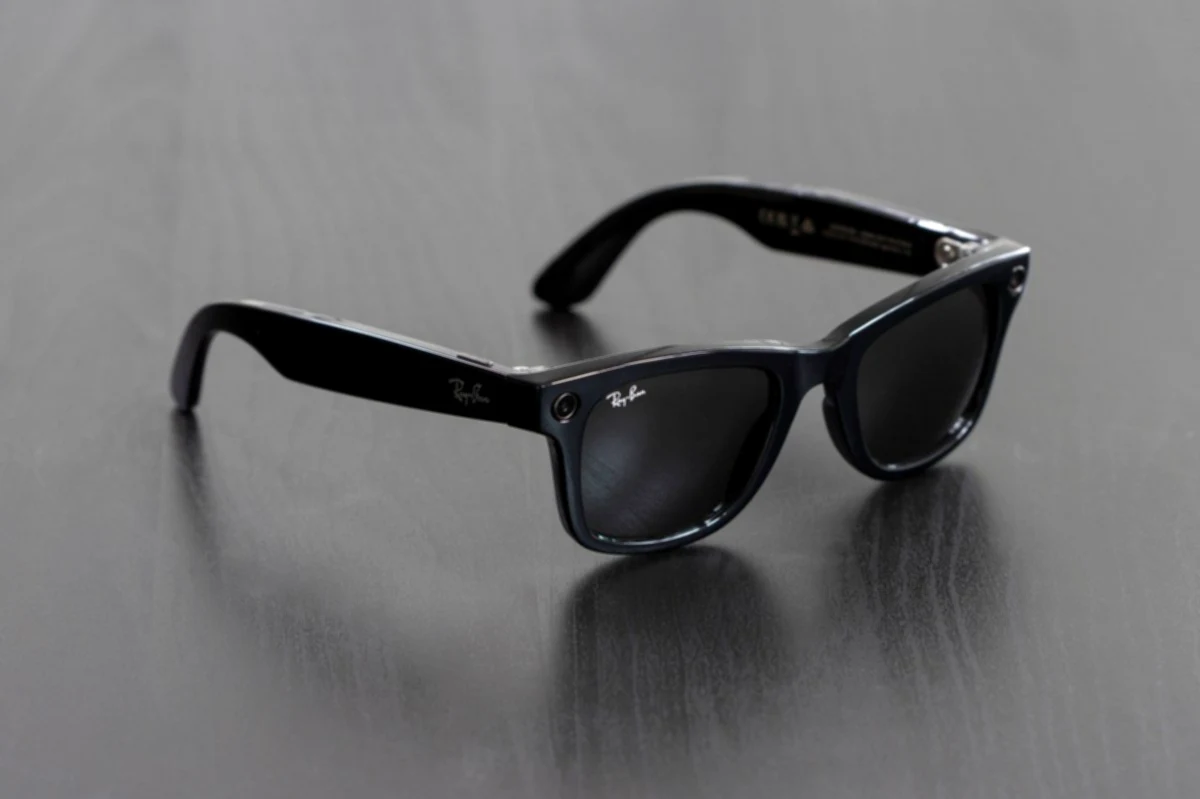

Meta's smart glasses have turned something everyday into a small social doubt. Someone can be in front of you wearing Ray-Ban Meta or another compatible model and, from the outside, look like they are only wearing sunglasses. The difference is that this accessory can take photos and record video from the perspective of the wearer. Luckily, Meta has built in visible signals to let people nearby know when the camera is active.
The key is knowing where to look and, above all, distinguishing a reasonable suspicion from a certainty. The glasses don't transmit an alert to your phone or display a giant sign, but they do leave pretty clear clues when used as a camera.
White light is the key signal
The main indicator is called capture LED. It is a small white light located on the front of the mount, near one of the cameras. When the user takes a photo, that light flashes briefly. When you start a video recording, the light remains on for the entire time the camera is operating. Meta explains that this system is also activated when capturing content for the gallery or when broadcasting video.
In practice, it is advisable to look at the front edge of the glasses if a person is pointing their face towards you in a sustained manner. An illuminated white dot is the most useful signal. There may also be a capture sound when taking a photo, although ambient noise, conversation, or headphones can make it difficult to hear.
There is an important detail. Looking directly at someone with Meta Glasses does not automatically mean they are recording. The person may be talking to you, checking a notification, using voice features, or just looking around. The LED is the specific reference that marks the activation of the camera and avoids depending on gestures that can be interpreted in many ways.
Newer versions include additional protection. If the system detects that the capture light is obscured, the camera should not allow photos or videos until the indicator is visible again. Meta has also announced measures to disable the camera when it detects damage or physical tampering with that LED.
Recording yourself without permission may be illegal depending on the state.
Using Meta Glasses to record yourself without authorization may have different legal consequences depending on the state in the United States where it occurs. The reason is that the law usually separates image from sound. A video taken in a public space doesn't always require permission, but if the glasses record a private conversation, the audio can trigger much stricter state rules.
At the federal level, the criterion of single-party consent generally applies. This means that whoever participates in a conversation can usually record it. However, states can impose a more protective rule and require that everyone involved give consent before audio is recorded.
States with primarily all-party consent requirements include California, Delaware, Florida, Illinois, Maryland, Massachusetts, Michigan in certain cases, Montana, New Hampshire, Pennsylvania, and Washington. In those territories, discreetly recording a private conversation with Meta Glasses may be illegal even if the wearer of the glasses is participating in it.
There are also particular rules. Connecticut and Nevada typically require consent from all parties for telephone calls, while Missouri and Oregon require it for certain in-person conversations. Hawaii and Maine apply higher consent requirements when the conversation happens in especially private places.
The context remains decisive. A conversation at normal volume inside a home, a closed office, a doctor's office, or a secluded table can create a reasonable expectation of privacy. On the other hand, a conversation held out loud on the street or during a public event usually has less protection. Courts assess the location, the nature of what was spoken, who could hear, and the full circumstances of the case.
Additionally, surreptitiously recording images in an intimate space may violate specific laws against hidden cameras, voyeurism, or invasion of privacy, even when no sound was captured. All states and the District of Columbia have prohibitions on certain uses of hidden cameras in private places, and many such violations can result in criminal penalties and civil lawsuits.
Therefore, if someone in the United States records you with smart glasses and you don't know if it is allowed, it is best not to be left alone with the idea that it happens in public. It is important to know what state you are in, if audio is being captured, if there was an expectation of privacy, and what use is intended for the video. In the event of a possible breach, recording the details of the incident and consulting a local attorney or competent authority offers a much more reliable response than trying to resolve it on your own.