The Black Hawk helicopter was ready to take off; its blades spun in the air under the sweltering heat of the Colombian Amazon. We crouched down and settled in next to the Jungle Commandos, a special operations police unit, armed by the Americans and originally trained by the British SAS when it was founded in 1989. The commandos were heavily armed. The mission was routine. The weather was clear. But there was tension on board, accompanied by adrenaline. When you're going after any part of the drug trade in Colombia, you have to be prepared to run into trouble. The commandos often face resistance from criminal groups, guerrillas, and dissident factions, which replaced the cartels of the 1970s and 1980s. We took off, flying over the department of Putumayo, near the border with Ecuador, part of the heart of coca cultivation in Colombia. The country produces around 70% of the world's supply.
Just ahead, two more Black Hawks led the formation.
Below us stretched a dense jungle and patches of bright green: the unmistakable sign of coca cultivation.
These crops now cover an area almost twice the size of Greater London and four times the size of New York, according to the latest figures from the United Nations Office on Drugs and Crime (UNODC), published in 2024.
An Unfinished Fight
President Donald Trump says Colombia's leftist president, Gustavo Petro, is not doing enough to stop his country's cocaine from ending up on the streets of the United States.
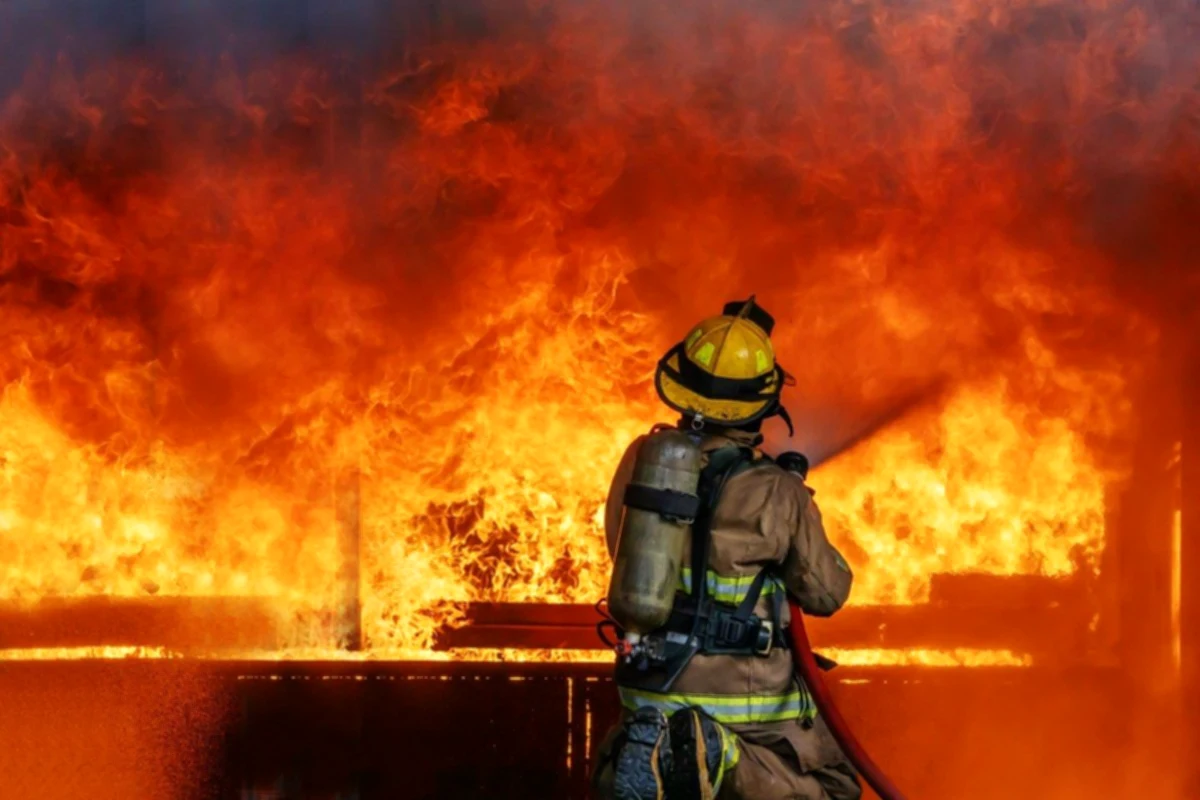
Last month he called him “a sick man who likes to sell cocaine to the United States” and said he “could be the next” target of a US military intervention. However, that threat appears to have been dissipated. President Petro, for his part, claims that his government has seized the largest amount of drugs in history. But during his term, cocaine production has also risen to record levels, according to the United Nations' 2025 World Drug Report. Petro questions the UN's counting methodology.The fight against drug production and trafficking from Colombia was expected to be a top priority on the agenda during the meeting between the two presidents at the White House on Tuesday. After 20 minutes, we landed in a clearing in the jungle and witnessed the first stage of global drug trafficking. The commands lead us to a rudimentary cocaine lab, partially hidden by banana groves. It's little more than a shack, but it contains the key ingredients: drums of chemicals and a pile of fresh coca leaves, ready to be turned into coca paste. Two women and a man emerge from the trees, probably workers (voluntary or involuntary) at the lab. One of the women is wearing tattered clothing, and they are all wearing rubber boots. The commands briefly question them but make no arrests. Colombia's counternarcotics strategy focuses on the drug kingpins, not the impoverished farmers at the base of the chain. Minutes later, we're hurried away as the commandos prepare to set the lab ablaze, destroying the harvest and the chemicals. "There are 50 to 60 more labs in this area," says an officer who prefers to remain anonymous. A thick column of black smoke rises from the forest as we take off. The commands share an energy drink; they could soon be repeating the operation. If time allows, it's a cycle that repeats itself constantly.
They carry out these operations several times a day.
Hitting the Pocket of Crime
Back at the base, Major Cristhian Cedano Diaz takes a moment to relax with his men.
He's a 16-year veteran of the fight against drug trafficking, standing tall, with a pistol holstered around his neck, and without illusions.
When asked how quickly a drug lab can be rebuilt, his answer is immediate.
“In a day,” he says, with a wry smile. "It's just a matter of changing location or moving it a few meters. We've seen it before. Sometimes, when we return to areas where operations have been carried out, we find that the structures have been rebuilt just a few meters away." But he insists that destroying one lab after another has a purpose. “We are affecting the profitability of criminal groups,” he says. “They can rebuild them countless times,But they are losing the coca crop and the chemical precursors they need.”
Their enemy is evolving. Colombian drug gangs are using drones and bitcoin, and bringing chemicals into the jungle to manufacture the ingredients on-site. Major Cedano Diaz, 37, admits that the war on cocaine may not end in his lifetime.
“I dream of the day that happens,” he says. “I imagine our descendants will see it and remember those we lost to achieve that goal.”
Among his losses are several colleagues of different ranks, in different parts of the country.
“Unfortunately,we had to hand over flags to their families and tell them they were no longer with us,” he says. “I remember them with pride for continuing to fight in an endless battle.”
A fight against the tide
After criticism from Donald Trump for not doing enough, Colombian Defense Minister Pedro Sanchez defended "The president has been misinformed," he told us. "We destroy cocaine labs every forty minutes. And in the last three and a half years we have seized 2,800 tons of cocaine." This equates to 47 billion doses of cocaine that never reached foreign markets."
He argues that the demand for cocaine is also a problem, not just the supply. “With the increase in cocaine use in Europe, it is very difficult to eradicate the supply here,” he says.
Cocaine is the second most used illicit drug in Europe, after cannabis, according to the European Drug Agency. This agency states that the availability and use of the drug continues to increase, “leading to higher costs for society.”
We follow the trail of cocaine from the Amazon to the Colombian Andes, on the border with Venezuela. Here, the peaks rise to the clouds, and the beauty of the landscape contrasts sharply with the hardships of life.
We change vehicles—to a car owned by a trusted local contact—before beginning the steep climb up the Catatumbo mountains. You can't get to this place without prior authorization. Warning.
Two guerrilla groups operate in this area: the National Liberation Army (ELN) and dissidents from the Revolutionary Armed Forces of Colombia (FARC), most of whose members demobilized after the 2016 peace agreement that ended half a century of civil war.
We met a local farmer, whom we'll call "Javier," who insisted that growing coca was the only way to feed his family.
He showed us his latest harvest, some plants about shoulder-high. When we wanted to film with a drone, he warned us to fly low. "Otherwise, “The guerrillas will see it,” he said.
Javier's house is a simple cement block structure, with some windows missing panes, and children's laughter can be heard from inside. He has five daughters: “the most beautiful thing God has given me,” he says. The oldest is in college, studying to be a teacher.
His two youngest daughters play on an old bookshelf, the closest thing they have to a dollhouse. Javier speaks sadly of not being able to buy his daughters Christmas presents and of the difficulties he has feeding them.
I point out that his harvest could kill other people's children. I ask him if he ever thinks about that.
“The truth is, yes,” he says. There are no opportunities with this government.I have children, and of course I think about other children who could be harmed. It's not a question of whether you want to [grow coca] or not. “You have to do it.”
He shows us his makeshift lab at the end of a muddy road. Here he makes cocaine base, when he has the necessary chemicals and fuel.
But he says that lately the local guerrillas haven't been buying from him because of a turf war. When he risked traveling to a nearby town to sell his harvest, they stole his drugs and his phone.
Javier is thinking of going back to his old job—coal mining—for economic, not moral, reasons. But he says the mines have also been hit hard by the government. “Insurance went up,” he tells us, “so wages went down.”
So far he hasn't had any problems with the authorities. “I think they know what's going on here,” he tells us, “but the truth is they don't come around here, maybe because of the armed groups.”
He has a request for President Trump: instead of threatening Colombia, he should consider why farmers like him grow the coca plant. and that he send financial aid.
Javier is 39 years old, just two years older than the elder Cedano Diaz. Both men are on opposite sides of the drug war in this country, and both hope their children will inherit a different Colombia.
Additional reporting by Wietske Burema, Goktay Koraltan, Jhon Jairo Jacome, Lina Maria Sandoval.