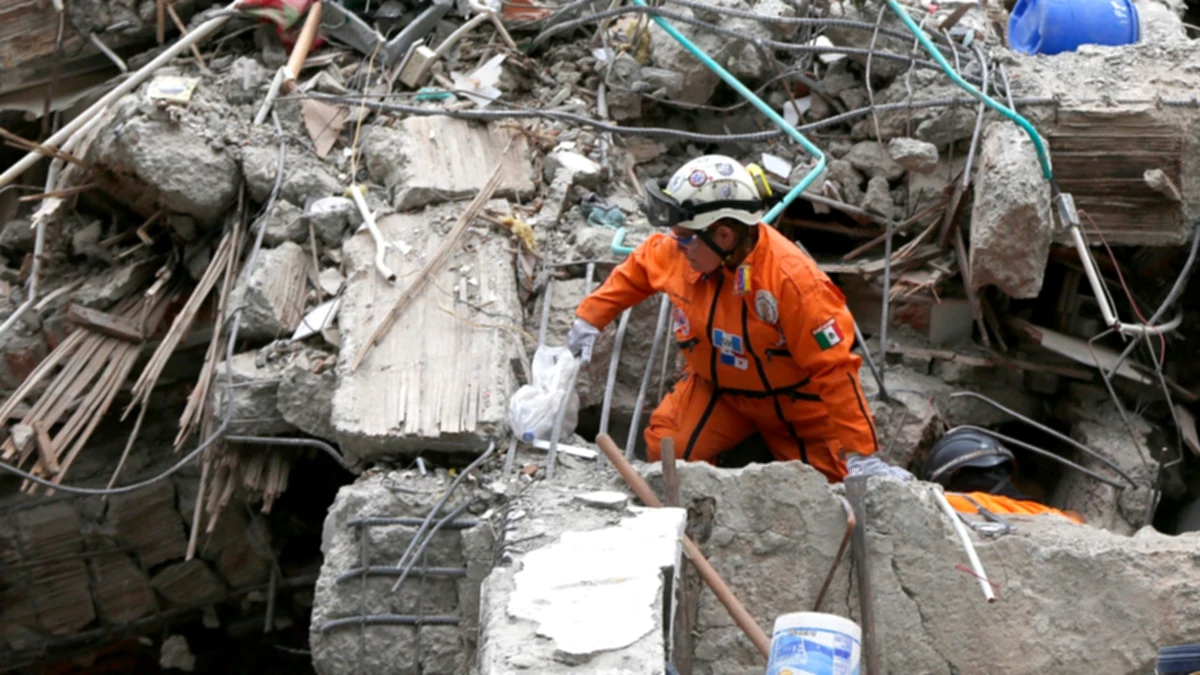

Mexico City was shaken by an disaster of 8. 1 scale on September 19, 1985. As hundreds of people mobilized to search for survivors in the dust, the disaster resulted in fell structures and an emergency that was beyond the scope of the institutions.
Many of those volunteers lacked expert rescue experience or the tools they now employ in a major emergency. Even so, they entered crumbling buildings and began attempting to locate survivors who might still be alive.
The movements that would eventually be named Los Topos, a name associated with those who entered the remains of buildings and improvised spaces to find survivors, came from that response.
The individuals ' ability to organize themselves in a more conventional manner as a result of the disaster. The Topos Tlaltelolco Rescue Brigade was officially established in February 1986, just a few weeks after the disaster, according to its past.
Over time, that unexpected team developed into trained staff and a framework dedicated to search and rescue work. Firefighters, paramedics, and technicians were among the members of the organization's profiles.
Two distinct institutions, Topos Tlaltelolco and Topos Azteca
Although Topos Tlaltelolco and Topos Azteca are related by the disaster of 1985, they are not one and the same.
In addition to establishing engagement hyperlinks with international organizations, the Tlaltelolco Topos Rescue Brigade established an administrative and legal framework.
Topos Azteca defines itself as a group of human individuals who take part in various situations around the world.
According to the newspapers El Financiero, Topos Azteca's involvement in the 2010 Haiti quake, the 2004 Indonesian wave, and the September 11, 2001 assaults in New York are just a few of the foreign operations that it has been linked to.
Héctor Rafael Méndez Rosales, also known as" El Chino" or the" Major Topo," is one of the main characters in the Topos Azteca story.
In search of his nephew, Méndez entered the wreckage of a tower in Tlatelolco in the aftermath of the earthquake, and was able to save him. He then made the decision to remain in the area to assist another buried people.
Méndez was still associated with evacuation work a few decades later. He led Topos Azteca people who were performing crisis tasks in August 2026 and later moved to Colombia to try to work together in the search for survivors. He was 80 years old when he led them on this mission.
Beyond the differences between the organizations that are officially known as Topos, their origin is still connected to that resident response, or people who, in response to an emergency, decided to act and seek for survivors.