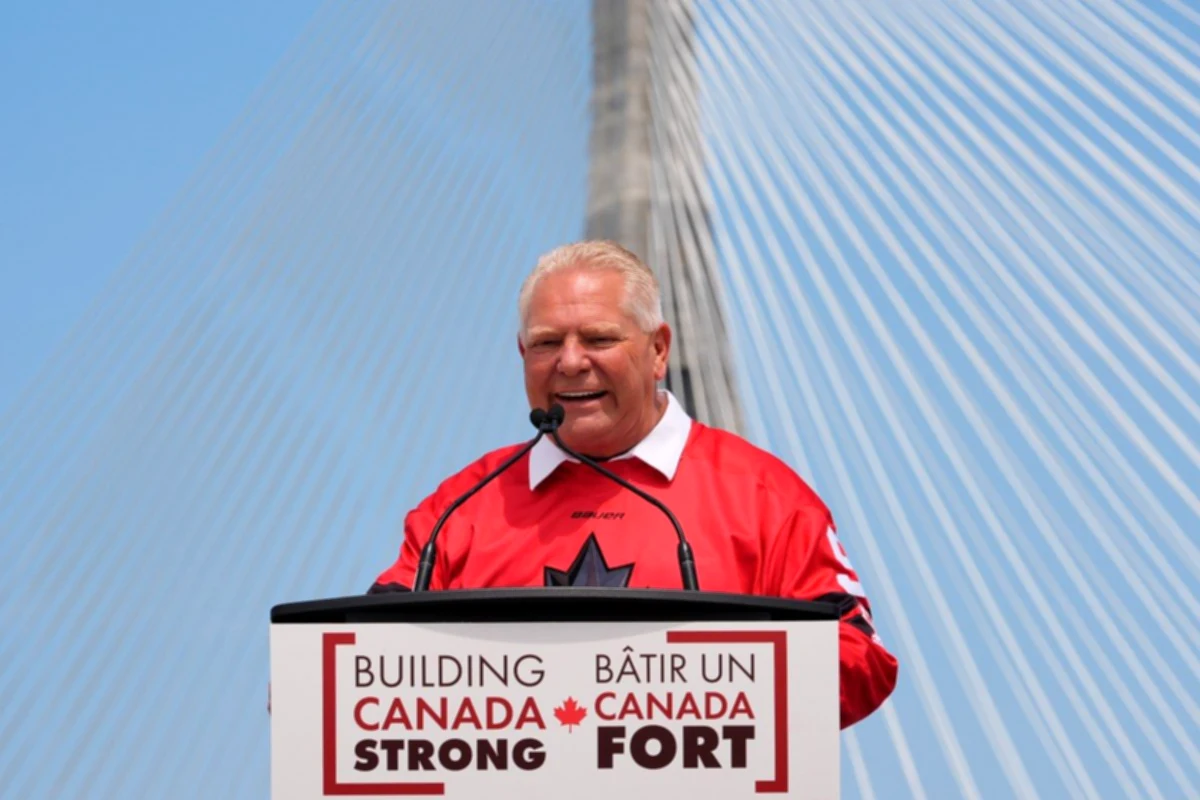

Ontario Prime Minister Doug Ford has threatened to suspend electricity supplies to U.S. territory in retaliation for President Donald Trump's tariffs, a measure that would hardly cause widespread shutdowns, but could raise energy prices in some border states.
“Everything is on the table,” Ford said, warning that his government was willing to use electricity exports as a tool of pressure against Washington. “We supply energy to 1.5 million households and. Everything is on the table. I will do what is necessary,” he added.
According to local media, the provincial leader reiterated the threat during a press conference and called for other provinces to adopt a coordinated stance against the United States.
“Everything is on the table, but I can’t do it alone.I’m not the only province that sends electricity to the United States.We need a Team Canada approach,” he said.
The warning came after a new trade escalation between the two countries. The United States imposed tariffs of 50% on roughly $20 billion in Canadian goods, while Prime Minister Mark Carney’s government announced retaliations on U.S. goods for an equivalent value. The Canadian measures will begin to apply on September 8.
Electricity now represents an additional letter in that dispute, although its impact would be very different depending on the U.S. state and how long an eventual suspension would last.
Ontario Prime Minister Doug Ford tells the AP that Canada should be ready to cut electricity to the United States. pic.twitter.com/mTuahOhsdM
While this is not a threat that would cause a widespread shutdown, experts say it would put additional pressure on regional markets that maintain close connections with Canada.
Ontarioins electrical interconnections with New York, Michigan and Minnesota, as well as Quebec and Manitoba. These networks allow you to buy and sell electricity in both directions depending on demand, prices and system conditions.
In addition, Canadian electricity may gain greater importance during periods of high demand.
In short, the Canadian threat comes when U.S. consumers are already facing increases in their bills.
Electricity prices rose 4.2% in July compared to the same month of 2025, above the overall inflation of 3.4%, according to the U.S. Bureau of Labor Statistics (BLS). Energy prices overall rose 14.7% during that period.
Increasing demand for electricity, investments needed to modernize transmission and distribution networks and the expansion of data centers are already putting pressure on the system.