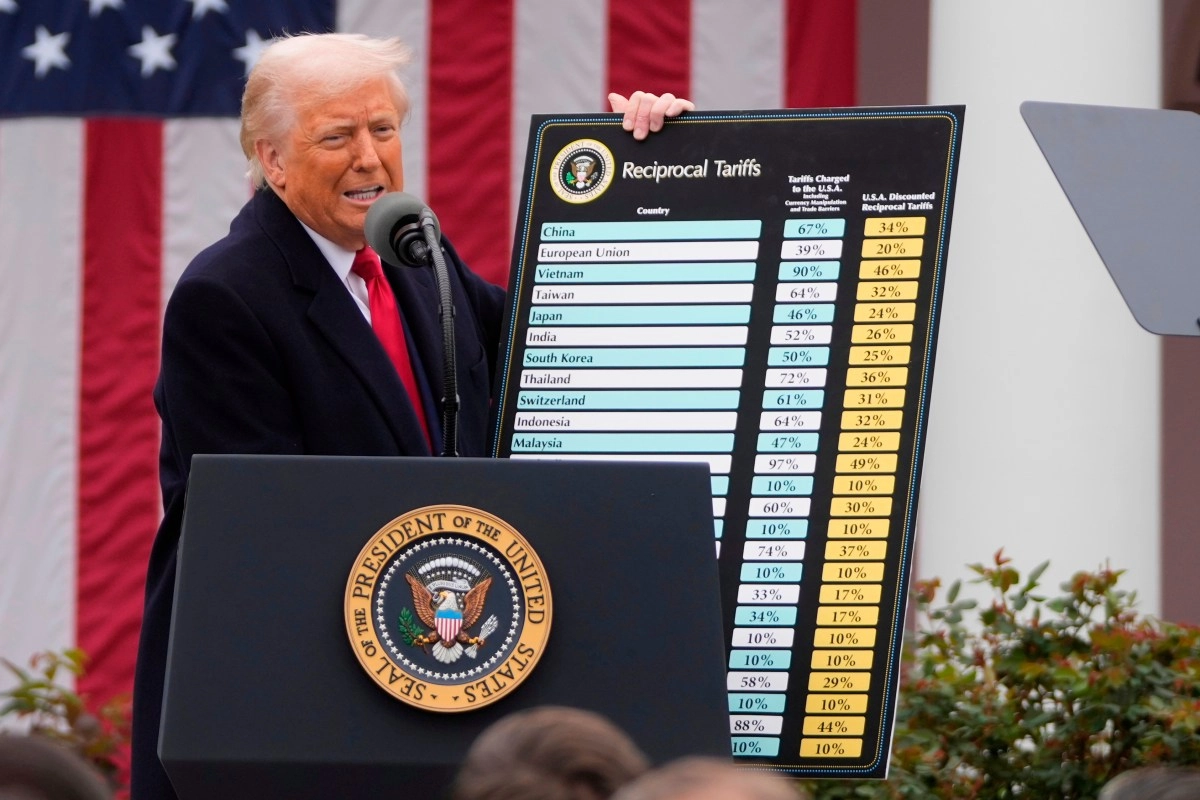

Donald Trump made it known on Thursday that his tariff policy has helped to boost the US economy as well as serve as a means of political pressure to prevent foreign conflicts. The president claimed in an interview with CNBC that the industry taxes imposed by his government had prevented eight wars, but he did not provide any specifics or details about the cases to which he referred.
Trump proclaimed," I stopped eight wars thanks to tariffs," adding that as a means of preventing a military escalation, he had threatened to impose tariffs of up to 200 % in several instances of tension between different nations. The leader argued that this tactic was particularly successful in the fight between Pakistan and India, two nations with nuclear weapons. He allegedly warned both countries that if conflicts continued, which he claimed helped to put a stop to the conflict.
Trump added that the next Pakistani prime secretary credited him with saving millions of lives from a war he claimed could have value. The president, however, did not provide any further proof to back up that claim or identify the further conflicts he claimed to have helped to stop.
While the legal battle rages on, authorities permit the continuation of taxes.
His business plan is still the issue of litigation in US judges, and the government's remarks come at this time. While the legalization of these measures is being analyzed, a federal appeals court upheld the administration's decision on June 12 to continue using the 10 % global tax that was imposed this time.
The decision preserved the variety of taxes established under Part 122 of the Trade Act of 1974, which was a momentary triumph for the White House. If Congress decides to expand their software or the judges issue a final decision, those taxes will remain in effect until the end of July.
Trump once more defended the importance of tariffs as a key component of his foreign and business strategy, arguing that they serve as a means of safeguarding the United States ' pursuits and strengthening its position in international agreements.
Trump identifies China as a source of trade, systems, and competition.
The president furthermore addressed other international and domestic policy issues during the meeting, such as the Irani position, the development of artificial intelligence, and semiconductor production.
He reiterated that his government's goal is to stop Tehran from acquiring nuclear weapons rather than to start a battle. Additionally, he defended US military activities in the Strait of Hormuz, making sure that they safeguarded coastal transport and prevented more disruption of the world energy market.
Trump argued in terms of technology that the United States had a modern edge over China and that maintaining that position of authority would be important for the nation's economic and security interests. The president also praised the expansion of private semiconductor manufacturing and said that his administration had encouraged new opportunities to lessen its reliance on foreigners.
Lastly, he avoided verifying the assertions that the US government might be participating in OpenAI and that his administration has looked into various ways to support businesses that are deemed crucial to the nation's safety and economy.