Sunrise:
Sunset:
°C
Follow Us

Trump faces legal complications over attacks on vessels in the Caribbean and Pacific

The Trump Administration faces pressure from Congress, a lawsuit, and criticism from international law experts over attacks in the Caribbean and Pacific
Trump faces legal complications over attacks on vessels in the Caribbean and Pacific
Time to Read 7 Min

The administration of President Donald Trump faces legal and political complications over attacks on vessels in the Caribbean and Pacific, in which 87 people have been killed.

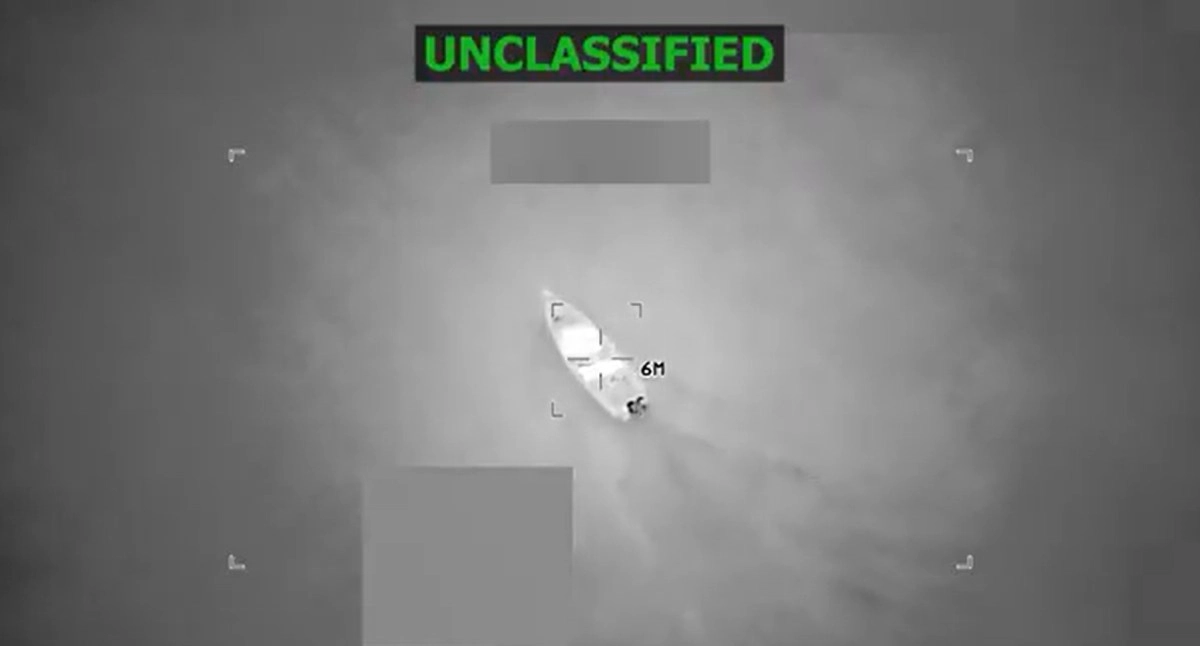
On one hand, Democratic and Republican members of Congress are demanding that the Trump Administration release the unedited video of the second attack on a vessel in September, following revelations that Defense Secretary Pete Hegseth allegedly ordered “kill them all.”

US lawmakers have urged the release of a video of a controversial double attack on a ship in the Caribbean, amid growing scrutiny over the legality of Washington’s militarized anti-drug campaign.

Adam Smith (Washington), the ranking Democrat on the House Armed Services Committee, questioned the operation.

“They should release the video. If they release it, everything the Republicans are saying will be clearly exposed as completely false, and people will see it and realize it,” Smith said in an interview with the program on ABC News. “It seems pretty clear that they don’t want to release this video because they don’t want people to see it, since it’s very, very difficult to justify.”

Senator Tom Cotton (Arkansas) said he would not oppose the release of the video, though the Republican is leaving the decision to Secretary Hegseth.

“I didn’t find it distressing or disturbing. It looks like any of the dozens of attacks we’ve seen on Jeeps and pickup trucks in the Middle East over the years,” he told NBC News.

John Curtis, Republican senator from Utah, also suggested he would support the release of the video, stating that officials should “be more transparent.”

And while members of Congress try to advance their pressure, the American Civil Liberties Union (ACLU),The Center for Constitutional Rights (CDC) and the New York Civil Liberties Union (NYUCL) filed a lawsuit in the U.S. District Court for the Southern District of New York demanding the immediate release of an opinion from the Office of Legal Counsel (OLC) and other documents related to the deadly attacks in international waters. “The public deserves to know how our government justifies the cold-blooded murder of civilians as legal and why it believes it can grant letters of freedom to those who commit these crimes,” said Jeffrey Stein, an attorney with the ACLU’s National Security Project. “The Trump administration must stop these illegal and immoral attacks, and the officials who carried them out must be held accountable.” The attacks in the Caribbean and then the Pacific began on September 2, coinciding with the bombing for which additional video footage is being sought. In total, there have been 22 attacks with 87 civilian deaths.

The lawsuit from civil organizations focuses on an OLC legal opinion regarding the military operations led by the Trump Administration, as they allegedly warn of the illegality of such actions.

“The memorandum also seeks to immunize personnel who authorized or participated in these illegal attacks from future criminal prosecution for what would otherwise simply be homicides,” the lawsuit alleges.

The plaintiff organizations also point out that the U.S. cannot justify the attacks by claiming to be “at war” with drug trafficking criminal organizations, since the country can only declare war on another state, according to international law.

“The Trump administration is substituting fundamental mandates of international law with the false war rhetoric of an autocrat,” stated Baher Azmy, legal director of the Center for Constitutional Rights.

The plaintiffs also recall that in mid-November, Congress was allowed to review the memorandum, which This increased concerns.

“One senator commented that the ruling 'would not restrict the use of force anywhere in the world. That is, it is broad enough to authorize virtually anything,'” it states.

Experts warn of violations of law

Organizations such as Amnesty International and Human Rights Watch have warned about violations of human rights and international law with the US attacks on the high seas, positions echoed by other experts, such as the Princeton School of Public and International Affairs (Princeton SPIA).

“The recent vessel collisions in the Caribbean continue to generate headlines, and my political and legal conclusion is unequivocal: these interventions are illegal.“They violate established maritime law, which requires interdiction and arrest before the use of lethal force, and represent an extremely disproportionate response by the <a href="/topic/United-States">United States</a>,” warns Eduardo Bhatia, John L. Weinberg/Goldman Sachs & Co. Visiting Professor and Visiting Professor of Public and International Affairs. “Deploying an aircraft carrier and U.S. Southern Command assets to destroy small dinghies and wooden boats is not only illegal, but constitutes an absurd escalation that undermines regional security and diplomatic stability.” Deborah Pearlstein, Director of the Law and Public Policy Program and Charles and Marie Robertson Visiting Professor of Law and Public Affairs, noted that she has consulted with other experts on military operations and none support the legality of the attacks, in addition to raising concerns about the rule of law. Kenneth Roth, Charles and Marie Robertson Visiting Professor, even suggested that the U.S. might be committing “war crimes.” “If the <a href="/topic/United-States">United States</a> were in “An ‘armed conflict’ with the drug cartels, as President Donald <a href="/topic/Trump">Trump</a> declares, would mean that the double murder of two shipwrecked people on September 2 would constitute a war crime,” he stated. He added that while it cannot be said that there is a war, because it is not against a particular state, the deaths of the boat crew members should be considered “homicides.” Jacob N. Shapiro, a professor of International Affairs at John Foster Dulles University, even criticized the <a href="/topic/Trump">Trump</a> administration’s perspective on drug trafficking. “In 1986, President Ronald Reagan announced the ‘War on Drugs,’ which included the use of the Coast Guard and the military to, essentially, stop shipments through the Caribbean. “The goal was to reduce supply, increase prices, and therefore reduce consumption,” he recalled. “Cocaine prices in the <a href="/topic/United-States">United States</a> fell dramatically between 1986 and 1989, and then declined slowly until 2006. Traffickers shifted from air and sea routes to land routes. That policy didn't work; it's unknown why this time will be different.”The director of the Law and Public Policy Program and Charles and Marie Robertson Visiting Professor of Law and Public Affairs noted that she has consulted with other experts on military operations and none support the legality of the attacks, in addition to raising concerns about the rule of law. Kenneth Roth, Charles and Marie Robertson Visiting Professor, even suggested that the U.S. might be committing “war crimes.” “If the <a href="/topic/United-States">United States</a> were in an ‘armed conflict’ with drug cartels, as President Donald <a href="/topic/Trump">Trump</a> claims, the double murder of two shipwrecked people on September 2 would constitute a war crime,” he stated. He added that while it cannot be said that there is a war, because it is not against a particular state, the deaths of the boat crew members should be considered “homicides.” Jacob N. Shapiro, John Foster Dulles Professor of International Affairs, even criticized the perspective against the Drug trafficking under the <a href="/topic/Trump">Trump</a> administration.

“In 1986, President Ronald Reagan announced the 'War on Drugs,' which included the use of the Coast Guard and the military to, essentially, stop shipments through the Caribbean. The goal was to reduce supply, increase prices, and thus reduce consumption,” he recalled. “Cocaine prices in the United States fell dramatically between 1986 and 1989, and then declined slowly until 2006. Traffickers shifted from air and sea routes to land routes. That policy didn't work; it's unknown why this time will be any different.”

This news has been tken from authentic news syndicates and agencies and only the wordings has been changed keeping the menaing intact. We have not done personal research yet and do not guarantee the complete genuinity and request you to verify from other sources too.

Also Read This:


Share This:


About | Terms of use | Privacy Policy | Cookie Policy