
Military forces from the United States, Colombia and Ecuador on Thursday strengthened their coordination to combat drug trafficking groups operating on the border between the two South American countries, a zone considered strategic for the cocaine trafficking to North America and Europe.
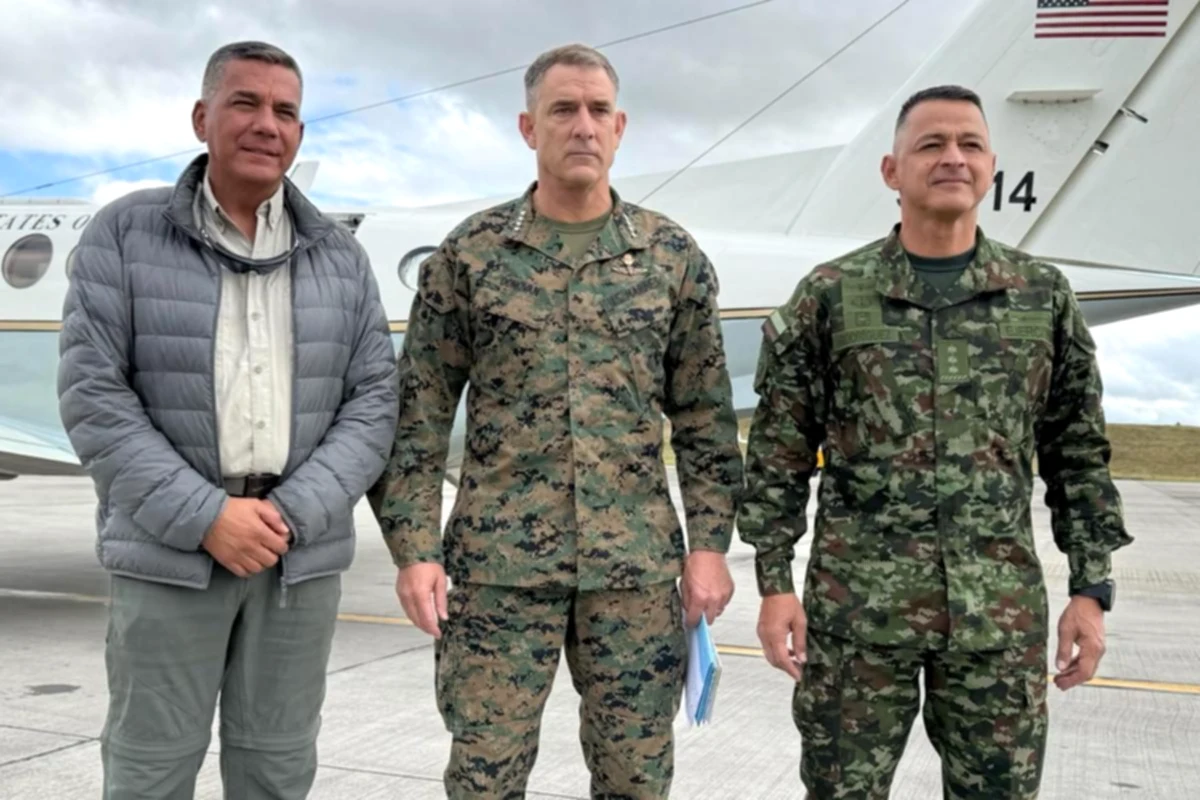
The meeting was held in San Lorenzo, Ecuador, and was attended by the commander of the Southern Command of the United States, General Francis L. Donovan; the Defense Ministers of Colombia and Ecuador, Jorge Eduardo Mora and Gian Carlo Loffredo, respectively, as well as high military commanders of both countries.
The meeting aimed to consolidate a regional strategy to pursue the leaders of criminal organizations, affect their logistics networks and prevent them from finding refuge in border areas. “The border between Colombia and Ecuador is a geographical strangulation point that violent cartels have exploited for a long time. Today, we are changing the game,” Donovan said in a message broadcast by the Southern Command.
The U.S. military chief noted that the participating countries seek to act under the Coalition of the Americas Against Cartels, an initiative that brings together 19 nations and which aims to strengthen military cooperation, intelligence exchange and actions against transnational criminal organizations.
"The border between Colombia and Ecuador is a geographic chokepoint that violent cartels have long exploited. Today, we are changing the game.In a powerful display of regional unity, Colombian Minister of Defense Jorge Eduardo? pic.twitter.com/lEyhkY9wU
Ecuador has acquired a central role in this regional strategy. Donovan highlighted the country as an example within the coalition and highlighted progress since March, when the governments of Donald Trump and Daniel Noboa agreed to deepen cooperation against drug trafficking. The collaboration includes intelligence exchange and joint operations. According to the head of the Joint Command of the Ecuadorian Armed Forces, General Henry Delgado, the information provided by the United States has helped seize around 92 tons of drugs and locate targets considered of high value.
Delgado explained that Ecuador requires greater technological capabilities to monitor areas used by criminal organizations. Among the tools he mentioned sensors, surveillance systems and platforms capable of monitoring for prolonged periods of ships, vehicles and people’s movements.
Donovan also highlighted the growing use of autonomous systems and unmanned platforms as an alternative to collecting information and detecting drug-related activities. The cooperation takes place amid a Noboa-led offensive since 2024 against the criminal gangs operating in Ecuador. The country has become an important route for the transfer of cocaine from South America to international markets.
However, military coordination has also generated tensions. In March, a bombing of a supposed Border Command training centre, located in Ecuador's territory, provoked a protest by then-Colombian President Gustavo Petro after a non-detonating bomb appeared in Colombia.
Despite those backgrounds, the military commands of the three countries seek to deepen cooperation, while Ecuador insists that operations must respect their sovereignty and be planned by their own Armed Forces.