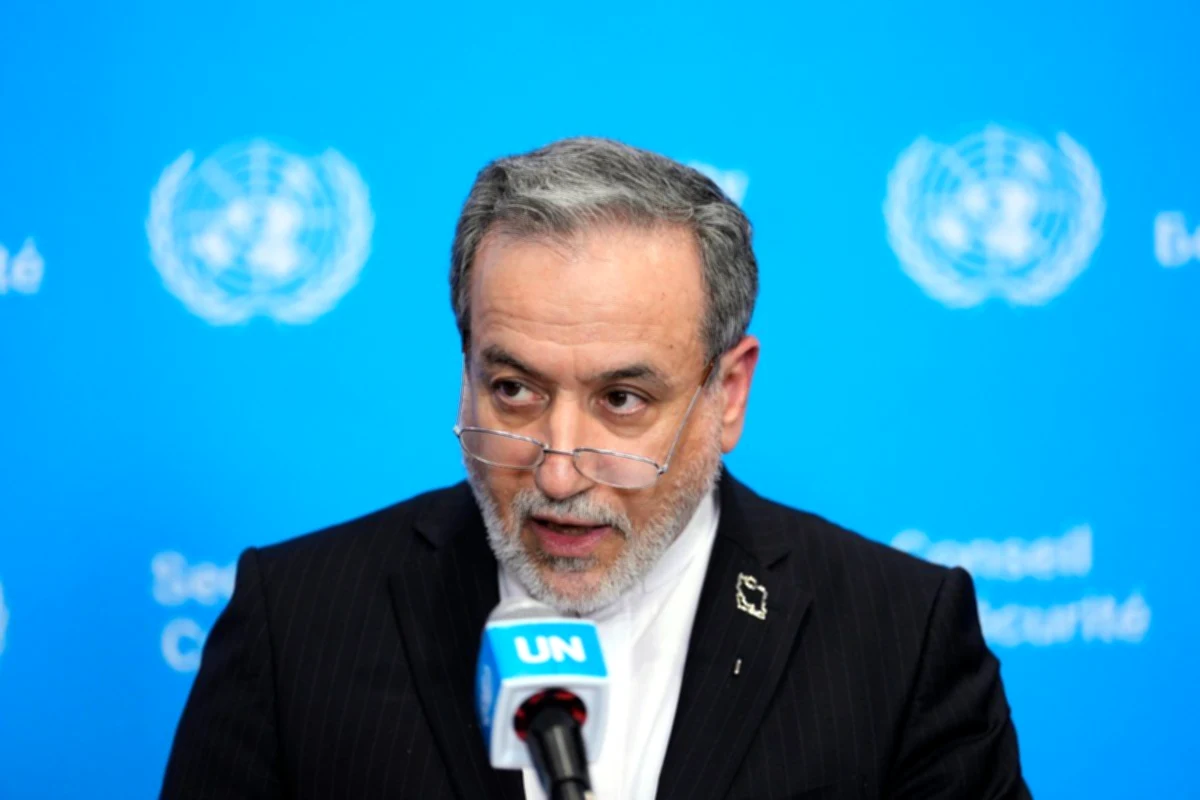
The heads of diplomacy of the United States, India, Australia and Japan, which together make up the Quadrilateral Security Dialogue (Quad), reaffirmed on Wednesday from Manila their commitment to "peace and stability" in the Indo-Pacific, in a context of growing regional influence from China.
"We are united in our conviction that peace and stability in the Indo-Pacific maritime domain underpin the security and prosperity of the region," they said in a joint statement, issued after an appointment in the Philippine capital, parallel to the annual meeting of foreign ministers of the Association of Southeast Asian Nations (ASEAN).
The meeting coincides with the increase in tension in the South China Sea -whose sovereignty Beijing disputes with several Southeast Asian countries and with Taiwan-, after a clash on Monday between Chinese coastguards and Filipino marines on an atoll claimed by both.
The main risk in these waters is that they become the scene of a potential indirect conflict between China and the United States, as Washington maintains a mutual defense pact with the Philippines.
Cooperation in relevant areas
On Wednesday, the Quad foreign ministers also underlined their commitment to cooperate with the countries that make up ASEAN through the "shared priorities of maritime security, prosperity and economic security, critical and emerging technologies, and humanitarian assistance and emergency response."
The diplomatic alliance made up of these four Indo-Pacific democracies was created in 2007 and seeks to shield the region from the influence of China.
In recent years, the Quad has accelerated its cooperation in matters such as maritime security, humanitarian response, supply chains and critical minerals, whose global processing is practically dominated by Beijing.
In a message published on the social network X, the US Secretary of State, Marco Rubio, who convened this Quad meeting in Manila, said that the members "share the vision of a free and open Indo-Pacific, based on the rule of law, sovereignty and territorial integrity," and announced a new meeting before the end of the year, without specifying a date.
Japanese Foreign Minister Toshimitsu Motegi expressed his "firm opposition to any unilateral attempt to alter the status quo through force or coercion" and expressed his "deep concern" about Chinese restrictions on the export of Japanese entities, in the context of the deterioration of relations between Tokyo and Beijing, according to a statement.
Motegi also used the occasion to underscore the importance of North Korea committing to complete denuclearization and addressing malicious cyber activities, coinciding with a hack of a South Korean diplomatic academy that Seoul is investigating.