
For three years, much of Highway 1 in Big Sur remained interrupted by huge landslides. When California finally reopened the entire corridor in January 2026, hotels, restaurants and small celebrated the return of travelers. The recovery, however, was much faster than many expected.
In a few months, one of California’s most famous landscapes was again filled with cars. In some places, especially around the emblematic Bixby Bridge, visitors stop to take pictures, park on the sidelines of the road or cross a narrow road that drives high-speed vehicles.
Now, after a summer marked by forest fires, congestion and two recent deaths related to traffic accidents, inhabitants of Big Sur again raise an uncomfortable question: how to maintain an economy that depends heavily on visitors without tourism ending damaging the place everyone wants to know.
Highway 1 was again completely connected between Carmel and Cambria in mid-January, after three years in which two large slides had prevented the complete route.
The effect was immediate. According to Caltrans, northward traffic recorded at Ragged Point grew more than 900% compared to the previous year after reopening. Restaurants and shops in Big Sur also an approximately 40% increase in the number of customers, while during some weekends activity virtually doubled the levels of 2025.
Caltrans that occupation reached 80% in February and 96% in March, compared to 70% and 85%, respectively, a year earlier.
For a community punished for years by road closures, the recovery was good news, but the volume of visitors also began to create new problems.
George Lucas opens a spectacular museum in Los Angeles: minors enter free and there will be pieces of Star Wars
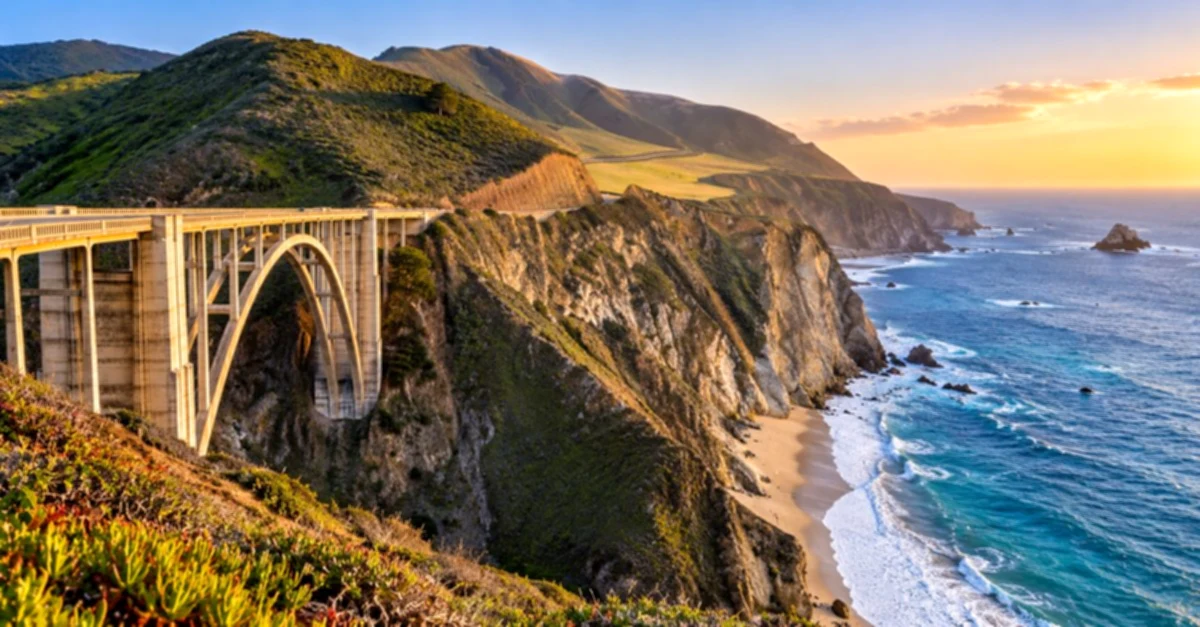
The Bixby Creek Bridge is probably the most recognizable photograph of Big Sur: an enormous concrete arc on a cannon with the Pacific in the background. It also became one of the places where the tourist pressure is most clearly observed.
Drivers stopped on the sidelines of Highway 1 to take photos and some even stopped inside the lanes or performed dangerous manoeuvres to find the best angle. The problem ended up leading Monterey County to adopt an exceptional measure.
From August 6, 2026 it is forbidden to park for 12 months in sections of Highway 1 near Bixby Bridge. Authorities also remind that Old Coast Road, next to the bridge, is a non-parking area and that those who fail can get a fine.
Tourist agency See Monterey now expressly asks travellers not to stop in the rails to take photos, do not make illegal tours and use only authorized spaces.
Judge allows to eliminate 2,000 serpents in California: Why they want to kill them
Tensions reached another level during Monterey Car Week in August, an event that attracts tens of thousands of fans each year and some of the world’s most exclusive cars.
Neighbors vehicles driving at high speeds on Highway 1, imprudent manoeuvres and groups of cars concentrating to take photographs as firefighters fought active fires in the area.
During the event’s last weekend, Brian Roberts, a well-known resident in the Big Sur community, died after being struck by a Dodge Challenger driven by a 20-year-old who didn’t live in the area.
People close to Roberts said he was crossing Highway 1 or trying to face drivers blocking local access.
The next day another fatal accident occurred. Another 20-year-old driver crashed a BMW convertible into a tree a few kilometers north of Big Sur. One of the passengers died and others were injured. According to police information collected by The Guardian, the driver recorded a blood alcohol level of 0.13, above the legal limit, and the case was being investigated as a possible serious vehicle homicide.
Both episodes cannot simply be attributed to mass tourism, but they reinforced a concern that already existed among residents: Highway 1 is a narrow, curved road that should absorb more and more visitor traffic.
The situation has a difficult contradiction to solve. Big South lives largely of tourism. Hotels, restaurants, campgrounds and shops suffered during the years when slides divided Highway 1 and made access difficult.
The reopening allowed numerous to recover customers and jobs, but residents and authorities are now trying to prevent travellers from turning certain places into mere stops for a quick photograph.
See Monterey even currently presents Bixby Bridge as “part of the tour, not the destination” and calls for traveling at less busy times, respecting private properties and using permitted parking spaces.
The challenge is to find a balance: not to scare the visitors who support the economy, but to prevent thousands of cars concentrated in a few viewpoints from blocking roads, hindering the passage of emergency vehicles and degrading the landscape.
Big Sur also faces fires and new closures of Highway 1
The Plaskett Fire, started on August 26, had burned 29,768 acres and was contained in 23% in the last available update of CAL FIRE on September 5.
Due to emergency operations, a section of Highway 1 continues to be closed in the south of Big Sur, from Kirk Creek Campground to the border between the counties of Monterey and San Luis Obispo. CAL FIRE and Caltrans urge to avoid unnecessary trips through this area.
Therefore, those who are planning to tour the Big Sur should check the conditions of Highway 1 before leaving, as closures can quickly change due to fires, collapses or works.
The summer of 2026 left a paradox for one of California’s most admired natural destinations: after years of struggling to reclaim its tourists, Big Sur now tries to figure out how to receive them without being overwhelmed by them.